In a display of surprising market resilience, the Nasdaq surged on September 17, 2026, following the Federal Reserve’s official announcement of a rate hike. While conventional wisdom often suggests that rising borrowing costs should dampen equity valuations, investors reacted with a wave of optimism, pushing tech-heavy indices into the green. The market’s reaction underscores a deepening belief that the Federal Open Market Committee (FOMC) is managing a ‘soft landing,’ effectively balancing the need to curtail persistent inflation without triggering a sharp economic contraction. Trading floors saw a flurry of activity as institutional buyers, anticipating the move, moved quickly to capitalize on the certainty provided by the announcement.
The Anatomy of the Fed’s Decision
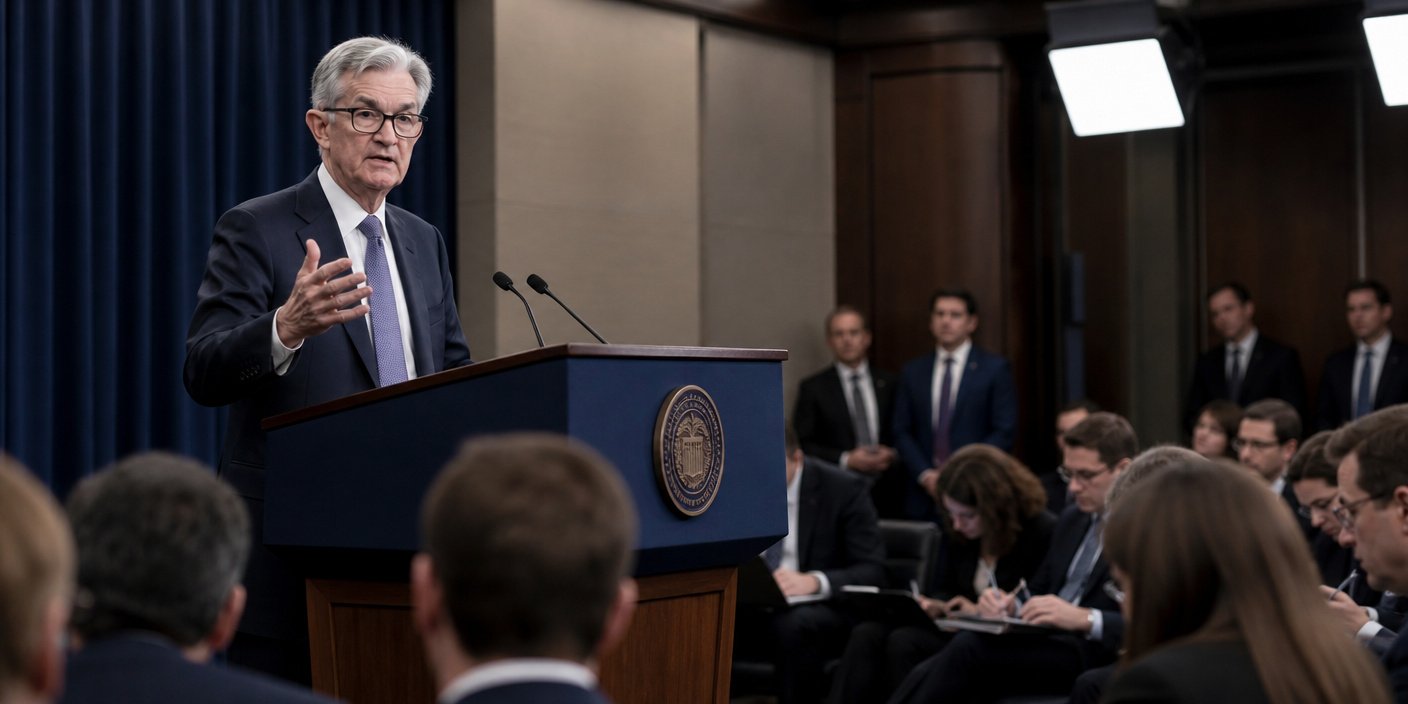
The FOMC’s decision to tighten monetary policy again reflects the ongoing battle against inflationary pressures that have lingered throughout the third quarter of 2026. Federal Reserve Chair Jerome Powell, in his post-meeting address, emphasized that the committee remains ‘data-dependent,’ keeping the door open for future adjustments based on labor market strength and consumer price index trends. The decision to hike rates—a move that increases the federal funds rate—was widely expected by Wall Street, but the market’s positive trajectory suggests that the magnitude of the hike was not enough to spook investors who had already priced the tightening into their models.
Why the Nasdaq Defied the Gravity of Higher Rates
Typically, growth-oriented sectors like those represented in the Nasdaq-100 are the most vulnerable to interest rate hikes. Because tech stocks derive much of their value from future earnings, high interest rates increase the discount rate applied to those future profits, theoretically lowering present value. However, the rally on September 17 indicates a shift in the investment thesis. Rather than reacting to the cost of borrowing, the market appeared to focus on the signal of economic strength inherent in the Fed’s move. Investors interpreted the hike as a necessary ‘maintenance’ step to cool the economy just enough to sustain long-term growth, rather than a precursor to a deep recession. Additionally, the resilience of earnings reports from key tech giants in the days leading up to the decision provided a ‘valuation floor’ that shielded the index from typical downside pressure.
Examining Treasury Yields and the Yield Curve
A critical component of today’s market action was the behavior of the 10-Year Treasury Yield. Following the announcement, yields exhibited volatility before settling into a range that suggests the bond market is becoming more aligned with the Fed’s terminal rate projections. The relationship between equity rallies and yield fluctuations is a constant tug-of-war. For the Nasdaq to climb alongside stable or rising yields is a strong indicator of investor risk appetite. If yields had spiked uncontrollably, it would have signaled a crisis of confidence in the Fed’s ability to control long-term inflation. Instead, the current stabilization suggests that bond investors share the Fed’s sentiment that inflation is trending toward the 2% target, albeit slowly.
The ‘Soft Landing’ Narrative and Market Sentiment
Perhaps the most important factor in the day’s rally is the overarching narrative of the ‘soft landing.’ Since early 2026, market participants have been scrutinizing every economic data point for signs of a recession. The fact that the Nasdaq climbed today suggests that the market is beginning to accept the Fed’s roadmap as the base-case scenario. When uncertainty is removed—even if the news is inherently ‘hawkish’ or negative in terms of borrowing costs—the market often rallies due to the elimination of the unknown. Traders, portfolio managers, and algorithmic systems alike have been waiting for a clear path forward, and the September 17 decision has provided that clarity, leading to immediate capital deployment.
Sector Rotation and Future Outlook
Beyond the headline-grabbing tech surge, there was also notable activity in other sectors. While semiconductors and software firms drove the Nasdaq’s gains, traditional sectors showed mixed results. Financial institutions, which typically benefit from higher interest rates via improved net interest margins, saw moderate gains, while consumer discretionary stocks lagged. This divergence highlights a rotation within the market. Smart money is betting on high-efficiency, cash-rich tech companies that can self-finance even in a high-rate environment, while moving away from companies heavily reliant on cheap capital. Looking ahead, the focus will now shift toward corporate earnings guidance for Q4. If the tech sector can maintain its current margin profiles despite the cost of capital remaining elevated, the Nasdaq may be positioned for further gains in the final quarter of the year. Investors should remain cautious, however, as future Fed commentary will be scrutinized with renewed intensity to ensure no pivot in their hawkish stance occurs.
FAQ: People Also Ask
Q: Why does the stock market often rise when the Fed hikes rates?
A: While counterintuitive, markets often rally after rate hikes if the hike was already ‘priced in’ by traders. When the uncertainty of a meeting is removed, and the Fed’s decision aligns with or is less aggressive than expectations, the market often experiences a ‘relief rally.’
Q: What specific index leads the market during this period?
A: The Nasdaq-100 has been a primary mover, driven by large-cap technology stocks that investors believe are best positioned to maintain earnings growth despite the current interest rate environment.
Q: How does this rate hike affect the average investor?
A: Higher federal funds rates usually lead to higher yields on savings accounts and certificates of deposit (CDs), but also increase the cost of variable-rate loans, such as credit cards and home equity lines of credit. For equity investors, it means valuing companies more strictly based on their current cash flow.
Q: What is the ‘soft landing’ mentioned in the article?
A: A ‘soft landing’ is a cyclical slowdown in economic growth that avoids a recession. In the current context, it refers to the Federal Reserve successfully raising interest rates enough to lower inflation without causing a spike in unemployment or a contraction in GDP.