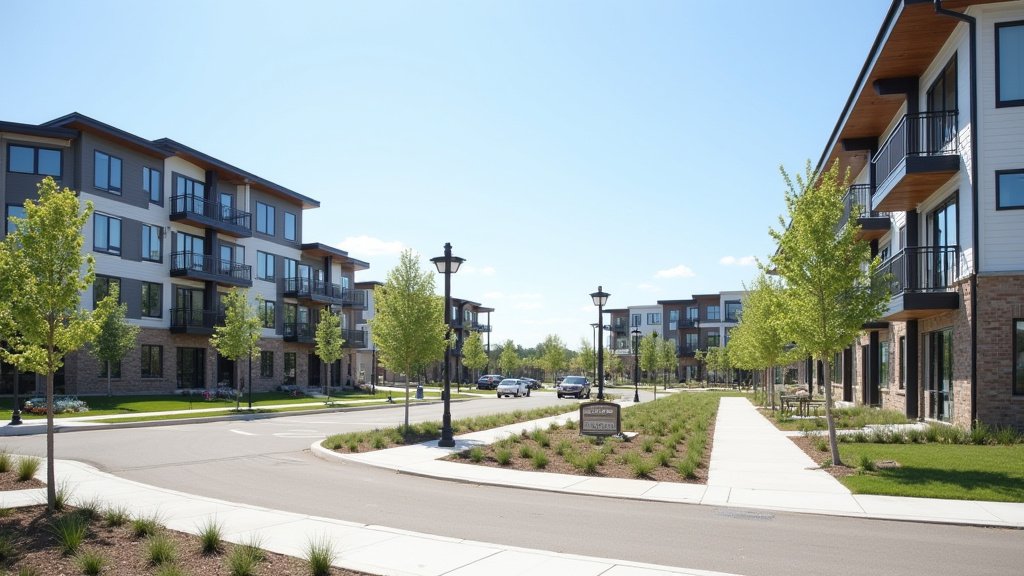
The commercial real estate landscape in the Iowa region underwent a significant transformation on September 16, 2026, as institutional investors and corporate entities executed a series of high-value transactions. These strategic moves, headlined by Siddhi Ventures Inc. and the Gurley Leep Automotive Group, highlight a broader trend of capital rotation into the Midwest’s secondary markets, driven by a search for stability and long-term yield in an evolving economic climate.
Key Highlights
- Siddhi Ventures Expansion: Siddhi Ventures Inc. has finalized a major acquisition of multi-family housing complexes, signaling a long-term commitment to central Iowa’s residential capacity.
- Gurley Leep Strategic Growth: Gurley Leep Automotive Group has secured prime commercial acreage, aiming to consolidate regional supply chains and retail infrastructure.
- Midwest Market Resilience: The transaction volume on September 16 underscores the growing institutional confidence in Iowa’s regulatory environment and steady economic output.
- Shift Toward Mixed-Use: Data suggests a concerted move away from purely speculative ventures toward projects that integrate residential and commercial utility.
Strategic Capital Flows: Inside the September 16 Iowa Market Surge
The transactions finalized on September 16, 2026, provide a granular view of how sophisticated capital is currently navigating the Iowa marketplace. For years, the region was considered a tertiary play for large institutional funds. However, the actions taken by firms like Siddhi Ventures Inc. and Gurley Leep Automotive Group suggest that the risk-adjusted return profile of Iowa has reached a critical threshold, prompting a flurry of activity that investors are now calling the “Heartland Re-investment Cycle.”
The Multi-Family Mandate: Siddhi Ventures’ Latest Bet
Siddhi Ventures Inc. has long been a bellwether for residential development trends. Their recent portfolio expansion in the Iowa region is not merely a collection of real estate assets; it is a calculated response to the persistent housing shortages that have plagued the state’s urban centers since 2024. By acquiring high-density, multi-family assets on September 16, Siddhi is positioning itself to capture the influx of workforce talent moving into the Midwest.
Analysts note that the valuation of these properties, while robust, remains significantly lower than comparable assets in coastal hubs like Seattle or Boston. This pricing arbitrage is the primary driver. Siddhi Ventures is betting that the demand for high-quality rental stock in Iowa will continue to outpace supply, providing a stable cash flow even if broader economic volatility persists. The firm’s strategy appears focused on “value-add” renovations, moving beyond simple ownership to implement energy-efficient technologies and smart-building systems that appeal to a younger, tech-enabled tenant demographic.
Commercial Consolidation: The Gurley Leep Automotive Strategy
Parallel to the multi-family push, the commercial sector witnessed a aggressive expansion from the Gurley Leep Automotive Group. Their acquisition strategy on September 16 was distinct from the residential focus, targeting prime land parcels with high visibility and highway connectivity. This is a play on infrastructure and logistics.
In the post-pandemic industrial landscape, the “just-in-time” delivery model has faced systemic stresses. By securing strategic commercial ground in Iowa, Gurley Leep is creating a hub-and-spoke infrastructure that reduces reliance on strained supply chains located thousands of miles away. This isn’t just about selling vehicles; it’s about owning the commercial footprint that services the region’s increasing population of commuters and businesses. The decision to centralize their regional logistics and display operations in Iowa suggests they anticipate a multi-year growth trajectory for the state’s automobile and service industry market.
Secondary Angles: Examining the Broader Economic Impact
To fully understand the weight of these transactions, one must look at the ripple effects across the regional economy.
1. The Infrastructure Correlation: These transactions are unlikely to happen in a vacuum. They typically follow local government investment in public infrastructure, such as road expansions or utility grid upgrades. The timing of the September 16 deals suggests that private firms are “tagging along” with public sector improvements.
2. The Decentralization Trend: There is a clear, ongoing exodus of capital from Tier-1 metropolitan areas. Institutional investors are seeking “Goldilocks” markets—places that are large enough to offer liquidity but small enough to remain affordable. Iowa fits this description perfectly.
3. Long-term Employment Stability: Large-scale real estate acquisitions usually precede hiring surges. Whether it is construction and property management from Siddhi or the automotive retail and service employment from Gurley Leep, these transactions act as a multiplier for local job creation.
As the state looks toward the close of 2026, the activity on September 16 will likely be viewed as a pivotal moment. The focus is no longer just on survival or stagnation; it is on building the infrastructure for a more modernized, self-sufficient Iowa economy.
FAQ: People Also Ask
Q: What do the September 16 transactions reveal about Iowa’s real estate market?
A: The transactions demonstrate a shift in institutional confidence, with major entities like Siddhi Ventures and Gurley Leep prioritizing long-term growth and infrastructure utility over short-term speculative gains, signaling a maturing regional market.
Q: Why are multi-family properties a focus for Siddhi Ventures?
A: Multi-family housing remains a defensive, high-demand asset class. Given the housing shortage in Iowa’s developing urban centers, these assets provide reliable, inflation-hedged income, which is highly attractive to institutional investors in the current economic environment.
Q: Does the Gurley Leep Automotive expansion affect local consumers?
A: Yes. The consolidation of their regional commercial footprint usually leads to improved service capabilities, a broader inventory of vehicles, and potentially more efficient logistics, which benefits the local consumer base through better availability and service standards.
Q: Should other investors follow these firms into the Iowa market?
A: While these firms are making strategic moves, investors should conduct independent due diligence. These transactions highlight specific opportunities in multi-family and commercial/automotive real estate, but market saturation and interest rate fluctuations remain critical variables for any new investment.