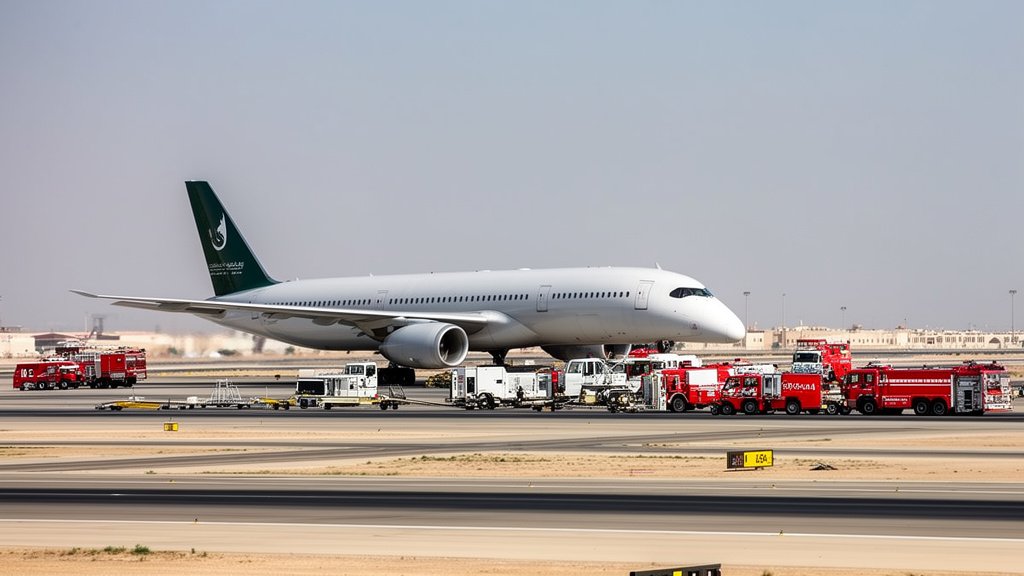
The skies over the Middle East became the setting for a harrowing aviation emergency this week when 166 Israeli citizens aboard a Flydubai flight were forced into a life-or-death struggle against their own pilot. In an unprecedented turn of events, passengers and cabin crew members intervened to subdue a pilot who, according to initial reports, allegedly attempted to initiate a deliberate crash of the aircraft while in flight. The intervention, described by aviation experts as a miraculous act of collective bravery, prevented a catastrophic tragedy, allowing the flight to make an emergency landing in Saudi Arabia, where all souls on board were safely secured.
Key Highlights
- Immediate Intervention: Passengers and cabin crew collaborated to physically restrain the pilot mid-flight after observing erratic, dangerous behavior that threatened the structural integrity and flight path of the aircraft.
- Emergency Diversion: Following the neutralization of the threat, the flight crew executed an emergency landing in Saudi Arabia, marking a rare and complex moment of international cooperation involving Israeli citizens on Saudi soil.
- 166 Lives Saved: All 166 Israeli citizens on board were confirmed safe upon landing, with local authorities providing immediate assistance and security protocols upon the aircraft’s arrival.
- Investigation Launched: International aviation bodies, alongside Saudi and Israeli authorities, have launched a multi-lateral investigation into the pilot’s history, mental health protocols, and the specific sequence of events that led to the breach of the cockpit.
Anatomy of a Midair Crisis: How 166 Lives Were Saved
The narrative of modern aviation safety is built on the assumption that the cockpit remains an impenetrable fortress, secured against external threats. However, the Flydubai incident forces a grim reassessment of the ‘insider threat’ scenario—a situation where the pilot, the very person entrusted with the safety of 166 lives, becomes the source of the danger. This incident stands as a chilling case study in how passenger intuition and rapid, decisive action can override institutional failure.
The Sequence of Events: A Rapid Deterioration
Reports indicate that the flight, which originated from an international hub with 166 Israeli nationals aboard, began under routine conditions. Mid-flight, however, the aircraft’s trajectory began to deviate erratically. Witnesses reported hearing audible alarms within the cabin and experiencing unexpected, violent turbulence caused by aggressive maneuvering. It was at this critical juncture that the cabin crew, supported by passengers in the forward section, recognized that the aircraft was not undergoing a mechanical failure, but a deliberate attempt to force a nosedive.
In a display of high-stakes Crisis Resource Management (CRM), the crew breached the standard protocols regarding cockpit access. Recognizing that the pilot had locked himself in and was engaging in maneuvers inconsistent with safe flight operations, the crew and passengers worked in tandem to regain control. The physical confrontation inside the aircraft was brief but intense, ultimately resulting in the pilot being subdued and removed from the flight controls.
Geopolitical Implications and The Saudi Landing
The emergency landing in Saudi Arabia adds an extraordinary layer of complexity to an already volatile situation. Given the historic geopolitical tensions between Israel and Saudi Arabia, the forced landing of a civilian aircraft carrying 166 Israeli citizens required rapid, high-level diplomatic communication.
Upon entering Saudi airspace in distress, the aircraft was met with guidance from the Saudi General Authority of Civil Aviation (GACA). The successful landing and the subsequent handling of the passengers—who were secured in a neutral, safe environment—is being cited as a rare example of humanitarian cooperation overriding political barriers. Experts suggest that the gravity of the emergency left little room for political posturing; the immediate preservation of 166 lives necessitated an all-hands-on-deck approach from Saudi ground control.
The Mental Health and Screening Scrutiny
Beyond the immediate drama of the event, the aviation industry is now bracing for a massive fallout regarding pilot mental health screening. How does a pilot, presumably vetted and cleared by aviation standards, reach a point of such severe instability that they would attempt to destroy their own aircraft?
This incident highlights a critical gap in aviation safety: the ‘Human Factor.’ While mechanical systems like Boeing’s flight management computers have redundancies, the human operator remains a single point of failure. This event will likely trigger a global review of psychological ‘fit-to-fly’ protocols. Airlines, including Flydubai and its regional counterparts, are expected to face intense pressure from regulators to implement more robust, real-time monitoring of pilot mental well-being, moving beyond periodic check-ups to comprehensive, ongoing behavioral analysis.
Secondary Angles: Future Implications
1. The Evolution of Cockpit Security: This event challenges the post-9/11 ‘fortress cockpit’ philosophy. While designed to keep intruders out, these doors proved to be a liability when the threat was internal. We can expect engineers to design secondary override systems or external monitoring tools that allow crew to intervene even when the pilot is unresponsive or malicious.
2. Technological Redundancies: This event will accelerate the push for autonomous ‘return-to-home’ systems. Future aircraft may soon be equipped with AI-driven overrides that detect erratic, terrain-threatening inputs from pilots and automatically place the aircraft into a safe, level flight pattern, effectively locking out the human operator during a crisis.
3. Passenger Psychology in Extremis: This incident provides researchers with a unique case study in group psychology. The actions taken by the passengers on this flight serve as a blueprint for how untrained civilians can effectively neutralize a high-stakes threat in a confined space. This will likely influence future aviation safety briefings, which traditionally emphasize passive compliance rather than active intervention.
FAQ: People Also Ask
Q: How did the passengers manage to subdue the pilot?
A: While specific details remain under investigation, reports indicate a coordinated effort between flight attendants and able-bodied passengers in the forward rows. Using standard in-flight equipment and sheer numbers, they were able to gain access to the flight deck, neutralize the pilot, and secure him before he could execute a fatal maneuver.
Q: What is the current status of the passengers?
A: All 166 passengers were confirmed safe following the emergency landing in Saudi Arabia. They were attended to by medical and security personnel, with diplomatic channels working to ensure their eventual repatriation to Israel.
Q: Will this change flight safety protocols?
A: Almost certainly. This event exposes a ‘single point of failure’ in aviation—the pilot. Regulatory bodies like the ICAO (International Civil Aviation Organization) are expected to review cockpit access and override protocols in the coming months.
Q: Why was the landing in Saudi Arabia significant?
A: The landing is significant due to the complex political history between Israel and Saudi Arabia. The fact that the flight was received, the passengers were protected, and the incident was resolved safely has been noted as a significant moment of humanitarian priority over political discord.