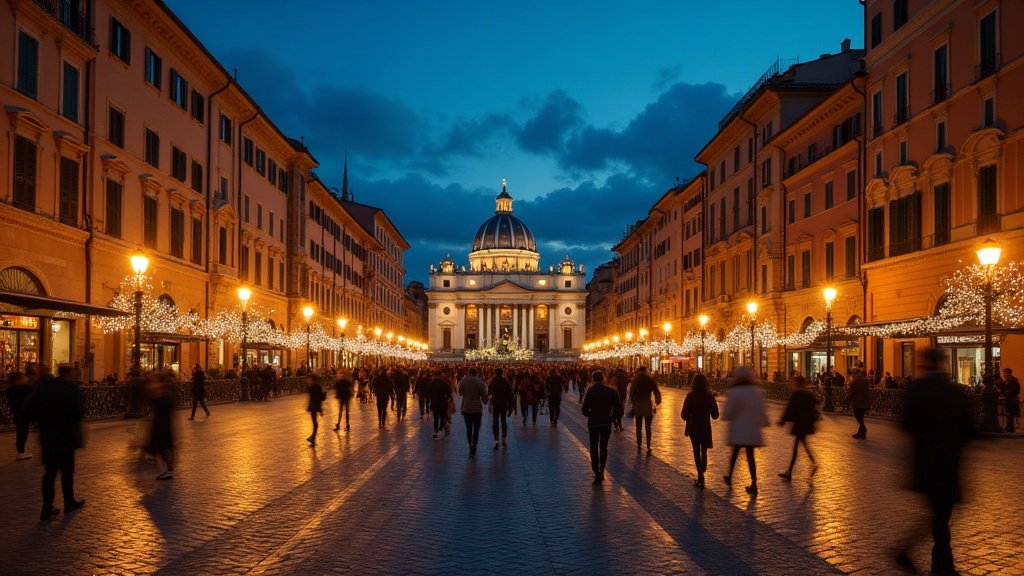
The U.S. Embassy in Rome has officially released an urgent security advisory, calling for increased vigilance among American citizens currently residing in or traveling through Italy. As the peak holiday season approaches, the diplomatic mission has underscored the necessity for heightened awareness in public spaces, particularly at popular holiday markets, high-traffic transportation hubs, and large public gatherings. This directive serves as a standard yet critical precautionary measure, intended to ensure the safety of U.S. nationals amid the increased density of tourist activity synonymous with the Italian winter calendar.
Key Highlights
- Heightened Vigilance Required: Citizens are advised to maintain a high level of situational awareness, especially in areas frequented by tourists and large crowds.
- Specific Risk Areas: Security protocols focus on holiday markets, religious event venues, and transportation corridors, such as major train stations and airports.
- Enrollment Essential: The Embassy strongly encourages all U.S. citizens in Italy to enroll in the Smart Traveler Enrollment Program (STEP) to receive timely security updates and facilitate emergency communication.
- Emergency Readiness: Familiarize yourself with local emergency numbers and the location of the nearest U.S. consulate or embassy office.
Navigating the Seasonal Threat Landscape in Italy
The security advisory issued by the U.S. Mission in Italy is a strategic communication tool designed to mitigate risks in a highly dynamic environment. While Italy maintains a robust internal security posture, the holiday season introduces a unique set of variables. The influx of seasonal tourists, combined with the concentration of individuals in traditional holiday markets (mercati natalizi) and historic city centers, creates environments that security experts classify as “soft targets.”
The Anatomy of ‘Soft Target’ Security
In urban planning and counter-terrorism, a soft target is typically defined as a location with limited security measures that is easily accessible to the public. During the holidays, Rome, Florence, and Milan experience a massive surge in foot traffic. These bustling, festive environments—while culturally vibrant—can complicate the ability of law enforcement to monitor individual actors. The Embassy’s alert is not a suggestion to cancel travel, but rather a call to “situational awareness.” This means avoiding “tuning out” while in crowded areas, maintaining distance from suspicious unattended packages, and being cognizant of emergency exits in crowded venues.
Collaborating with Italian Law Enforcement
It is essential to understand that the U.S. Embassy’s alert is issued in coordination with broader geopolitical awareness and local intelligence. Italy utilizes a sophisticated security framework, including the Polizia di Stato and the Carabinieri, who maintain a visible presence in major transit hubs such as Roma Termini and Milan Central Station. The advisory serves as a supplement to these local measures, ensuring that U.S. citizens understand their role in maintaining personal security. Understanding the relationship between U.S. Diplomatic Security and local Italian authorities helps citizens realize that the safety net is layered and comprehensive.
The Digital Component: Utilizing the STEP Program
The Smart Traveler Enrollment Program (STEP) is the single most effective tool for Americans abroad. By registering their trip details, citizens allow the U.S. Department of State to provide critical information tailored to their specific location. In the event of a civil unrest incident, natural disaster, or localized security threat, those enrolled in STEP receive direct alerts via email or SMS. This digital infrastructure is vital during the holiday season, where communication channels can be overwhelmed. Ensuring your profile is updated with current local contact information is a non-negotiable step for responsible travel.
The Evolution of Consular Safety Communication
Over the past decade, the nature of security advisories has shifted. We have moved from broad, generalized warnings to hyper-specific, actionable intelligence. The Embassy’s current focus on “public gatherings” reflects a modern approach to mitigating threats. Rather than limiting movement, the goal is to empower citizens to make informed decisions about where they go and when. This includes identifying alternative routes through crowded plazas or opting for early morning or late-night visits to attractions to avoid the peak density hours, a secondary benefit of which is a more authentic and less congested tourism experience.
Looking Ahead: Strategic Travel in 2025
The implications of this advisory extend beyond the immediate holiday window. It represents a recurring seasonal reality for travelers in major European capitals. As global travel continues to rebound to pre-pandemic levels, the density of tourist hubs will remain a focal point for diplomatic caution. Travelers should view these alerts as a permanent feature of international mobility—a tool that, when respected, enhances the safety and quality of the travel experience rather than diminishing it.
FAQ: People Also Ask
Q: Does this advisory imply that I should not travel to Italy for the holidays?
A: No. The advisory is a routine measure to promote situational awareness. It does not suggest that travel is unsafe; rather, it highlights the importance of staying alert in areas with high human density, which is standard practice for travel to any major global capital.
Q: What exactly is ‘situational awareness’ in this context?
A: It means staying off your phone when walking in crowded areas, being aware of who is around you, identifying the nearest emergency exit upon entering a building, and trusting your instincts if a location feels unsafe or overly chaotic.
Q: What should I do if I notice a suspicious package or activity?
A: Do not investigate it yourself. Immediately move away from the area and alert the nearest police officer (Carabinieri or Polizia di Stato). If in a public building or transit hub, alert facility staff or security personnel and leave the premises quickly.
Q: How often should I check the U.S. Embassy website?
A: During the holiday season, it is recommended to check the Embassy’s ‘Alerts and Messages’ page every few days, or at least before traveling to a new city within Italy, to ensure you are up-to-date on any localized security shifts.