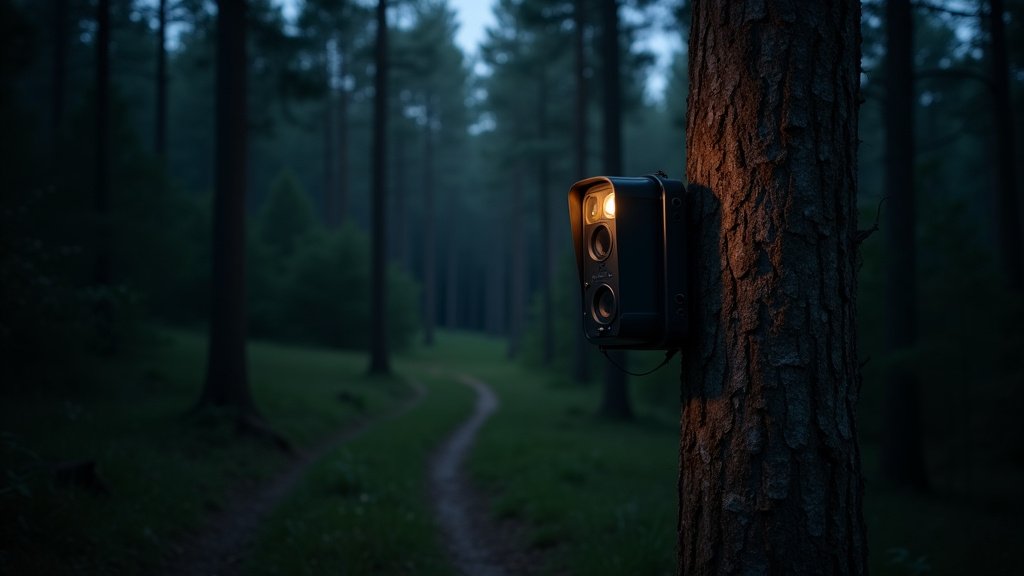
Wildlife conservation has long focused on the tangible scars humans leave on the Earth: the highways that segment habitats, the industrial zones that poison waterways, and the deforestation that eliminates shelter. However, a groundbreaking new study published in the journal Science suggests that our focus may have been too narrow. A collaborative team of researchers from the University of California, Santa Barbara (UC Santa Barbara), the Smithsonian Institution, and Yale University has revealed that human presence itself—the mere activity of people—is a critical, often underestimated, catalyst for changes in wildlife behavior.
By tracking data from over 4,500 animal populations across the globe, the research team identified a consistent pattern: animals are not just reacting to roads and buildings; they are actively modifying their movement, feeding, and reproductive patterns in direct response to the presence of human beings. This finding is set to fundamentally reshape how conservationists manage ecosystems, moving the conversation from purely spatial planning to temporal and behavioral management.
Key Highlights
- The ‘Presence’ Effect: The research concludes that wildlife behavioral responses are triggered by human activity, irrespective of the existence of human-built infrastructure.
- Massive Data Scale: The analysis incorporated data from 4,500 animal populations, providing a robust, global dataset that spans diverse ecosystems and species.
- Conservation Paradigm Shift: Wildlife management efforts must now pivot to include the ‘human footprint’—time-based management of human access—rather than relying solely on creating protected physical zones.
- Surprising Adaptations: The study documents how species are shifting their activity to nocturnal patterns to avoid humans, a behavioral ‘masking’ that has long-term evolutionary implications.
Rethinking the Anthropocene: Why Presence Matters
For decades, the central tenet of habitat conservation was the mitigation of physical encroachment. If we could build fences, designate wildlife corridors, or reroute roads, we believed we could effectively insulate animal populations from human impact. The research from UC Santa Barbara, the Smithsonian, and Yale University dismantles this assumption. By synthesizing data across 4,500 populations, the authors illustrate a dynamic landscape where animals function as a ‘landscape of fear,’ constantly assessing the risk posed by bipeds, whether they are in a pristine forest or a suburban park.
The ‘Invisible’ Disturbance
Human presence introduces a set of stressors that are distinct from infrastructure. Noise, scent, and visual silhouettes are detected by wildlife at distances far greater than the footprint of a physical building. This creates a psychological boundary. When humans enter a habitat, even for a short hike or scientific research, they create an ‘exclusion zone’—a buffer where wildlife activity ceases or changes. The study demonstrates that this effect is persistent and measurable. Animals are not merely fleeing in terror; they are undergoing a sophisticated, albeit involuntary, behavioral adjustment. They are feeding when it is darker, moving more cautiously through open spaces, and exhibiting heightened vigilance, all of which incur metabolic costs that reduce long-term fitness and reproductive success.
The Shift Toward Temporal Conservation
If the problem is not just where we are, but when we are there, the solution requires a shift in temporal management. This means conservationists may need to implement ‘time-sharing’ strategies. In many public lands, this could look like strictly regulated access hours for recreationalists to provide wildlife with uninterrupted windows of activity. The study suggests that by simply restricting human presence during peak wildlife feeding or mating times, we could yield significant conservation benefits without requiring costly new infrastructure or land acquisition. This is a low-cost, high-impact strategy that aligns with modern data-driven management.
Implications for Urban and Suburban Planning
For urban planners, this study presents a new challenge: how to design cities that don’t just protect land, but minimize the ‘sensory footprint’ of their residents. This includes acoustic engineering in park borders, light pollution control, and the creation of ‘human-only’ thoroughfares that sequester the sensory cues of humans away from critical wildlife nodes. The findings suggest that the boundary between human and wild is porous, and that porousness is mediated by human behavior. Architects and urban designers must now account for the ‘behavioral buffer zones’ required by local fauna, essentially designing for a coexistence that prioritizes the sensory needs of the natural world.
The Evolutionary Cost of Coexistence
Perhaps the most alarming aspect of the research is the long-term evolutionary cost. When an entire species population is forced to shift its feeding times to the night to avoid human contact, they are potentially exposed to different predators, different food sources, and different environmental stresses. This ‘nocturnal shift’ is a stress response, and sustained stress across generations can lead to shifts in life-history traits. Are we inadvertently selecting for a different kind of animal—one that is more skittish, less efficient at foraging, or less socially interactive? This study opens the door to a new field of ‘behavioral evolutionary ecology’ that asks not just how animals die, but how they are forced to live differently because we are there.
FAQ: People Also Ask
Q: Did the study focus on a specific type of animal or ecosystem?
A: No, the strength of this study lies in its breadth. The researchers analyzed 4,500 animal populations across a vast array of global ecosystems, from tropical forests to temperate woodlands and even near-urban environments, ensuring the findings apply globally.
Q: How does this change the way I should interact with nature?
A: It reinforces ‘leave no trace’ ethics. Being quiet, staying on paths, and observing quiet hours—especially at dawn and dusk when many animals are most active—are critical to minimizing your personal ‘human footprint’ in sensitive habitats.
Q: Does this mean we should stop hiking and exploring?
A: The researchers do not argue for total exclusion. Instead, the findings emphasize management. By understanding which times and places are most sensitive, land managers can create smarter, more effective access policies that balance human recreation with the physiological needs of the local wildlife.
Q: How did the researchers measure the ‘presence’ effect compared to infrastructure?
A: The team utilized advanced statistical modeling to isolate the ‘presence’ variable from the ‘infrastructure’ variable, using camera trap data and tracking technologies that allowed them to detect human activity versus physical barriers across the 4,500 populations.