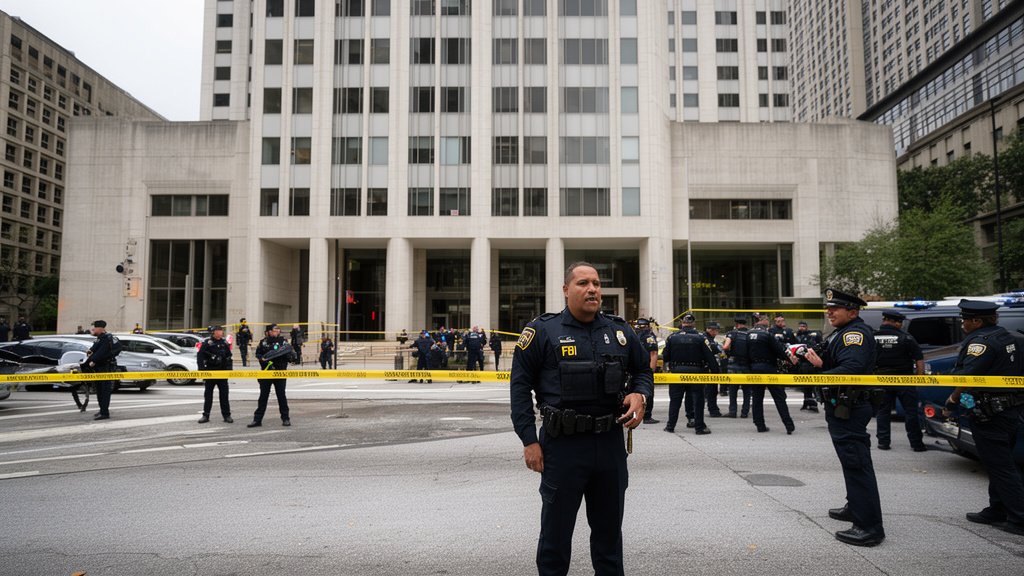
Federal authorities have launched a high-level investigation following a brazen incendiary attack on an Immigration and Customs Enforcement (ICE) facility in downtown Atlanta. The incident, which unfolded late Tuesday night, has triggered an immediate and coordinated response from federal agencies, including the Federal Bureau of Investigation (FBI), as investigators work to secure the site and identify those responsible for the destructive act.
Key Highlights
- Incident Confirmation: An incendiary device was deployed against the federal building located in the downtown Atlanta area on Tuesday night.
- Federal Response: The FBI’s Atlanta Field Office has officially assumed the lead in the investigation, coordinating with local law enforcement and the Department of Homeland Security (DHS).
- Safety Status: Authorities have confirmed that there were no injuries reported as a result of the attack, though the physical structure sustained localized damage.
- Ongoing Security: Security protocols surrounding federal buildings in the metropolitan area have been heightened as the investigation continues.
The Federal Investigation into the Atlanta Infrastructure Attack
The tranquility of the downtown Atlanta business district was disrupted late Tuesday when an unidentified individual or group targeted the Immigration and Customs Enforcement facility with an incendiary device. This attack, which law enforcement officials characterize as a deliberate strike against federal property, has prompted an intensive forensic inquiry. While initial reports indicate no casualties, the targeting of a federal office—a symbol of government authority and administration—represents a significant escalation in local security concerns.
Investigative Procedures and Forensic Analysis
When a federal facility is subjected to an incendiary attack, the investigative threshold is immediate and severe. The FBI Atlanta field office, which manages domestic counter-terrorism and federal crime portfolios, has deployed its evidence response teams. These teams are currently engaged in a meticulous collection process, analyzing blast patterns, chemical residues, and remnants of the incendiary device to determine its composition and source.
Investigators are simultaneously leveraging high-resolution surveillance footage from the surrounding downtown corridor. The area, characterized by dense corporate infrastructure and heavy foot traffic, is monitored by a web of public and private cameras. Federal agents are cross-referencing this digital trail with witness statements collected in the immediate aftermath. The goal is to establish a timeline of movement, identifying the perpetrator’s approach and egress routes, which is critical in the early stages of a federal investigation.
Federal vs. Local Jurisdictional Coordination
The attack occurred within the jurisdiction of the Atlanta Police Department, but given the specific targeting of an ICE building, the Department of Homeland Security and the FBI have assumed primary oversight. This jurisdictional hierarchy is standard for federal property, yet it necessitates a complex “force multiplier” approach. Local officers have been tasked with securing the perimeter and managing traffic flow, while federal agents handle the internal forensic and intelligence-gathering aspects of the case. This synergy is designed to ensure that the investigation is conducted without the jurisdictional bottlenecks that can sometimes slow down complex municipal inquiries.
Examining the Security Landscape
The incident raises critical questions regarding the vulnerability of government infrastructure within major urban centers. In recent years, federal agencies have faced increased scrutiny and, at times, direct physical threats. The downtown Atlanta ICE facility, like many similar offices, operates in a high-density environment. This presents a unique challenge for security planners who must balance the need for public accessibility with the hardening of government assets. Security experts suggest that this incident will likely lead to a re-evaluation of perimeter security, including potential upgrades to exterior surveillance, blast-resistant modifications, and increased inter-agency patrolling in the vicinity of federal buildings.
Secondary Angles: Analyzing the Broader Context
To fully understand the weight of this event, we must look at three distinct secondary angles:
1. The Evolution of Domestic Threats: Historically, attacks on government buildings fluctuate based on the national political climate. By analyzing the frequency and nature of these incidents, researchers can identify if this represents a localized anomaly or a broader trend in political expression turning into violent action against state institutions.
2. Urban Planning and Security: The economic impact of such attacks is not limited to the building itself. When a federal facility is targeted in a downtown district, it often leads to temporary closures of adjacent businesses, rerouting of public transit, and a general climate of unease that can temporarily dampen the local commercial environment.
3. Psychological Impact on Federal Workers: Beyond the physical damage, these events have a profound impact on the morale and operational readiness of federal employees. The psychological toll of working in a facility that has been targeted by violence necessitates support structures that are often overlooked in the initial crime reporting.
FAQ: People Also Ask
Q: Were there any injuries reported during the attack on the Atlanta ICE facility?
A: No, authorities have confirmed that no employees or members of the public were injured during the incident.
Q: Who is leading the investigation into the incendiary attack?
A: The Federal Bureau of Investigation (FBI) Atlanta Field Office is leading the investigation, in coordination with the Department of Homeland Security and local law enforcement.
Q: Is there an active threat to the downtown Atlanta area?
A: Authorities have not issued a broad alert for the general public, but they are treating the incident as a serious matter and have increased security visibility in the immediate vicinity of the facility.
Q: What is the primary purpose of this specific ICE facility?
A: The facility serves as an administrative and operations office for Immigration and Customs Enforcement in the Atlanta region, handling regional policy, enforcement coordination, and logistical management.