A pre-dawn raid shattered the peace of Caracas on January 3, 2026. United States forces executed a daring operation, with the primary goal of the Maduro Capture. This action targeted key military sites around Venezuela’s capital, as part of “Operation Absolute Resolve.” The mission’s objective was clear: to capture Venezuelan President Nicolás Maduro. His wife, Cilia Flores, was also apprehended. These dramatic events mark a significant turning point, igniting widespread international concern and putting Venezuela on the global trending list, underscoring the critical nature of the Maduro Capture.
The Dawn Assault for Maduro Capture
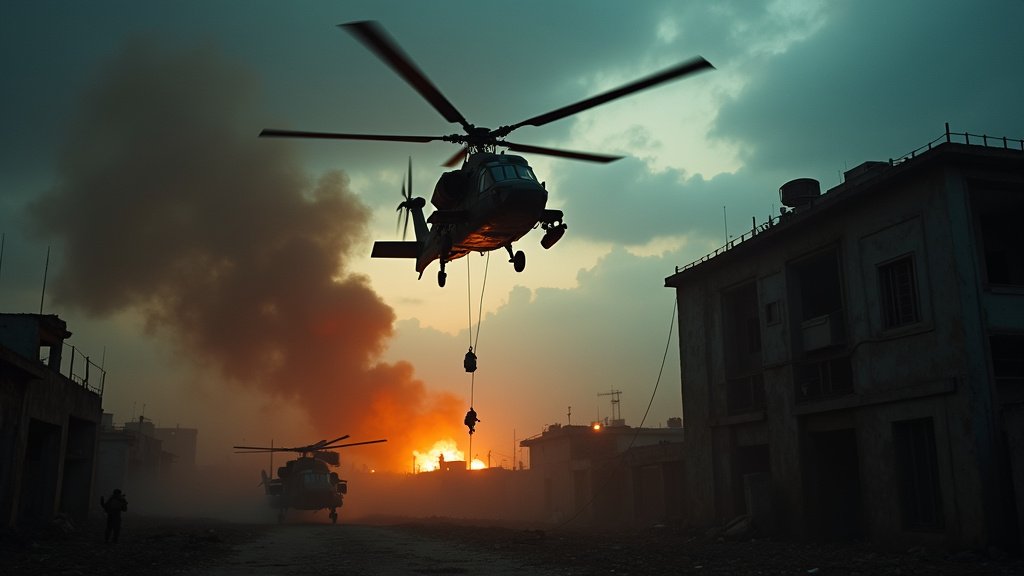
Explosions rocked Caracas around 2:00 AM local time. US military aircraft, including AH-1Z Vipers, employed Hellfire missiles. Targets included Fort Tiuna and the Generalísimo Francisco de Miranda Air Base. Higuerote Airport and the port of La Guaira also sustained damage. The operation involved extensive use of drones. Cyber warfare played a role too. Power outages plunged parts of Caracas into darkness. Internet connectivity also suffered significant disruption. U.S. forces utilized advanced technology for this swift incursion. Helicopters from the 160th Special Operations Aviation Regiment ferried assault teams. Delta Force elements led the ground operation. The CIA and FBI provided crucial intelligence and support for the Maduro Capture. The military action lasted about 30 minutes, a testament to the efficiency of the planning for the Maduro Capture.
Maduro Capture and Indictment
Maduro and Flores were reportedly apprehended at Fort Tiuna, central to the Maduro Capture. They were quickly transported out of Venezuela. U.S. forces held them aboard the USS Iwo Jima. Subsequently, they were flown to New York City. U.S. Attorney General Pam Bondi announced their indictment following the Maduro Capture. Charges include drug and weapons trafficking. These accusations stemmed from a 2020 indictment. Maduro and Flores pleaded not guilty in a Manhattan federal court. President Donald Trump hailed the operation as successful. He described it as a “brilliant operation.” The U.S. government framed it as a law-enforcement action with military backing, the culmination of efforts leading to the Maduro Capture.
Human Cost and International Outcry Following Maduro Capture
The airstrikes tragically resulted in significant casualties, a grim consequence of the Maduro Capture. Initial reports indicated at least 40 deaths. Later estimates suggest a higher toll. The Venezuelan prosecutor general stated between 100 and 120 Venezuelans died. These included both civilians and military personnel. Cuba confirmed 32 of its military and security personnel perished. Among the civilian dead were a Colombian vendor and an elderly lawyer. At least seven U.S. service members sustained injuries. The operation drew widespread condemnation. Many UN officials and foreign leaders decried the violation of international law. Venezuela labeled the attack an “imperialist aggression.” Neighboring Colombia called for an emergency UN Security Council session, reflecting the global shockwaves from the Maduro Capture.
Shifting Power Dynamics Post-Maduro Capture
Following Maduro’s capture, a political vacuum emerged. Delcy Rodriguez, then Vice President, assumed the role of acting president. She was formally sworn into office on January 5, 2026. The Venezuelan Supreme Tribunal of Justice, with military backing, supported her transition. Rodríguez vowed to ensure state continuity. However, she faces immense challenges. These include economic instability and political division. The U.S. also released 139 political prisoners from Venezuelan jails as a consequence of the Maduro Capture. This was seen as a gesture to avoid further escalation. The Maduro Capture initiated this significant shift.
The Broader Context of the Maduro Capture
The U.S. justified the operation by citing Maduro’s alleged narco-terrorism activities. The administration claimed authority for a law-enforcement mission that led to the Maduro Capture. Critics questioned the legality of using military force for such purposes. They highlighted potential violations of Venezuelan sovereignty. The U.S. also emphasized its strategic interests, including oil. Analysts suggest the move could reroute Venezuelan oil exports back to the U.S. from China. The operation, while militarily precise, raises questions about long-term stability and the implications of the Maduro Capture. It has undoubtedly shifted regional geopolitical trends. This exclusive report delves into the exclusive details of these trending happenings surrounding the Maduro Capture.
Uncertain Future After Maduro Capture
Venezuela now navigates a complex new reality following the Maduro Capture. Delcy Rodríguez leads an interim government. The nation grapples with the aftermath of the strikes. The full impact on its oil industry and international relations is still unfolding. The world watches closely. The events of January 3, 2026, have left an indelible mark, underscoring the volatile nature of international relations and the far-reaching consequences of the Maduro Capture. Future developments promise to be closely monitored.