
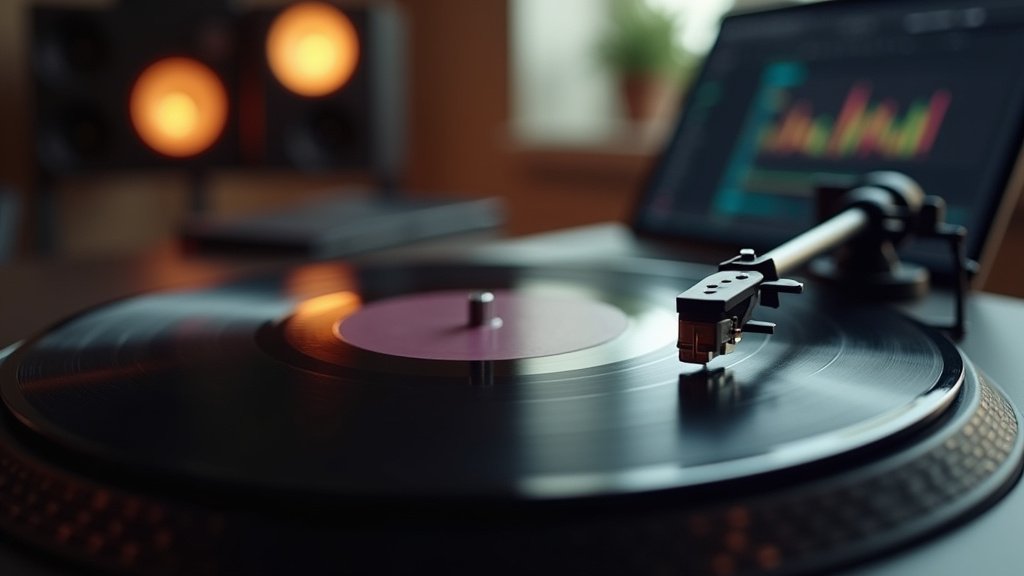
In a bold move that bridges the gap between the infinite, ephemeral world of generative AI and the tactile, enduring tradition of physical music collecting, the AI music platform Suno has announced the launch of ‘Suno Vinyl.’ This new service allows users to press their unique, AI-generated compositions directly onto 12-inch vinyl records. While digital platforms have long dominated the way we consume music, this initiative marks a distinct cultural pivot: the desire to own, touch, and display the artifacts of digital creation.
The Digital-Analog Paradox
The announcement of Suno Vinyl arrives at a pivotal moment in the music industry. As generative AI continues to democratize music production—allowing anyone with a prompt to conjure radio-ready tracks in seconds—the resulting audio often lacks a sense of ‘permanence.’ Digital files are fluid, easily duplicated, and subject to the vagaries of cloud storage. By offering a physical format, Suno is catering to a growing subset of users who want to imbue their AI-generated content with the gravitas traditionally reserved for studio albums.
The service, which is currently accepting sign-ups via a dedicated waitlist, functions as a bridge. A user spends minutes crafting a song, tweaking lyrics, and refining the AI’s musical style, and now, that same user can receive a high-fidelity 12-inch disc. This transforms a temporary digital experiment into a static, collectible object, effectively treating AI output with the same reverence as professional studio recordings.
Why Vinyl? The Psychology of Ownership
To understand the strategic importance of Suno Vinyl, one must look at the ‘Vinyl Revival.’ Over the past decade, vinyl sales have consistently outperformed digital downloads in revenue, driven by a consumer desire for physical ownership in an increasingly digitized world. By entering the vinyl space, Suno is not just selling a product; it is selling the feeling of ownership.
When a listener owns a record, they participate in a ritual: taking the disc from the sleeve, dropping the needle, and sitting through an entire side of music. This deliberate consumption pattern is at odds with the ‘skip-heavy’ nature of streaming services like Spotify or Apple Music. By applying this format to AI music, Suno is attempting to elevate the perception of AI-generated tracks from ‘throwaway content’ to ‘composed art.’
The Technical and Legal Landscape
While the novelty of the service is undeniable, it raises significant questions regarding the intersection of intellectual property and physical manufacturing.
1. Copyright and Provenance: Suno has faced intense scrutiny regarding the training data used for its models. Pressing this music onto vinyl—a format traditionally associated with high-value licensing and artist royalties—adds a layer of complexity to the existing copyright debates.
2. Quality Control: AI-generated audio is often compressed or mastered specifically for digital playback. Pressing these files to vinyl requires a ‘mastering’ process that ensures the audio doesn’t distort on the playback turntable. It remains to be seen how Suno handles the audio fidelity requirements of the physical format.
3. Market Segmentation: This service creates a new tier of ‘prosumer’ users. It appeals to creators who want to build a ‘physical’ portfolio of their work, moving beyond social media posts and into physical archives.
Secondary Angles: Exploring the Future
1. The ‘Artifact’ Economy
As the internet becomes saturated with AI-generated content, there is a likely future where ‘physical proof’ becomes a premium. We may see a rise in ‘AI Artifacts,’ where users purchase vinyl records, limited edition cassettes, or even physical NFTs that correspond to their digital creations. This creates a secondary market where the object becomes more valuable than the file itself.
2. The Impact on Independent Manufacturing
Suno’s entry into vinyl could have massive implications for vinyl pressing plants, which are already struggling to keep up with industry demand (a bottleneck often cited by major labels). If AI users start pressing their own records, it could increase pressure on production capacity, leading to longer wait times for human-made independent albums. Conversely, it could drive innovation in ‘on-demand’ manufacturing technologies.
3. The New ‘Garage Band’ Era
Just as the home recording studio defined the late 20th century, the ‘AI-to-Physical’ workflow defines the 2020s. We are likely approaching a phase where the ‘amateur’ creator no longer just makes digital tracks but produces physical merchandise, records, and album art, effectively running a boutique label from a bedroom without ever needing to step into a traditional recording booth.
FAQ: People Also Ask
Is Suno Vinyl available to everyone immediately?
No. Currently, the platform is accepting sign-ups for a waitlist. Access will likely be rolled out in phases to ensure the logistics of vinyl pressing—which is a slow, manufacturing-heavy process—can keep up with demand.
How is the audio quality for AI-generated vinyl?
While Suno has not disclosed the specific mastering process, professional vinyl cutting requires specific frequency handling to prevent skipping and distortion. The company is likely using custom processing to ensure the digital files transfer well to the analog grooves of a 12-inch record.
Does this change who owns the copyright to my song?
Suno’s terms of service generally dictate the ownership rights of the tracks created on their platform. Pressing your song onto vinyl does not change the fundamental copyright status of the track, but it does transform the song into a physical asset, which can be legally complex depending on your subscription tier and the platform’s user agreement.
Will this be expensive?
Vinyl pressing is inherently more costly than digital distribution. Given the custom, one-off nature of pressing a single record (as opposed to mass production), users should expect a price point reflective of ‘custom’ manufacturing, likely significantly higher than the cost of a mass-produced, off-the-shelf record.