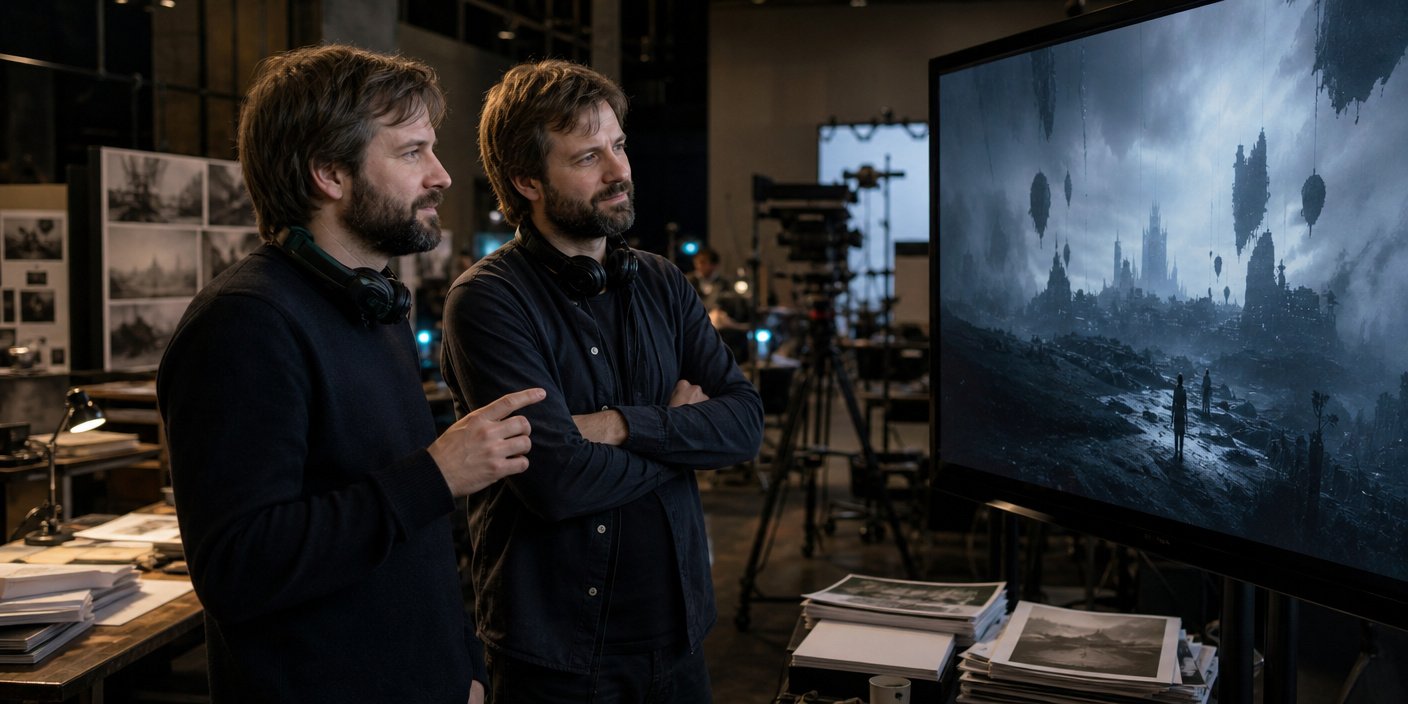

Immersive 3D technology is no longer confined to the silver screen; it’s rapidly transforming how entertainment news is created, consumed, and experienced. From interactive news reports to virtual studio tours and enhanced special effects, 3D is offering a new dimension of engagement for audiences.
Key Highlights:
- 3D technology enhances storytelling in entertainment news through immersive visuals.
- It enables interactive news formats, allowing viewers to explore content dynamically.
- Virtual and augmented reality integrations are becoming more prevalent.
- Future applications promise even deeper audience engagement and new revenue streams.
The Evolving Landscape of 3D in Entertainment Journalism
The integration of three-dimensional technology into entertainment news reporting marks a significant leap forward in digital storytelling. Beyond traditional text and video, 3D offers a tangible sense of depth and immersion, allowing audiences to feel more connected to the stories and personalities within the entertainment industry. This shift is driven by advancements in display technologies, virtual reality (VR), and augmented reality (AR), which are becoming increasingly accessible to both content creators and consumers.
Interactive Storytelling and Immersive Experiences
One of the most exciting aspects of 3D technology in entertainment news is its ability to create truly interactive experiences. Imagine a news report on a blockbuster film where viewers can virtually step onto the set, explore the movie’s environment in 3D, or even interact with 3D models of characters and props. Companies are leveraging 3D scanning and rendering to create these virtual environments, offering a level of detail and engagement previously unimaginable. This not only makes news more compelling but also provides a richer context for understanding the creative processes behind entertainment.
Enhancing Special Effects and Visuals
In the realm of entertainment news coverage, 3D technology also plays a crucial role in enhancing visual presentations. Whether it’s a segment on the latest CGI advancements in film or a behind-the-scenes look at a complex visual effects sequence, 3D graphics can bring these explanations to life. News outlets are utilizing sophisticated 3D rendering software to create infographics, visualizations of box office data, or even to reconstruct historical entertainment events in a lifelike manner. This visual fidelity elevates the credibility and impact of the reporting.
The Rise of VR and AR in News Delivery
Virtual Reality (VR) and Augmented Reality (AR) are key components of the 3D entertainment news revolution. VR headsets offer a fully immersive experience, transporting viewers directly into virtual newsrooms or event spaces. AR, on the other hand, overlays digital information and 3D models onto the real world through smartphone screens or AR glasses. This allows for dynamic content delivery, such as 3D character models appearing on a user’s coffee table or interactive infographics hovering in their living room. These technologies are pushing the boundaries of how news is consumed, making it more personalized and engaging.
Economic and Creative Implications
The adoption of 3D technology presents both economic opportunities and creative challenges for the entertainment news sector. The investment in 3D production tools and expertise can be significant, but the potential for increased audience engagement and new monetization models, such as premium immersive content, is substantial. Creatively, journalists and producers are exploring new narrative structures and visual languages to best leverage the capabilities of 3D, pushing the art of storytelling in the digital age.
FAQ: People Also Ask
How is 3D technology used in modern filmmaking?
3D technology in filmmaking is used to create a sense of depth and immersion, allowing audiences to perceive visuals as extending into the space in front of them. This is achieved through stereoscopic filming techniques and specialized post-production processes, enhancing the viewing experience for audiences in theaters equipped with 3D capabilities.
What are the benefits of AR in news reporting?
Augmented Reality (AR) in news reporting allows for the overlay of digital information, graphics, and 3D models onto the real world through devices like smartphones. This enhances understanding by providing contextually relevant data, interactive visualizations, and engaging visual elements directly within the viewer’s environment, making complex stories more accessible and compelling.
How does VR enhance the news consumption experience?
Virtual Reality (VR) enhances news consumption by providing fully immersive environments. Viewers can experience news stories from within a simulated space, offering a sense of presence and deeper emotional connection. This is particularly effective for covering events in remote locations or reconstructing historical scenarios, providing a unique perspective that flat media cannot replicate.
What is the difference between 3D, VR, and AR?
While all relate to immersive experiences, 3D primarily refers to the illusion of depth in visuals, often seen in movies. VR (Virtual Reality) completely replaces the user’s real-world environment with a simulated one, typically experienced through a headset. AR (Augmented Reality) overlays digital information and graphics onto the user’s view of the real world, enhancing it rather than replacing it.