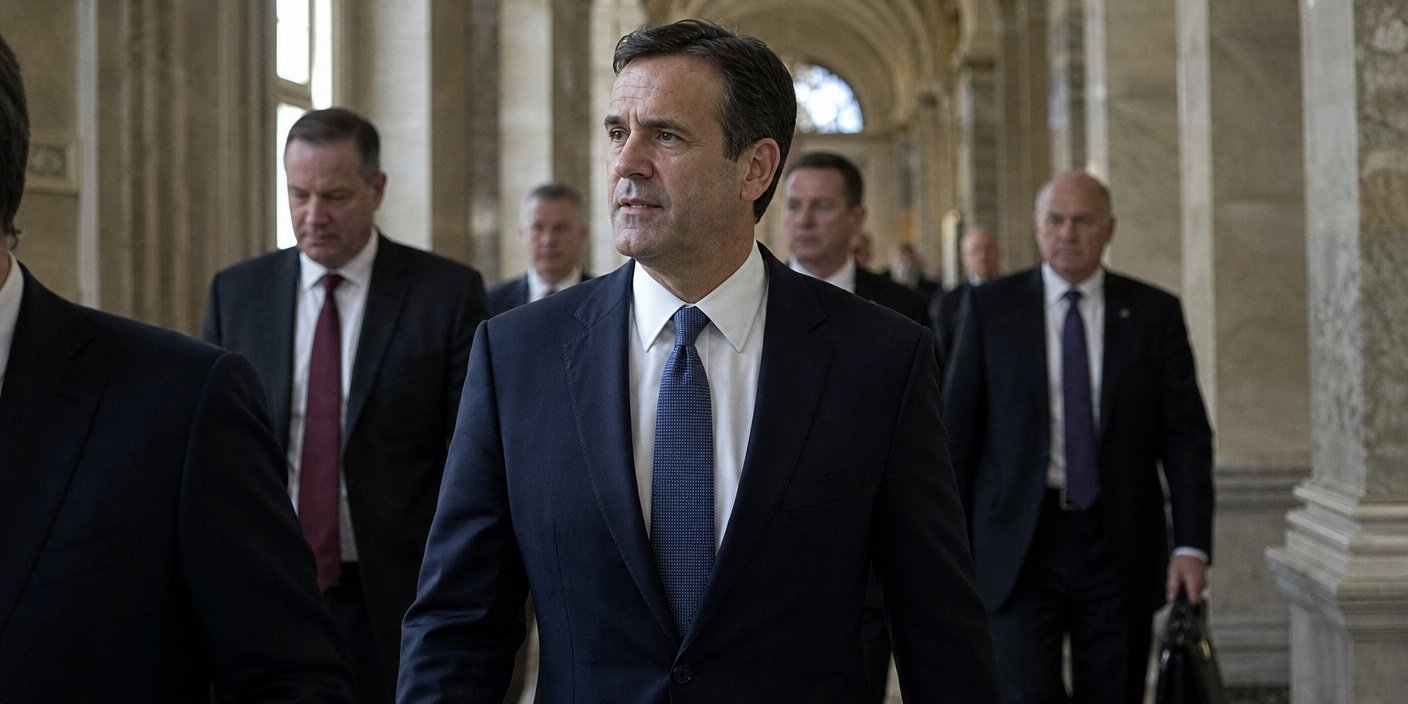
On August 25, 2026, CIA Director John Ratcliffe arrived in Moscow for a previously unannounced, high-stakes summit, marking the first known visit of a sitting U.S. intelligence chief to the Russian capital in recent history. This unprecedented journey, occurring amid a complex global security landscape, has signaled a significant, if opaque, attempt to reopen critical intelligence deconfliction channels between Washington and the Kremlin.
Key Highlights
- The Unannounced Arrival: Director John Ratcliffe touched down in Moscow on August 25, 2026, for a working visit that was only disclosed once security protocols allowed for public acknowledgement.
- Intelligence Deconfliction: The primary agenda, while largely classified, centers on re-establishing or stabilizing ‘hotline’ intelligence protocols between the CIA and their Russian counterparts.
- Strategic Silence: Both the White House and the Kremlin have remained notably guarded regarding the specific items on the itinerary, citing the sensitive nature of the discussions.
Navigating the New Intelligence Realpolitik
The surprise visit by CIA Director John Ratcliffe to Moscow represents a significant recalibration of high-level statecraft. In an era where digital warfare, regional instability, and cybersecurity threats have blurred the lines of traditional diplomacy, the decision to send the nation’s top intelligence officer directly to the source of existing tensions suggests that bureaucratic channels have hit a stalemate that only direct, high-level engagement could resolve.
The Mechanics of Back-Channel Diplomacy
Intelligence diplomacy, often referred to as ‘back-channel’ engagement, differs fundamentally from traditional state department negotiations. While diplomats engage in public-facing discourse, intelligence directors operate in the realm of raw, objective security requirements. For Director Ratcliffe, the trip was likely aimed at establishing a ‘floor’ for the current U.S.-Russia relationship—a minimum level of operational understanding that prevents accidental escalation in cyberspace or localized conflict zones.
Analysts have noted that the timing of this visit is critical. With geopolitical tensions fluctuating rapidly in Eastern Europe and the Middle East, the necessity for clear communication lines—deconfliction protocols—is paramount. If the CIA and its Russian counterparts, such as the SVR (Foreign Intelligence Service) or the FSB, are not in active communication, the risk of miscalculation increases exponentially. Ratcliffe’s presence in Moscow provides the necessary gravitas to enforce these communication standards, ensuring that neither side operates under false assumptions regarding the other’s red lines.
Historical Parallels and Contemporary Stakes
Historically, the Cold War was characterized by the ‘Red Phone’—the direct line between Moscow and Washington. Today, the technology has evolved, but the necessity remains unchanged. When direct communication fails, intelligence agencies often fill the void. This meeting evokes memories of clandestine exchanges during the latter half of the 20th century, though updated for the modern era of encrypted communication and automated cyber-defenses.
Experts suggest that the agenda likely covered three specific pillars: the stabilization of cyber-attack attribution standards, the management of proxy conflict zones, and the reaffirmation of nuclear command-and-control safety protocols. While the public may never learn the specifics of the agreements, the sheer fact that the visit occurred is the message itself: both nations recognize that total non-engagement is a risk that neither capital can afford to sustain in the current fiscal and political climate.
The Impact on Global Security Architecture
Looking forward, the ripple effects of this trip will be felt across the international security architecture. By engaging in this level of dialogue, the U.S. is not necessarily signaling a ‘reset’ or an improvement in diplomatic relations, but rather a commitment to ‘risk management.’ The market implications are equally significant; international security is the bedrock of economic stability. By reducing the ambient noise of global threats through direct intelligence discussions, the U.S. may be looking to provide a level of predictability to international markets that have been rattled by recent geopolitical volatility.
Furthermore, this meeting forces a shift in how allied nations view the U.S. engagement strategy. European and Asian partners will be watching closely to see if this direct intelligence line yields concrete reductions in hostile activities. If the Moscow summit leads to a tangible decrease in regional friction, it could provide a template for future intelligence-led diplomatic efforts in other areas of conflict, fundamentally altering the way the West manages adversarial states.
FAQ: People Also Ask
Q: Why was CIA Director Ratcliffe’s visit unannounced?
A: High-level intelligence visits are frequently unannounced until the official is safely in transit or on the ground. This security protocol prevents interference from hostile actors and maintains the operational integrity of the mission, allowing for candid, off-the-record discussions without public pressure.
Q: Does this visit signal an end to tensions between the U.S. and Russia?
A: Not necessarily. Intelligence deconfliction is a tool for preventing accidental escalation and managing crisis points, not a substitute for formal diplomatic resolution. It is a pragmatic step to maintain stability rather than a sign of a political thaw.
Q: What is ‘deconfliction’ in this context?
A: Deconfliction refers to the protocols and communication channels established between militaries or intelligence agencies to ensure they do not accidentally interfere with each other’s operations, which could lead to unintended conflict or escalation.
Q: How do other world leaders view this meeting?
A: Global reactions are mixed. While some view it as a necessary measure for world security, others in the international community are likely seeking clarification on how these private discussions might impact their own national security interests and regional alliances.