
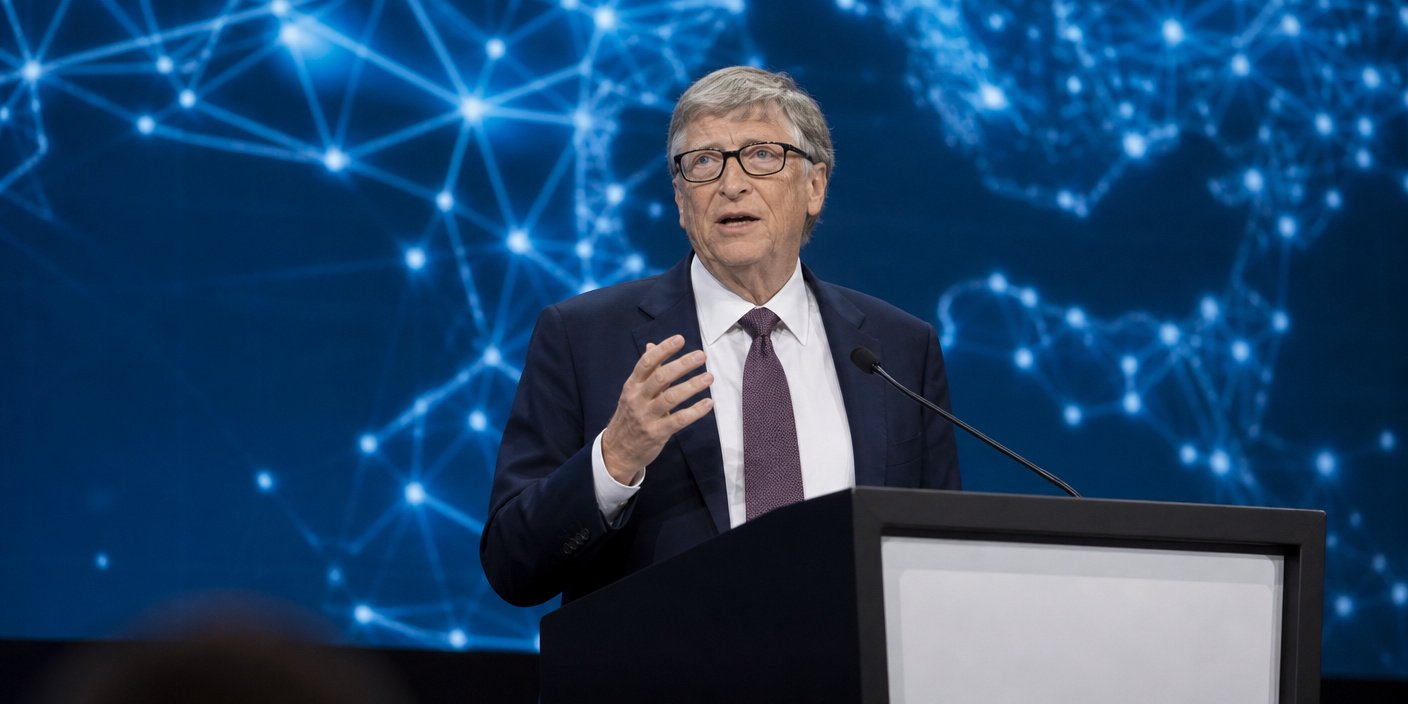
Artificial intelligence stands at a historic inflection point, a technology as transformative as the microprocessor, the personal computer, the internet, and the mobile phone. In his latest analysis, Bill Gates argues that the choices we make about AI today are not merely technical decisions but ethical imperatives that will define the trajectory of global equity for decades to come. As the technology accelerates, the divide between those who can harness it and those who remain excluded threatens to widen, turning a tool of immense potential into a source of systemic injustice.
The Moral Imperative of AI Development
The central thesis of the current discourse on AI is that technological development cannot be decoupled from social responsibility. For Gates, the primary mission is clear: ensuring AI serves as a tool for the many, rather than a luxury for the few. This requires deliberate, proactive intervention by governments, private corporations, and global institutions. If left entirely to market forces without a moral compass, the risk is that AI will disproportionately benefit the wealthiest nations and corporations, leaving developing countries to deal with the disruptions without sharing in the productivity gains. The challenge is to direct this innovation toward the most pressing global problems—specifically in health, education, and climate resilience.
Bridging the Global Health Divide
One of the most promising applications of AI lies in global health, where it could serve as a powerful equalizer. In regions where access to doctors and diagnostic tools is severely limited, AI-powered diagnostic assistants could be revolutionary. These systems, capable of identifying disease patterns in X-rays or analyzing blood samples for conditions like malaria, tuberculosis, and HIV, can operate with the accuracy of seasoned specialists. By embedding these tools into mobile devices, the barrier to high-quality healthcare could be drastically lowered for billions of people. This isn’t theoretical; the Bill & Melinda Gates Foundation is actively investing in AI models that can help health workers in low-income settings provide the same level of care found in the world’s best-funded hospitals.
Transforming Education Through Personalization
Beyond healthcare, the democratization of quality education represents the second pillar of Gates’ AI vision. The ‘one size fits all’ model of traditional schooling has long failed to address individual learning needs. AI has the potential to act as a hyper-personalized tutor, adapting to a student’s pace, identifying specific areas of difficulty, and adjusting pedagogical methods in real-time. By leveraging Large Language Models (LLMs), educational content can be translated and culturally adapted to languages and contexts that have historically been underserved by mainstream software. This shift is critical to ensuring that AI closes the education gap rather than creating a new ‘intelligence divide’ where only the affluent have access to customized, high-tier educational support.
The Regulatory Tightrope and Labor Impacts
While the upside is massive, the risks are equally profound. The potential for AI-driven misinformation and the disruption of labor markets are immediate concerns. Gates notes that the transition to an AI-augmented economy will likely cause significant displacement in certain sectors. However, history suggests that technological revolutions, while painful in the short term, ultimately create new categories of jobs and economic value. The critical choice lies in how society manages this transition. Policy frameworks must prioritize worker retraining and safety nets, ensuring that the productivity gains from AI are not concentrated at the top, but are used to support the social infrastructure that allows the workforce to adapt.
Future Predictions: The Agent-Based Era
The next evolution of AI, according to current projections, is the shift from simple chatbots to ‘agents.’ These are AI systems that don’t just respond to commands but proactively work to complete tasks on behalf of the user—scheduling, purchasing, researching, and even negotiating. This shift will fundamentally change how we interact with technology. Instead of learning to use dozens of different apps, users will simply talk to an agent that integrates these functions. This evolution will be the ultimate test of equity: if these agents are accessible to everyone, they will be the most significant productivity multiplier in human history. If they are restricted or gated by high costs, they will solidify a new class of digital ‘haves’ and ‘have-nots.’
The Historical Context: Learning from the Internet
To understand the gravity of our current moment, one must look at the dawn of the internet. Initially, access was concentrated in wealthy, developed nations. It took nearly three decades for the benefits of global connectivity to reach the majority of the world’s population. With AI, we do not have the luxury of waiting thirty years. The speed at which AI is integrating into the foundational layers of banking, healthcare, and governance is unprecedented. This acceleration demands that we treat the deployment of AI not as a business strategy, but as a global public good requiring international cooperation, similar to how we manage public health initiatives or environmental treaties.
Economic Impact: Productivity vs. Displacement
The economic implications of AI are twofold. On one hand, AI will likely boost the global GDP by optimizing logistics, reducing waste, and accelerating scientific discovery. On the other hand, the labor market faces a period of volatility. The concern is that the ‘middle’ of the labor market—administrative, data-entry, and certain clerical roles—is most vulnerable. However, the most positive scenario is that AI eliminates the ‘drudge work,’ allowing humans to focus on higher-order creative and empathetic tasks. The goal for policymakers must be to incentivize the deployment of AI in sectors that have historically suffered from low productivity growth, such as government services, rather than solely in entertainment or retail advertising.
The Path Forward
Ultimately, the ‘choices we make’ refer to a set of concrete actions: increased investment in public AI research that focuses on humanitarian goals, international standards for AI safety and bias mitigation, and an unwavering commitment to digital infrastructure in the Global South. If we successfully navigate these ethical and regulatory hurdles, AI will not just be a technological marvel; it will be the most potent engine for global equity we have ever created. The window to shape this future is narrow, but the potential rewards for humanity are limitless.