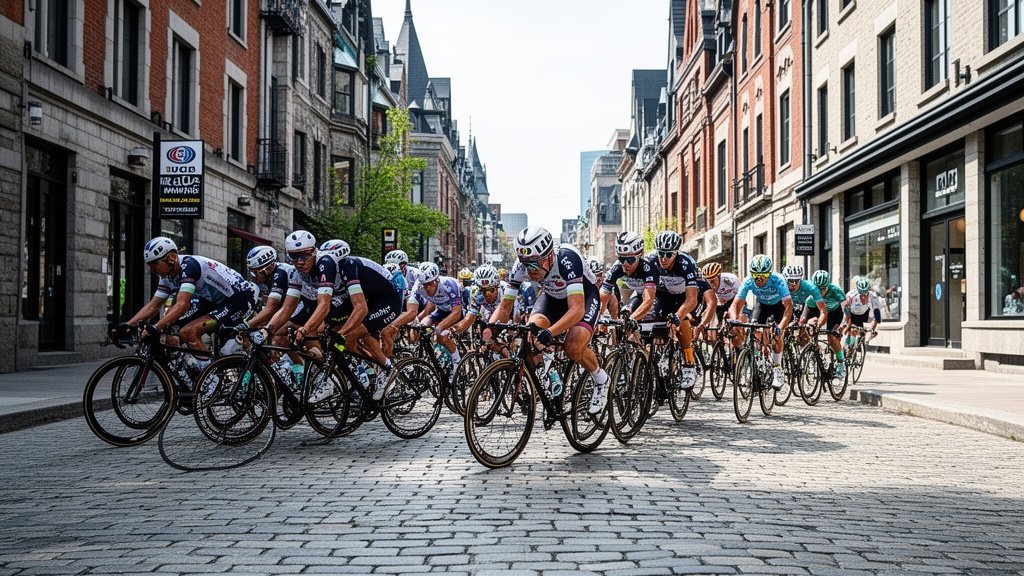
The UCI Road World Championships have officially arrived in Montreal, Quebec, transforming the city into a global epicenter for professional cycling. For the first time since the 2003 championships held in Hamilton, Canada is serving as the host nation for this prestigious week-long event, bringing the world’s top talent to North American soil. The atmosphere is electric as teams prepare to navigate a technical course that winds through the city’s most iconic historic districts, blending the grueling demands of elite road racing with the unique urban topography of Montreal.
A Historic Return for Canadian Cycling
The anticipation surrounding this year’s UCI Road World Championships is palpable. For cycling enthusiasts and local spectators alike, this event represents a significant milestone. Not since 2003 has Canada played host to the world’s premier cycling competition, a hiatus that has only served to heighten the excitement for this week’s festivities. The UCI (Union Cycliste Internationale) has selected a route that challenges riders while showcasing the architectural and cultural heritage of Montreal, providing a backdrop that is as visually stunning as it is physically demanding.
Mapping the Montreal Circuit
The course design is a masterclass in urban cycling integration. Unlike the flat, wind-swept plains often found in European circuit racing, the Montreal route utilizes the city’s natural elevation shifts and sharp, technical corners. Riders will face a labyrinth of narrow streets in the historic districts, where speed management is paramount. The inclusion of these winding, cobblestone-adjacent routes forces athletes to rely on superior handling skills and tactical positioning rather than just pure aerobic capacity. Local organizers have worked extensively with the UCI to ensure that the infrastructure not only accommodates the peloton but also provides optimal viewing points for spectators, effectively turning the city into a dynamic, open-air stadium.
The Tactical Landscape: Elevating the Game
Elite cycling at this level is a game of marginal gains. The Montreal course presents unique challenges that differentiate it from previous years. With multiple elevation changes packed into the city center, the profile of the race favors ‘puncheurs’—riders who excel on short, steep climbs and can navigate technical descents. Teams have been scouting the circuit for months, analyzing every turn and gradient change. The psychological pressure of this technical terrain cannot be overstated; a single hesitation in the heart of the historic district could cost a rider the jersey. The peloton’s ability to navigate the traffic circles and narrow passages of Montreal will ultimately be the deciding factor in who stands on the podium at the end of the week.
Beyond the Race: Economic and Cultural Impact
While the sporting spectacle is the primary focus, the impact of the UCI Road World Championships extends far beyond the finish line. The influx of international teams, media, and supporters provides a substantial boost to the local economy. Hospitality, tourism, and infrastructure projects have seen increased activity in the lead-up to the event. Furthermore, the championship serves as a powerful catalyst for cycling culture within Canada. By hosting an event of this magnitude, Montreal is positioning itself as a premier destination for international sports, likely influencing future investment in cycling infrastructure and city planning. The economic ripple effects, from hotel occupancy rates to the surge in local patronage at restaurants and businesses near the course, underscore the event’s status as a major cultural and commercial asset.
The Evolution of Modern Peloton Dynamics
As the sport of road cycling evolves, so too do the strategies employed by professional teams. We are witnessing a shift toward more data-driven racing, where real-time analytics influence everything from gear selection to hydration and energy output. In Montreal, teams are utilizing the latest technology to monitor power output and heart rate variability, ensuring that every rider is performing at their physiological limit. However, even with the most advanced technology, the human element remains unpredictable. The ‘race of truth’ that these championships represent tests the mental fortitude of athletes, forcing them to balance team directives with the instinctive, split-second decisions required to win a World Championship title. This tension between human intuition and data-driven strategy will define the narrative of the week.
FAQ: People Also Ask
What makes the Montreal course unique compared to European circuits?
Unlike many traditional European courses that prioritize long, rolling hills or mountainous terrain, the Montreal course is defined by its tight, technical, and urban nature. The focus is on handling skills, acceleration out of corners, and navigating a complex city environment, which creates a more ‘explosive’ style of racing.
How does this event compare to the 2003 Hamilton Championships?
While the 2003 Hamilton event was a pivotal moment for Canadian cycling, this Montreal edition is being touted as a more integrated urban experience. Technological advancements in both the bikes and the broadcast technology, combined with a focus on showcasing Montreal’s specific historic landscape, mark a technological and cultural evolution from the 2003 iteration.
Where can spectators view the race most effectively?
The race organizers have designated several ‘fan zones’ in the historic districts. These areas offer the best vantage points for the most technical corners and the steepest climbs, providing the highest probability of witnessing critical tactical moves.
What impact does the UCI Road World Championships have on Montreal’s infrastructure?
The event has necessitated significant temporary traffic modifications and the upgrading of road surfaces in key sectors. These improvements are intended to leave a lasting legacy for the city’s cycling infrastructure, encouraging safer and more efficient urban commuting post-event.