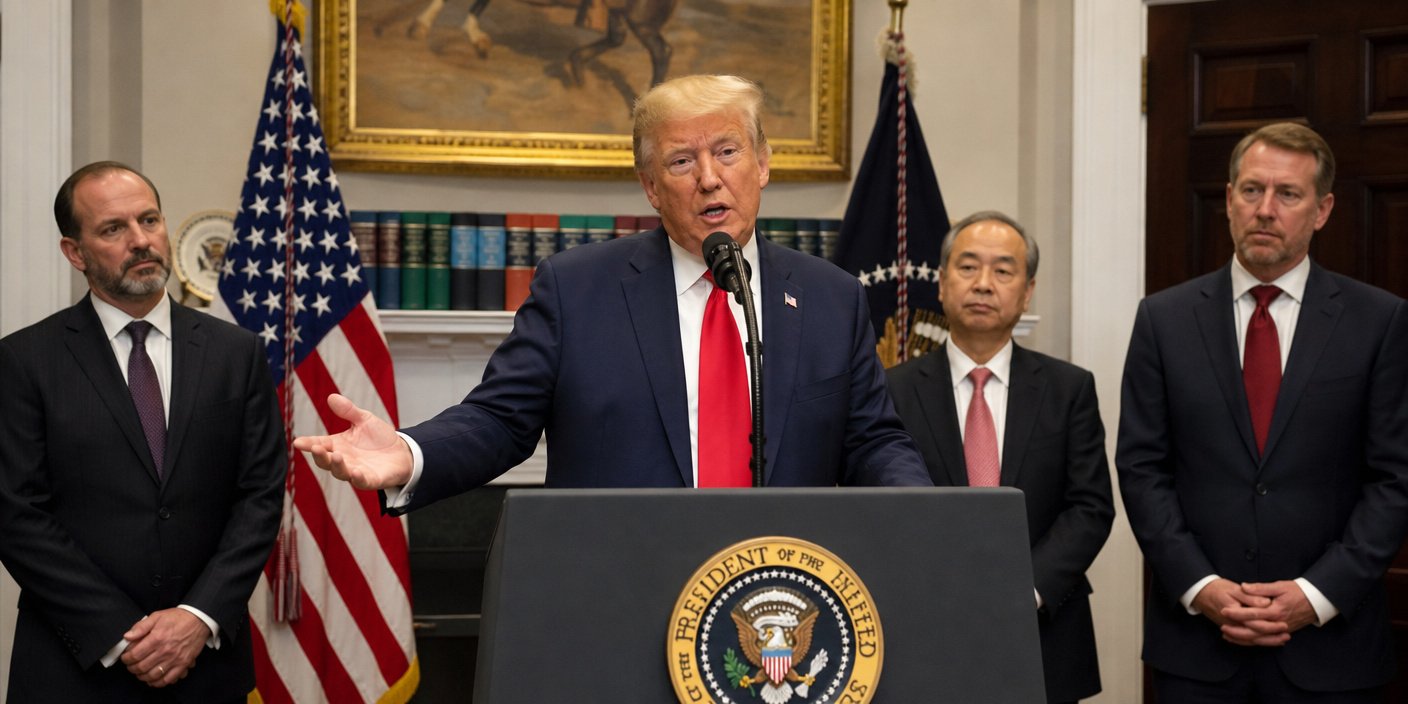
President Donald Trump has officially confirmed that all 50 states have signed on to the administration’s new Medicaid ‘GENEROUS’ model, a sweeping national initiative aimed at curbing the escalating cost of prescription medications. By aligning domestic Medicaid drug pricing with benchmarks found in other developed international economies, the White House claims this move will fundamentally alter the fiscal landscape of healthcare in the United States. While the administration projects significant savings for state budgets and federal expenditures alike, health policy experts are expressing cautious skepticism, citing the lack of public disclosure regarding specific agreements reached with pharmaceutical manufacturers. This historic consolidation marks one of the most aggressive federal interventions in the pharmaceutical market to date.
Key Highlights
- Nationwide Consensus: All 50 states have formally agreed to participate in the GENEROUS model, ensuring a unified national approach to Medicaid pharmaceutical procurement.
- International Benchmarking: The core mechanism of the program involves recalibrating Medicaid drug costs to match price points observed in developed international markets, a move intended to correct pricing disparities.
- Fiscal Uncertainty: Despite the administration’s optimistic projections for long-term taxpayer savings, non-public details regarding negotiations with pharmaceutical firms have raised questions about the policy’s actual fiscal impact.
- Market Accountability: The model represents a structural attempt to exert federal leverage over medication pricing, shifting the dynamics between federal regulators and drug manufacturers.
The GENEROUS Initiative: A New Era for Medicaid Costs
The implementation of the GENEROUS model represents a significant pivot in how the federal government interacts with the healthcare supply chain. By securing the participation of every state, the administration has effectively eliminated a fragmented procurement process, creating a singular block of bargaining power that aims to drive down the net costs of essential medications. The initiative is predicated on the idea that the current United States pricing model is an outlier compared to peer nations, and that by instituting a reference pricing system based on international standards, the Medicaid program can achieve substantial efficiency gains.
Unpacking the Framework and Objectives
At its core, the GENEROUS model is designed to harmonize the cost of prescription drugs dispensed through Medicaid with the average costs of identical drugs in other developed countries. This strategy, often referred to as International Reference Pricing (IRP), has been debated in policy circles for decades but never implemented at this scale. The primary objective is to eliminate the ‘pricing premium’ that U.S. healthcare providers and state Medicaid programs have historically paid compared to foreign entities.
For state administrators, the promise of this program is fiscal relief. With Medicaid budgets accounting for a massive share of state spending, even marginal reductions in drug costs could translate into billions of dollars in redirected funds for other essential state services. The uniform, 50-state adoption is a critical component of this strategy, preventing pharmaceutical companies from navigating around state-specific policies.
The Mechanics of International Alignment
Under the GENEROUS model, the Department of Health and Human Services (HHS) will work in coordination with the Centers for Medicare & Medicaid Services (CMS) to establish a pricing index. This index will be populated by analyzing the net prices of specific drug classes in nations with similar regulatory and safety infrastructures.
This isn’t merely a theoretical exercise; it is an enforcement mechanism. If a pharmaceutical firm wishes to participate in the Medicaid market—which serves millions of low-income Americans—they must align their pricing structures with the newly established international benchmarks. The administration argues that this creates a necessary ‘check’ on a market that has historically seen drug prices rise significantly above the rate of inflation.
Expert Concerns and Market Ambiguity
Despite the enthusiasm from the White House, the policy is not without its detractors. Health policy experts, economists, and market analysts have pointed to a ‘black box’ element: the specific agreements made between the administration and pharmaceutical manufacturers.
Crucially, the details of how these firms agreed to comply—and what, if any, concessions or secondary deals were made—remain largely non-public. This lack of transparency is the primary source of skepticism. Critics argue that without understanding the full scope of these agreements, it is impossible to determine if the projected savings are genuine or if they are being offset by other industry-friendly policies elsewhere in the deal. The uncertainty regarding these ‘side deals’ creates a risk that the long-term fiscal impact could be more complex than the administration suggests.
State-Level Operational Shifts
For state governments, the GENEROUS model necessitates an immediate operational overhaul. Medicaid is a joint federal-state program, and while the federal government sets the policy, states are responsible for the administration of benefits. The shift requires states to synchronize their payment systems, update their billing codes, and navigate new reporting requirements to the federal government.
This transition period is likely to be fraught with administrative challenges. State health departments will need to coordinate closely with federal partners to ensure that patient access to medication is not disrupted during the transition. The success of the GENEROUS model will hinge not just on the pricing policy itself, but on the ability of 50 distinct state systems to execute these complex changes without reducing the availability of life-saving therapies.
The Pharmaceutical Industry Reaction
The pharmaceutical industry, which has historically resisted attempts at price controls, faces a new reality under this model. While they have come to the table, the long-term viability of their revenue models is in flux. Industry representatives have previously expressed concerns that such stringent pricing mandates could stifle research and development. However, the political reality of a 50-state mandate leaves little room for maneuver. The industry’s ongoing engagement with the administration suggests a strategic focus on mitigating the impact of these rules rather than fighting the implementation entirely.
FAQ: People Also Ask
Q: What does ‘GENEROUS’ stand for in the context of the Medicaid model?
A: The ‘GENEROUS’ model, as announced by the administration, is the proprietary name for this specific initiative. While it functions as a policy acronym, the core focus is its objective: Government-Enabled Net Effective Recovery Of Unit Sales, aimed at lowering costs.
Q: How will this affect the availability of drugs for Medicaid patients?
A: The administration maintains that the GENEROUS model is designed to reduce costs without compromising patient access. However, some healthcare analysts caution that the transition period could cause temporary administrative friction in local Medicaid offices.
Q: Are the pharmaceutical agreements truly secret?
A: While the broad strokes of the GENEROUS model are public, specific contractual negotiations and private agreements between the pharmaceutical industry and federal agencies remain shielded from public disclosure, which is the primary driver of current policy skepticism.
Q: Does this policy affect Medicare or private insurance?
A: The GENEROUS model is specifically designed for the Medicaid program. While the administration may look to expand similar pricing logic to other sectors in the future, it currently applies only to state-managed Medicaid expenditures.