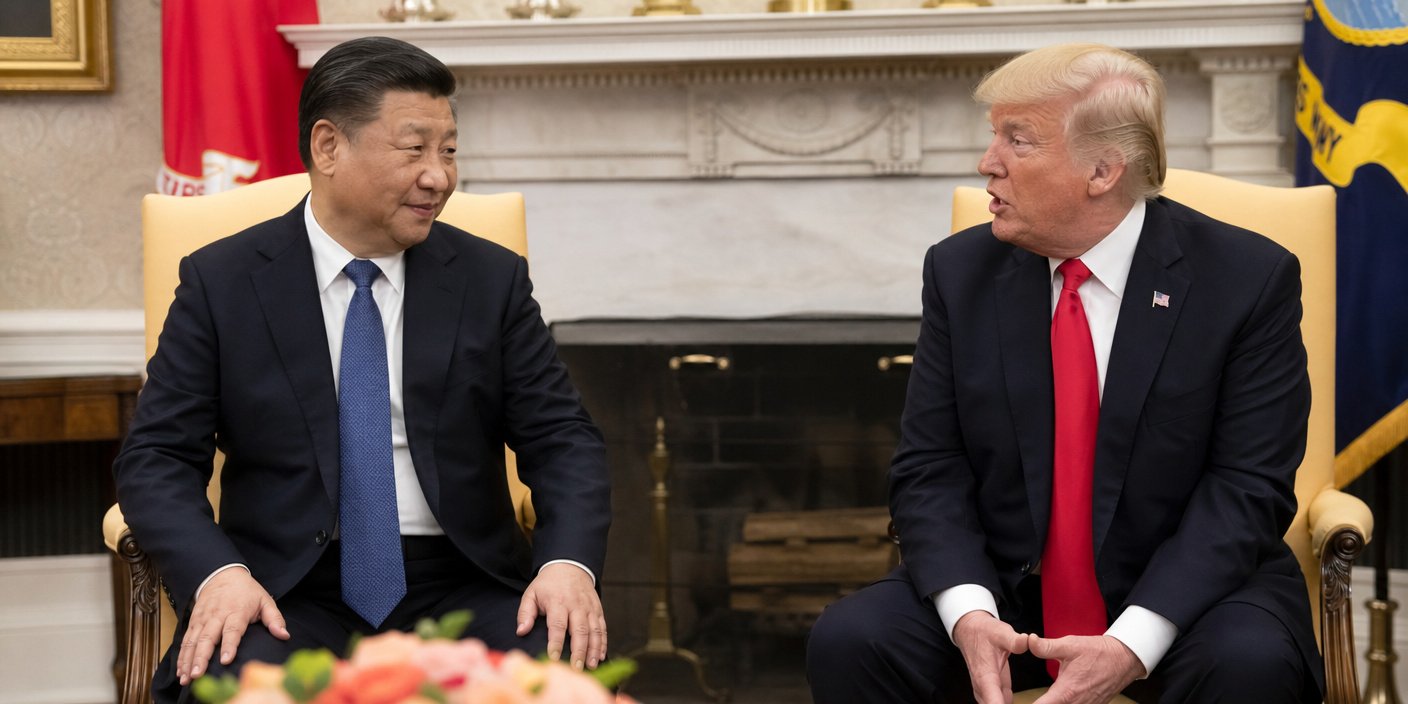
The diplomatic landscape is set for a historic shift as China formally announced that President Xi Jinping will travel to the United States for a state visit, accepting the invitation extended by President Donald J. Trump. This upcoming engagement represents one of the most significant geopolitical developments in recent years, signaling an intensified focus on managing the complex bilateral relationship between the world’s two largest economies. As international observers look on, the summit promises to address the intricate web of trade, technology, and global security challenges that define the current era of international relations.
Key Highlights
- Formal Invitation: President Xi Jinping has confirmed his upcoming state visit to the United States at the direct invitation of President Donald J. Trump.
- Diplomatic Objectives: The engagement is centered on enhancing bilateral relations and addressing pressing issues concerning global stability.
- Strategic Timing: The visit comes at a time of shifting economic policies, technological competition, and evolving security alliances across the globe.
- Commitment to Dialogue: Both administrations have signaled a shift toward direct, high-level diplomatic communication to prevent misunderstandings and foster predictable outcomes.
Charting the Course for U.S.-China Relations
The announcement of this state visit is not merely a ceremonial event; it is a strategic maneuver designed to reset the tone of the U.S.-China relationship. Historically, a state visit is the highest form of diplomatic engagement, reserved for the closest of allies or for managing the most critical of partnerships. By hosting President Xi, the United States is acknowledging the necessity of direct, face-to-face negotiation to address the tectonic shifts in global power dynamics.
The Economic Imperative
At the forefront of the agenda, economic interdependence remains the primary driver of this interaction. The global economy is still navigating the aftershocks of supply chain realignments, inflationary pressures, and shifting trade tariffs. Business leaders and financial markets alike are watching this summit closely, hoping for clarity on trade frameworks, market access, and intellectual property protections. The dialogue is expected to move beyond rhetoric, touching upon the specifics of trade deficits and the integration of technology sectors. For both nations, the cost of decoupling is high, and the challenge lies in creating a ‘managed competition’ model that preserves economic growth while safeguarding national interests.
Technological Competition and Cybersecurity
In the modern geopolitical theater, technology is the new frontier. Discussions during this visit will inevitably touch upon artificial intelligence, semiconductors, and cybersecurity—sectors that have become the primary battlegrounds for supremacy. The U.S. administration has consistently highlighted the need for security protocols in the digital age, while China remains committed to its rapid technological advancement. Finding a middle ground on global standards for emerging technologies will be one of the most difficult, yet essential, aspects of the summit. If the two nations can establish even a foundational agreement on the ethical and safe use of advanced technologies, it could serve as a model for the rest of the world.
Ensuring Global Stability and Security
Beyond trade and technology, the summit carries immense weight in the realm of global security. Regional conflicts, territorial disputes, and the stability of maritime supply lines are critical issues that require constant diplomatic maintenance. By bringing the two leaders together, the international community hopes for a de-escalation of rhetoric and the establishment of ‘guardrails’—mechanisms designed to ensure that competition between the two powers does not devolve into conflict. This is not just a matter of U.S. and Chinese national security; it is a fundamental requirement for the stability of the global financial system and international peace.
Historical Context and Protocol
State visits have served as the bedrock of international diplomacy for centuries, providing a stage for leaders to exert influence and cement agreements. This specific visit follows a tradition of high-stakes summits that have defined the 21st century. The protocol surrounding the visit—from the arrival ceremony to the state dinner—serves as a barometer for the state of the relationship. A successful visit typically yields tangible outcomes, such as joint statements on climate change, health cooperation, or crisis management protocols. However, the true success of this trip will be measured by the follow-through and the ability of both administrations to maintain open channels of communication long after the cameras have stopped flashing.
FAQ: People Also Ask
Q: What is the primary purpose of President Xi Jinping’s visit?
A: The primary purpose is to hold high-level discussions with President Donald J. Trump regarding bilateral relations, trade, technological competition, and global stability.
Q: Why is this considered a ‘State Visit’ rather than a standard meeting?
A: A state visit is a formal, top-tier diplomatic engagement, usually involving ceremonial honors. It signals a higher level of importance and commitment to the relationship than a standard working meeting or summit.
Q: How will this affect the global economy?
A: Markets are looking for signals regarding trade policies, tariffs, and technological cooperation. Increased clarity and improved relations could stabilize global supply chains, while continued tension could lead to market volatility.
Q: What are the biggest hurdles to a successful outcome?
A: The primary hurdles include deeply rooted differences in political ideologies, competing interests in technology and cybersecurity, and differing approaches to international regional security.