
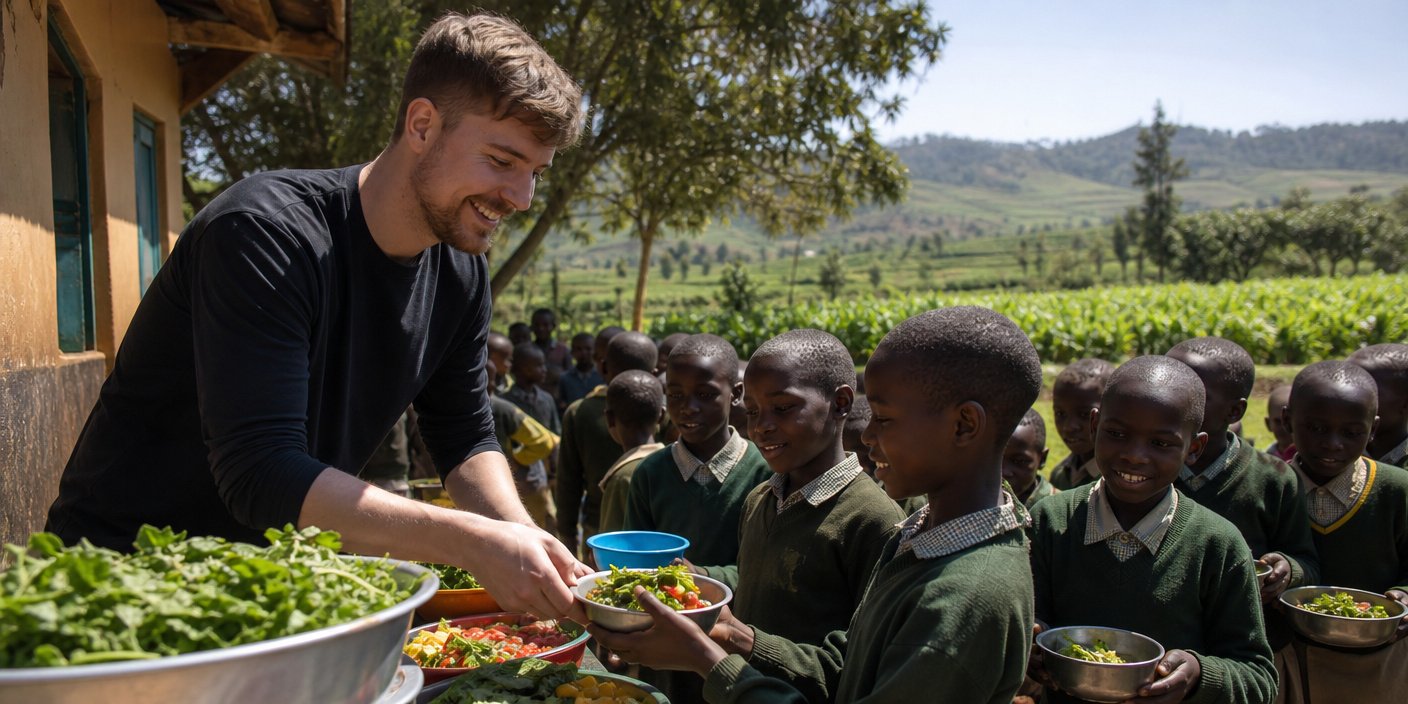
In a strategic convergence of high-scale digital influence and institutional philanthropic expertise, Beast Philanthropy—the charitable arm founded by Jimmy Donaldson (MrBeast)—and The Rockefeller Foundation have announced a significant partnership to scale Regenerative School Meals (RSM) across Ghana and Kenya. This initiative represents a pivot from traditional aid delivery models toward sustainable, systemic food infrastructure, aiming to provide high-quality, nutritious meals to students while bolstering local agricultural markets. By leveraging the specific regional supply chains in these East and West African nations, the program intends to create a blueprint for food sovereignty and educational support that can be replicated in other developing regions.
Key Highlights
- Strategic Partnership: A formal collaboration between Beast Philanthropy and The Rockefeller Foundation designed to implement and scale Regenerative School Meals (RSM) programs.
- Geographic Focus: Initial implementation targets specific school systems in Ghana and Kenya, selected for their potential impact on local nutritional outcomes.
- The RSM Model: The program prioritizes locally sourced, regeneratively grown food, which simultaneously reduces carbon footprints and stimulates smallholder farming economies.
- Systemic Objectives: The dual goal is to enhance student attendance and academic performance through consistent nutrition while fostering long-term resilience in local food supply chains.
The Intersection of Digital Influence and Food Systems Reform
The partnership between a top-tier digital content powerhouse like Beast Philanthropy and a long-standing institution like The Rockefeller Foundation marks a new era in global development. For years, Beast Philanthropy has operated on a high-velocity, high-impact model, often focusing on immediate-need food distribution. By aligning with The Rockefeller Foundation’s extensive experience in ‘Food Initiative’ strategies, the collaboration is moving beyond simple distribution toward systemic infrastructure. This shift is critical: rather than importing supplies, the RSM model seeks to ‘grow the solution.’
The Regenerative Agriculture Model (RSM)
The core of the project is the implementation of Regenerative School Meals. Unlike standard programs that rely on international food aid or processed commodities, the RSM model integrates directly with nearby farmers. Regenerative agriculture practices—which include crop rotation, minimal soil disturbance, and natural fertilization—are used to produce nutrient-dense food.
By sourcing produce within a short radius of the schools, the initiative significantly reduces ‘food miles’ and greenhouse gas emissions. Furthermore, because the schools guarantee a consistent market for these local farmers, the agricultural community gains economic stability. This creates a virtuous cycle: improved nutrition leads to better school attendance and cognitive outcomes for students, while the demand for produce enables farmers to invest in better equipment and sustainable farming practices.
Operational Dynamics in Ghana and Kenya
Ghana and Kenya were selected due to their unique combination of agricultural potential and existing challenges in school nutrition. In both nations, despite strong educational enrollment, rural school districts often struggle with consistent access to fresh produce. The Rockefeller Foundation has provided the technical roadmap for food systems transformation, while Beast Philanthropy is providing the operational muscle and the logistical capability to scale these efforts rapidly.
In Kenya, the focus is on integrating the RSM model into existing community-led school feeding programs, utilizing the country’s diverse agricultural zones to provide a varied diet. In Ghana, the initiative emphasizes the revitalization of local supply chains that have historically been disrupted by global market volatility. By stabilizing these supply chains, the initiative acts as an economic buffer for rural villages, ensuring that children are fed regardless of broader geopolitical or economic shocks.
Measuring Success and Future Scalability
The metrics for success for this partnership go beyond simple headcount. The team is tracking student body mass index (BMI) improvements, attendance rates, and graduation percentages, alongside agricultural data such as farmer income growth and soil quality metrics.
This data-driven approach is a hallmark of the Rockefeller Foundation’s strategy, which Beast Philanthropy is now applying to its global operations. If the pilot programs in Ghana and Kenya demonstrate success—specifically, a measurable increase in academic performance tied to dietary health—the scalability of this model is immense. The ambition is to provide a template that African nations can adopt to move away from aid-dependency and toward a model of localized, sustainable food independence.
Secondary Angles: Why This Matters
1. Economic Stabilization: By creating a ‘guaranteed buyer’ in local schools, the program creates a floor price for local farmers, preventing the extreme income volatility that often plagues smallholder farming in sub-Saharan Africa.
2. Educational Outcomes: Research consistently shows that nutritional quality is a direct driver of cognitive development. By providing fresh, high-quality calories rather than bulk staples, the initiative aims to boost national literacy and numeracy rates in the targeted regions.
3. Climate Resilience: Regenerative agriculture is inherently better at retaining water and resisting drought. In regions like Kenya, where climate change increasingly threatens traditional farming, this model serves as a vital adaptation strategy to ensure food security during extreme weather events.
FAQ: People Also Ask
Q: How does this partnership differ from traditional food aid?
A: Traditional aid typically involves the importation of goods, which can undercut local farmers and create dependency. The RSM model focuses on local sourcing, ensuring that money stays within the community and farmers are supported to produce food for their own regions.
Q: Why were Ghana and Kenya chosen for this initiative?
A: These countries offer strong potential for agricultural development and have existing school systems where a shift in nutrition could yield significant, measurable improvements in student health and attendance.
Q: What is the specific role of the Rockefeller Foundation?
A: The Rockefeller Foundation brings deep technical expertise in food systems, agricultural policy, and impact evaluation, providing the framework to ensure the program is both scalable and sustainable.
Q: Does MrBeast actually run the operations?
A: Beast Philanthropy manages the logistics and implementation on the ground, utilizing the brand’s operational reach to ensure the program moves quickly and efficiently, while the Rockefeller Foundation provides the strategic guidance and research foundation.