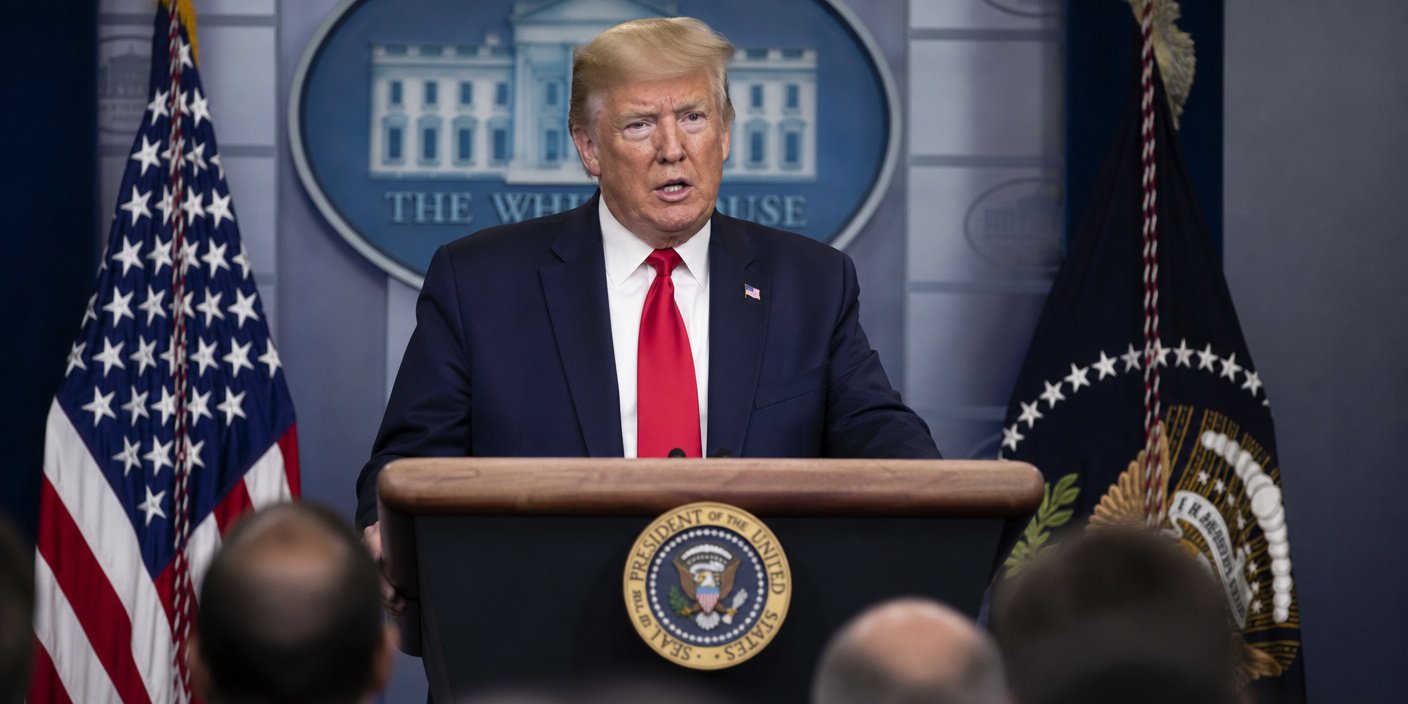
Former President Donald Trump has recently reignited public debate by expressing frustration over what he describes as a lack of appreciation from the American public for his decision to decline his annual presidential salary. Throughout his first term in office, Trump frequently touted his commitment to donating his $400,000 annual paycheck to various federal agencies, an act he frequently contrasts with his claims of having generated significant wealth through his private business career. This rhetoric, which often circles back to his assertion of having made over $2 billion, highlights a persistent tension in his political messaging: the narrative of the billionaire outsider sacrificing for the public good versus the reality of his vast, often scrutinized, corporate portfolio.
The Anatomy of the Salary Donation
To understand the gravity of the former President’s recent commentary, one must first revisit the logistical execution of his salary donations. Upon taking office in January 2017, Donald Trump pledged to forgo his $400,000 annual salary, a move permitted under the U.S. Constitution, which requires the President to receive compensation but does not force them to keep it. Over the course of his four-year term, Trump systematically distributed these funds across multiple federal departments, including the Department of the Interior, the Department of Education, and the National Park Service.
Transparency reports from the time confirmed these donations were processed, with various Cabinet officials frequently appearing at press briefings to accept ceremonial checks on behalf of their respective agencies. The total sum donated reached approximately $1.6 million by the end of his term. For many supporters, this act served as tangible proof of his commitment to “draining the swamp” and prioritizing national interests over personal gain. However, critics often pointed out that the $400,000 salary, while significant to the average American, was statistically negligible when compared to the vast revenue streams of the Trump Organization, suggesting the gesture was more symbolic than financially impactful.
Analyzing the $2 Billion Claim
Central to the current discourse is Trump’s claim of having “made over $2 billion.” This figure is often cited by the former President to characterize his business acumen and to distinguish his financial background from traditional career politicians. When dissecting this claim, financial analysts—including those from outlets such as Forbes—often note the complexity of valuing the Trump Organization. Unlike a publicly traded company that must provide standardized financial disclosures, the Trump Organization is a private entity, making exact net worth and income calculations notoriously difficult.
Trump’s assertion of “making” $2 billion likely refers to gross revenue figures or specific asset valuations accumulated over his decades-long career as a real estate developer and media personality, rather than liquid cash or annual income. During his presidency, the Office of Government Ethics (OGE) required detailed financial disclosures that showed a wide array of income sources, including golf clubs, hotels, and licensing deals. These disclosures revealed that while his presidency was marked by a decline in the revenue of certain urban properties, other assets experienced shifts in profitability. By emphasizing the $2 billion figure, Trump creates a stark contrast between his private success and his perceived undervaluation by the political establishment and the media.
The ‘Thankless’ Narrative: Optics vs. Reality
When Trump labels the public or the political class as “thankless,” he is tapping into a deeper populist sentiment. This framing positions the former President as a martyr of sorts—a figure who relinquished the perquisites of power for the benefit of the nation, yet received persistent negative coverage and legal scrutiny in return. This narrative strategy is designed to resonate with voters who feel alienated by traditional political elites. By constantly referencing the rejected salary, Trump effectively anchors a complex political discourse to a simple, relatable financial transaction.
However, the political science behind this approach is nuanced. For his base, the recurring mention of the salary donation acts as a reminder of his anti-establishment credentials. For his detractors, it serves as an example of what they view as a transactional approach to governance, where every action is leveraged for political capital. As the political landscape shifts toward the next election cycle, this “thankless” narrative serves as a tool to reinforce loyalty, reminding his supporters of his unique status as a wealthy benefactor who chose to serve.
Historical Precedent and Future Implications
While Trump’s vocalization of his salary sacrifice is prominent, he is not the first president to decline the salary. John F. Kennedy and Herbert Hoover also famously donated their presidential salaries to charity. However, neither utilized this act as a consistent rhetorical cudgel in the same manner as Trump. Looking forward, this discourse raises critical questions about how future candidates will present their personal finances. As the line between private business success and public service continues to blur in the modern era, the precedent set by Trump’s vocal self-advocacy regarding his financial “sacrifice” may become a fixture of future campaign rhetoric, regardless of party affiliation. The public, for their part, remains divided, with opinions on the matter largely aligning with pre-existing partisan views, suggesting that while the facts are clear, the interpretation of those facts remains as polarized as ever.
FAQ: People Also Ask
Q: Did Donald Trump actually donate all of his presidential salary?
A: Yes, throughout his term, records from the White House and various federal agencies confirmed that Donald Trump donated his $400,000 annual salary to different government departments, including the National Park Service, the Department of Education, and the Department of Health and Human Services.
Q: Is the claim of ‘making $2 billion’ verified?
A: The $2 billion figure is widely interpreted as a reference to the former President’s long-term business success, gross revenue, or asset valuations rather than a specific salary or liquid profit figure. Financial analysts note that the Trump Organization’s private status makes independent verification of exact net worth complex.
Q: Are presidents required to accept a salary?
A: The U.S. Constitution mandates that the President receives compensation for their services, which cannot be changed during their term. However, it does not explicitly prohibit a president from donating those funds to charity or federal agencies once received.
Q: Why does this keep coming up in political discourse?
A: Trump uses the salary donation narrative as a rhetorical device to contrast his business background with his political opposition, emphasizing his financial independence and framing his service as a personal sacrifice.