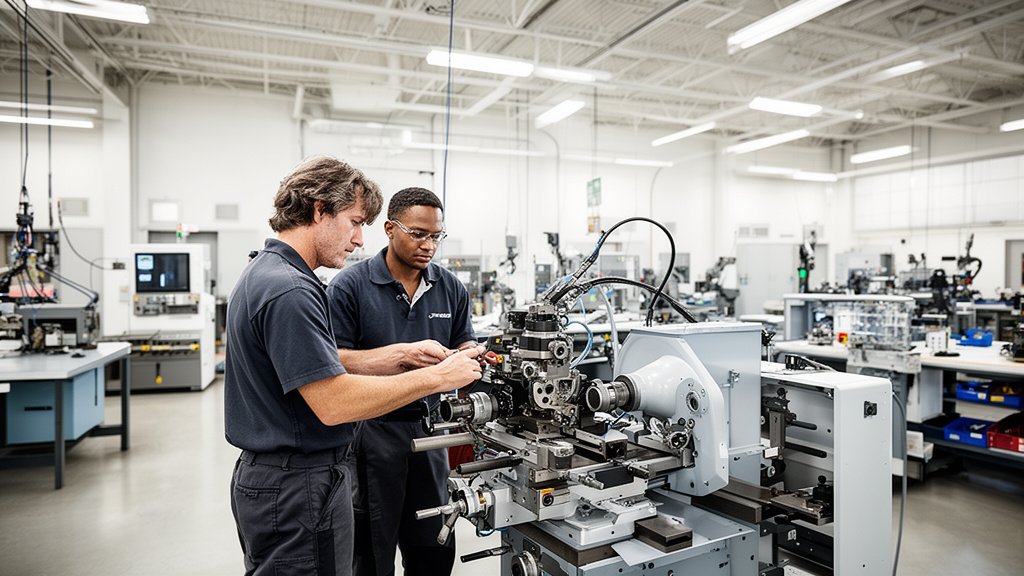
California is aggressively scaling its workforce development strategy, announcing $15.9 million in funding distributed across 67 distinct programs. This capital injection from the Apprenticeship Innovation Fund is designed to support 10,000 Californians as they transition into high-skilled, “earn-and-learn” career pathways. By bolstering the capacity of both traditional and non-traditional training programs, the state aims to secure a more robust and adaptable labor market.
Key Highlights
- Significant Investment: $15.9 million awarded to 67 diverse apprenticeship initiatives across the state.
- Impact Metrics: The funding is projected to support 10,000 Californians as they enter high-skilled careers.
- Administrative Oversight: The initiative is managed by the California Department of Industrial Relations (DIR) and the Division of Apprenticeship Standards (DAS).
- Strategic Focus: The grants prioritize “earn-and-learn” models, enabling participants to receive compensation while acquiring technical skills.
Modernizing the Labor Landscape: The Apprenticeship Innovation Fund
The announcement by the California Department of Industrial Relations (DIR) marks a pivotal shift in how the state approaches vocational training and economic mobility. While apprenticeships have historically been synonymous with the building and construction trades, the current funding allocation signals a broader mandate. The Apprenticeship Innovation Fund is specifically designed to diversify the state’s human capital, encouraging programs that extend into sectors ranging from healthcare and advanced manufacturing to information technology and green energy.
By providing $15.9 million to 67 recipients, the state is addressing the acute “skills gap” that has defined the post-pandemic labor market. Employers often struggle to find qualified candidates who possess both theoretical knowledge and practical, on-the-job experience. The apprenticeship model is the perfect remedy to this friction, as it integrates classroom instruction with active employment.
The Role of the Division of Apprenticeship Standards (DAS)
The Division of Apprenticeship Standards (DAS) plays a critical, behind-the-scenes role in this success. By vetting programs and ensuring they meet rigorous educational and safety standards, the DAS acts as the quality-control architect of California’s workforce pipeline. This funding ensures that these programs have the resources to scale their intake, improve their pedagogical equipment, and hire high-level instructors. The 67 programs funded represent a mixture of public, private, and community-based organizations that operate as the frontline of economic development.
Beyond the Traditional Degree: The Rise of Earn-and-Learn
One of the most profound secondary angles of this development is the cultural and economic shift away from the reflexive reliance on four-year university degrees. As student debt climbs to unprecedented levels, “earn-and-learn” models offer an attractive alternative. Participants in these 67 programs will be able to gain high-level credentials without the crushing burden of tuition debt, effectively democratizing access to high-paying, high-skilled career sectors. This is not merely a social program; it is an economic imperative that ensures California remains competitive in a globalized, tech-heavy economy.
Economic Implications for the California Labor Market
By targeting 10,000 individuals, the state is making a massive bet on the efficacy of vocational training. If successful, these individuals will likely see a significant increase in lifetime earnings. Furthermore, local economies benefit from a workforce that is more resilient to automation. As the nature of work changes, the ability to retrain and upskill through apprenticeships becomes the most vital asset a worker can possess. The state’s investment acts as a catalyst, encouraging private firms to partner with public entities, creating a virtuous cycle of investment that could lead to even greater expansions in the fiscal years ahead.
FAQ: People Also Ask
Q: What exactly is the Apprenticeship Innovation Fund?
A: It is a state-funded initiative administered by the California Department of Industrial Relations designed to provide financial resources to programs that develop, expand, or modernize apprenticeship training in high-growth, high-skilled industries.
Q: Who is eligible to participate in these programs?
A: Eligibility varies by the specific program; however, these initiatives are generally open to Californians seeking to enter new careers, upskill, or transition into high-demand technical roles. Interested individuals should contact the specific DAS-approved programs for enrollment details.
Q: How does this funding differ from traditional financial aid?
A: Unlike traditional financial aid or student loans, which subsidize the cost of schooling, these apprenticeship programs provide a paycheck while you learn. The state’s funding helps cover the overhead costs for the programs to operate, enabling them to accept more students and provide higher quality training.
Q: What sectors are prioritized for this funding?
A: While the funding is broad, it prioritizes sectors that provide pathways to high-skilled, well-paying careers. This includes traditional trades as well as emerging sectors like technology, healthcare, and green energy, ensuring a diverse and resilient workforce.