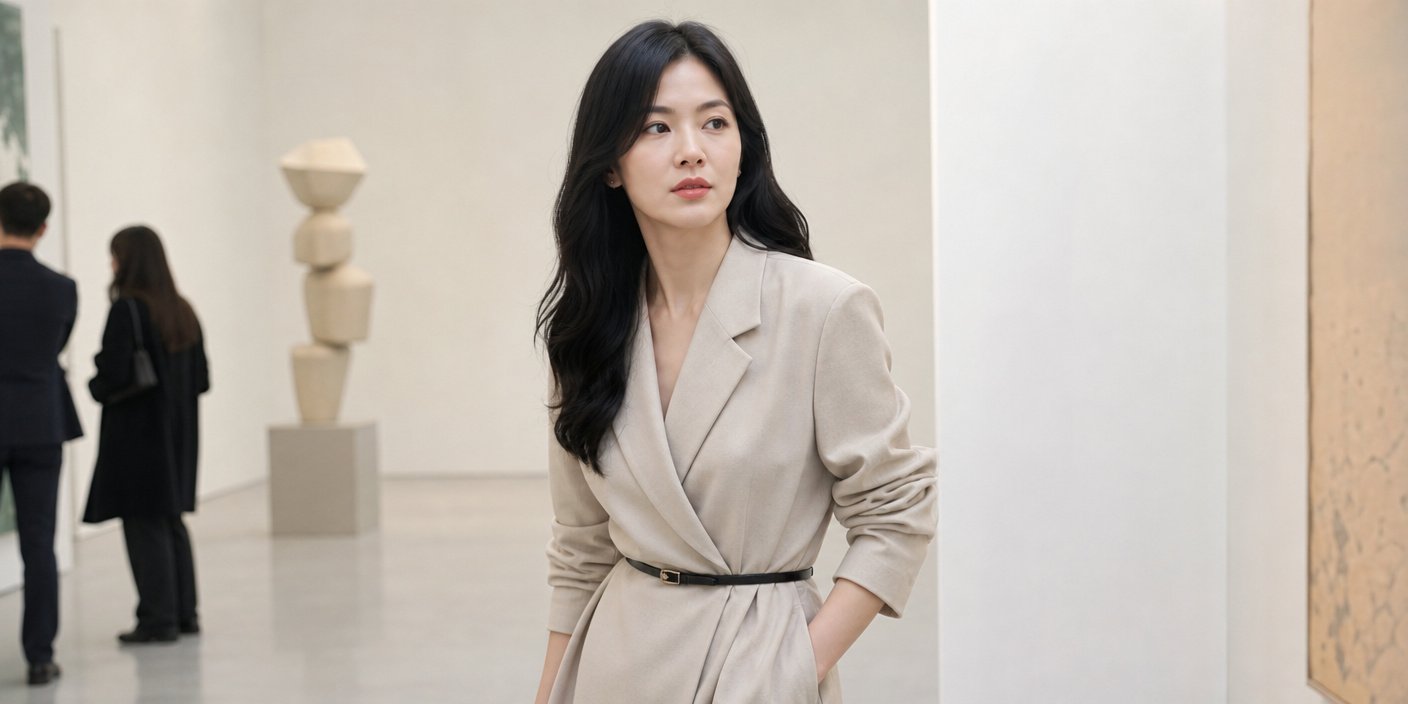

Seoul, South Korea — Karina, a prominent member of the highly popular K-pop girl group aespa, has issued a further apology regarding a controversy that arose during South Korea’s recent election season. The incident involved her choice of clothing in a social media post, which was interpreted by many online users as potentially expressing political alignment.
Speaking during an interview on veteran singer Jung Jae-hyung’s widely viewed YouTube channel, known as Fairy Jaehyung, on Sunday evening, Karina addressed the issue directly and with apparent candor. “I really wanted to say that I never meant anything of the sort,” she stated, referring to any political intention behind her actions. She candidly admitted, “I was ignorant,” acknowledging a lack of awareness regarding the potential implications of her social media activity during the sensitive political period.
Background to the Controversy
The controversy initially surfaced in late May, coinciding with heightened political campaigning ahead of local elections in South Korea. Karina had uploaded a photograph to her personal Instagram account. The image featured her wearing a black jacket adorned with red patterns. Crucially, the jacket also reportedly displayed the number two. This particular combination of color and number quickly went viral online.
Online commentators and fans swiftly linked the red color and the number two to the conservative People Power Party (PPP), one of the two major political forces in South Korea. The PPP is widely associated with the color red, and in the election in question, their candidates were often assigned ballot number two. Specifically, some online interpretations connected Karina’s outfit to the PPP candidate Kim Moon-soo.
Navigating Political Sensitivities in K-pop
The reaction to Karina’s post highlighted a delicate, albeit often unspoken, guideline within the South Korean K-pop industry. Idols, who cultivate broad appeal across diverse fan bases, are typically expected to maintain political neutrality, particularly during election periods. Actions or symbols that could be construed as endorsing a specific political party are generally avoided to prevent alienating segments of their audience or drawing unwanted scrutiny.
In South Korea’s political landscape, specific colors are strongly associated with major parties: red for the People Power Party, blue for the Democratic Party, and yellow or green for the Green Justice Party, among others. Wearing or displaying these colors prominently, especially in combination with symbols like ballot numbers, can be interpreted as a political statement, whether intended or not. Karina’s outfit, featuring red and the number two, unfortunately, intersected directly with the symbols most closely linked to the People Power Party during the election period.
The Apology and Its Context
Karina’s appearance on Jung Jae-hyung’s YouTube channel provided a platform for a more extensive explanation and apology following the initial online reaction. The interview format allowed her to directly address viewers and fans in a personal manner.
During the conversation, she elaborated on her regret, stating that the unintended political interpretation of her clothing choice had caused significant distress. She expressed sorrow for causing concern among her dedicated fanbase, acknowledging the worry and disappointment the incident had likely generated. Furthermore, she spoke about seeing her fellow aespa members suffer due to the repercussions of the controversy, underscoring the collective impact such incidents can have on a group.
Her admission of being “ignorant” suggests a recognition that, regardless of her intentions, she failed to consider how her actions might be perceived in the highly sensitive political climate of an election season. It implies a learning experience regarding the level of scrutiny and the potential for misinterpretation that comes with being a prominent public figure in the K-pop industry.
Broader Implications for Idol Image Management
The incident involving Karina underscores the immense pressure K-pop idols face in managing their public image. Every action, post, and even clothing choice can be subject to intense analysis and speculation by fans and the wider public. Maintaining an image that is appealing to a global audience while navigating the specific cultural and political nuances of South Korea presents a constant challenge.
Idols are often expected to be role models and maintain a ‘clean’ image, which includes steering clear of potentially divisive topics like politics. While this unspoken rule is designed to protect their careers and group stability, it also limits their freedom of expression and places them under constant surveillance regarding their public presentation.
Karina’s detailed apology on a public platform like YouTube signifies the seriousness with which her agency and the artist herself are treating the matter. It is a step aimed at mending relationships with fans who may have been concerned or disappointed and reaffirming her commitment to her career and group.
In conclusion, Karina’s recent apology on Jung Jae-hyung’s YouTube channel serves as a significant statement addressing the election season clothing controversy. By acknowledging her actions and expressing regret for the unintended consequences, the aespa member seeks to move past the incident and reinforce her position as a K-pop artist navigating the complex landscape of public scrutiny and political sensitivity.