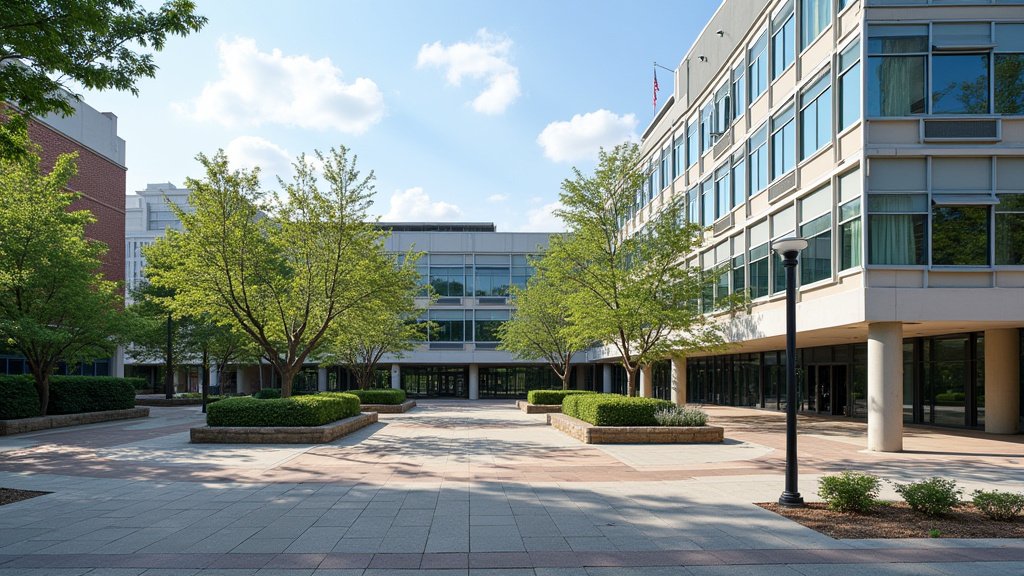
Arlington County officials have publicly acknowledged a surge in community concerns regarding public safety in the immediate vicinity of the Bozman Government Center, situated at 2100 Clarendon Boulevard. The seat of local government, once considered the crown jewel of the Courthouse neighborhood, has increasingly become a flashpoint for reports of disorderly conduct, property crime, and open-air drug activity. This shift has forced the County Board and the Arlington County Police Department (ACPD) to re-evaluate security protocols in what is arguably the most transit-heavy and politically significant corridor in the county.
Key Highlights
- Center of Gravity: The Bozman Government Center serves as the primary hub for civic operations, drawing thousands of residents, employees, and visitors daily, making safety here critical to public perception.
- Specific Complaints: Community advocacy groups and local residents have highlighted a spike in loitering, narcotics use, and petty theft near the Courthouse Metro station and adjacent plaza.
- Official Response: The Arlington County Police Department has pledged to increase foot and bicycle patrols in the 22201 zip code, while county leadership has initiated a review of environmental design features, including lighting and line-of-sight visibility.
- Strategic Balancing: Officials are attempting to balance the need for an open, accessible civic space with the necessity of enforcing public order in a post-pandemic urban environment.
Courthouse Crossroads: Addressing Public Safety at the Seat of Power
The Bozman Government Center is more than an office building; it is the administrative heart of Arlington County. Recent months, however, have seen a tangible shift in the atmosphere surrounding the facility. Reports from residents and business owners indicate that the area, particularly the plaza connecting the government complex to the Courthouse Metro entrance, has experienced a decline in perceived safety. This acknowledgment by local leadership marks a significant departure from previous, more passive approaches to community management in this corridor.
The Catalyst: Community Pressure and Incident Reports
The pressure on the County Board began in earnest as a wave of constituent emails and public comments during recent budget hearings highlighted safety as a top-tier concern. Local neighborhood civic associations have cited a ‘cumulative effect’ of minor crimes—loitering, harassment, and open-air drug use—that, while individually might not trigger major headlines, collectively erode the sense of security among those who work and live in the immediate area. The Bozman Government Center, which stands at the nexus of these activities, has inadvertently become the symbol of the challenge facing urban policing in Northern Virginia.
Historically, the Courthouse area has been defined by high foot traffic, upscale residential development, and consistent police presence. The current friction arises from a changing urban landscape where transit hubs act as magnets for individuals who are not always compatible with the intended use of the public space. When a government center—a place of law and civil order—is perceived as ‘unsafe,’ it creates a crisis of confidence in the municipal government’s ability to manage its own doorstep.
Assessing the Data: Criminal Activity Trends in 22201
Data from the ACPD indicates that while major violent crime rates in the Courthouse area remain relatively low compared to national urban averages, the ‘quality of life’ crimes have seen a measurable uptick. Property-related offenses, specifically thefts from vehicles and retail theft, have consistently ranked high in police reporting for the Rosslyn-Ballston corridor.
Analysts point to the intersection of three factors: the high density of Metro ridership, the presence of public plazas that lack natural surveillance at night, and the proximity to social services that sometimes draw vulnerable populations into high-traffic areas. The acknowledgement by county officials that these trends are problematic is the first step in a data-driven strategy to re-allocate resources. The goal is to move from reactive policing to proactive management, identifying the ‘hot spots’ within the government campus that require better environmental design—such as improved illumination or the removal of visual obstructions—to discourage illicit behavior.
The County’s Strategic Response
The Arlington County Police Department has initiated what it describes as a ‘re-doubled effort’ to maintain order. This includes not only the deployment of uniform officers on foot, but also closer coordination with the County’s Department of Parks and Recreation and the Department of Environmental Services. The logic is that security is a holistic issue: if a space is well-lit, well-maintained, and heavily trafficked by legitimate users, the opportunities for criminal activity are reduced.
Furthermore, the County Board has been under pressure to demonstrate that their commitment to safety is matched by their spending. Discussions regarding increased funding for mental health co-responder teams are also underway. These teams, composed of a police officer and a mental health professional, are designed to address incidents involving individuals in crisis, ensuring that the response is appropriate to the nature of the disturbance, rather than relying solely on traditional law enforcement tactics. This reflects a progressive approach to public safety that has become a hallmark of Arlington’s governance philosophy.
Future Predictions and Economic Implications
The long-term viability of the Courthouse district depends on the success of these interventions. As remote work trends continue to reshape office occupancy, the vitality of the area relies more heavily on residents and visitors. If the Bozman Government Center cannot maintain a safe environment, it risks discouraging the foot traffic that supports local retail and dining in the vicinity. Arlington’s economic development strategy is inextricably linked to its reputation for safety. Therefore, the current effort is not just about keeping the government headquarters secure; it is about protecting the tax base and maintaining the area’s desirability as a place to live, work, and conduct business. We anticipate that in the coming fiscal quarter, the County Board will likely announce a comprehensive ‘Courthouse Area Revitalization and Security Plan’ to formalize these current, ad-hoc efforts into a long-term strategic initiative.
FAQ: People Also Ask
1. What specific area of Arlington is being affected by these safety concerns?
The primary focus of the safety concerns is the area immediately surrounding the Bozman Government Center at 2100 Clarendon Boulevard, extending toward the Courthouse Metro station and the surrounding public plazas in the 22201 zip code.
2. How is the Arlington County Police Department changing its approach?
The ACPD is shifting toward more proactive community policing, including increased foot and bicycle patrols in the immediate vicinity of the government buildings to provide a more visible deterrent to disorderly conduct.
3. Is there a timeline for these safety improvements?
While the County Board has acknowledged the issue, specific timelines for physical infrastructure changes (like lighting upgrades or plaza design modifications) are typically subject to public planning cycles. However, increased patrols and police presence are being implemented immediately as part of ongoing operational adjustments.