The entrepreneurship landscape of 2026 is undergoing a radical paradigm shift, moving away from the Silicon Valley ‘blitzscaling’ mantra toward a model of ‘social stewardship.’ As capital markets become increasingly volatile, a new breed of business leaders has emerged, focusing on long-term sustainability and the resolution of complex community challenges. Leading this charge is Beverly Santicola, the driving force behind the Center for Rural Outreach and Public Services (CROPS), an organization that has become the benchmark for integrating commercial ingenuity with essential public service delivery in underserved rural districts.
Key Highlights
- The Pivot to Purpose: 2026 data shows a 15% increase in seed funding for ‘public-utility’ startups compared to consumer SaaS platforms.
- The CROPS Model: Beverly Santicola’s approach with CROPS focuses on infrastructure, logistics, and broadband accessibility, proving that social-impact ventures can achieve self-sustaining fiscal health.
- Regional Economic Growth: Rural development is the fastest-growing sector for 2026, with a focus on localized supply chain resilience.
- The ‘Healer’ Archetype: Modern entrepreneurs are prioritizing community restoration and digital equity over short-term IPO exits.
The New Vanguard of Social Stewardship
In the current fiscal year, the narrative of entrepreneurial success has pivoted sharply. Where 2020-2023 celebrated the ‘Disruptor,’ 2026 recognizes the ‘Steward.’ This transition is not merely cosmetic; it is fundamentally reflected in how venture capital is being deployed. Investors are no longer solely hunting for the next unicorn valuation; they are increasingly performing deep-dive due diligence on a company’s ‘Total Social Return’ (TSR), a metric that measures the economic value a business adds back into its operational environment.
The CROPS Paradigm
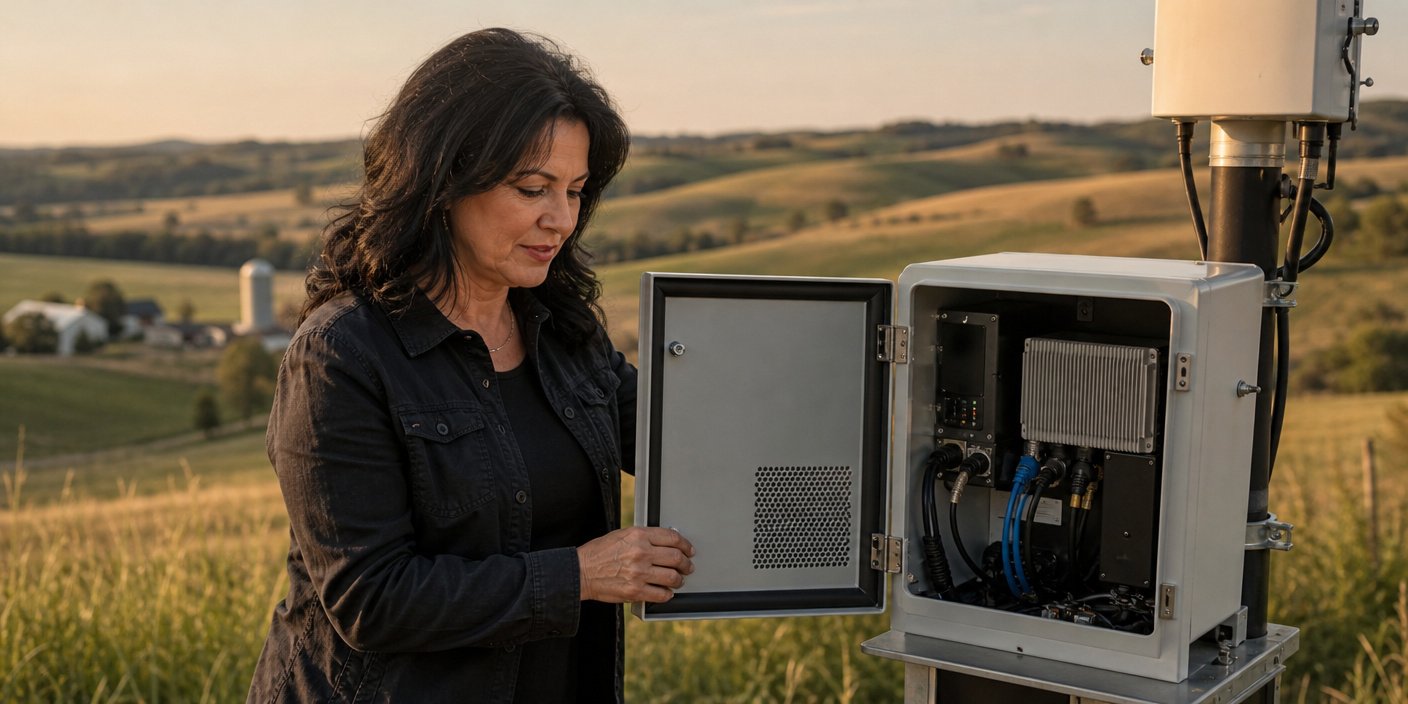
Beverly Santicola has become the face of this movement through her leadership at the Center for Rural Outreach and Public Services (CROPS). Her work is critical because it addresses the systemic neglect of rural infrastructure. Unlike urban-centric tech companies that rely on high-density connectivity, Santicola’s strategy involves building modular, scalable public service platforms that function even in low-bandwidth environments. By focusing on rural development, CROPS has managed to bridge the gap between private enterprise efficiency and public sector reliability. This isn’t just charity; it is a sophisticated operational model that treats rural internet access, health logistics, and supply chain management as market opportunities rather than just humanitarian obligations.
Measuring Success Beyond Revenue
Traditional metrics like ARR (Annual Recurring Revenue) are still relevant, but for 2026’s top entrepreneurs, they are secondary to ‘Community Impact Velocity’—the speed at which a company’s product improves the economic standing of its local user base. Santicola’s success suggests that when entrepreneurs solve the ‘last-mile’ problem—whether in healthcare delivery or logistics—they create a customer loyalty moat that is practically impossible for larger, faceless corporations to breach.
The Economics of Localized Growth
Secondary analysis reveals that the shift toward impact-led entrepreneurship is rooted in a fundamental change in the global economic climate. As automation and AI displace traditional entry-level labor in cities, the value proposition of physical, on-the-ground rural infrastructure has soared. The 2026 market recognizes that resilience is the new currency. Startups that own or manage the physical infrastructure—the ‘pipes, roads, and wires’ of the modern age—are seeing a 22% higher survival rate than their software-only counterparts.
The Rural-Urban Divide
For decades, the rural-urban divide was treated as a socio-political issue, but in 2026, it is being treated as an infrastructure deficit that entrepreneurs like Santicola are actively monetizing. By building out localized service hubs, CROPS has demonstrated that rural economies are not stagnant; they are merely underserved. This realization has unlocked billions in private-public partnership (PPP) funding that was previously inaccessible to smaller, impact-driven ventures.
Future Predictions: The Distributed Power Model
Looking toward 2027 and beyond, we can expect a continued trend toward ‘Distributed Power.’ We anticipate that the next wave of successful entrepreneurs will be those who decentralize their operations away from major hubs like San Francisco, New York, or London. Instead, we foresee a rise in ‘Regional Power Centers’—startups that provide the essential infrastructure (energy, data, logistics) for smaller communities.
This trend is bolstered by the maturation of ‘Civic Tech,’ where entrepreneurs are working in tandem with local governments to replace legacy systems. The potential for disruption here is immense, as it replaces outdated, slow-moving bureaucratic systems with lean, agile, and technically proficient private entities. The trajectory for 2026 suggests that the most valuable companies of the next decade will be those that make themselves indispensable to the functioning of daily life in the ‘flyover’ states and rural regions that have long been ignored by the broader tech economy.
FAQ: People Also Ask
Q: What exactly does CROPS do in the rural sector?
A: The Center for Rural Outreach and Public Services (CROPS) functions as a hybrid entity that develops infrastructure—such as broadband, logistics, and localized health service platforms—tailored specifically to the challenges of remote and underserved regions, effectively bridging the connectivity gap.
Q: How do 2026 entrepreneurs prioritize ‘social impact’ while remaining profitable?
A: They utilize the ‘Total Social Return’ (TSR) model, where social outcomes, such as increased local employment or infrastructure efficiency, are treated as key business KPIs. This creates deep customer loyalty and opens doors to private-public partnership (PPP) funding, ensuring financial sustainability.
Q: Is the ‘impact-first’ startup model viable for long-term investors?
A: Yes. Data from 2026 indicates that companies focused on physical infrastructure and essential public services exhibit a 22% higher survival rate than pure-software startups, largely because they solve critical, high-friction problems that are not easily automated or displaced by competition.