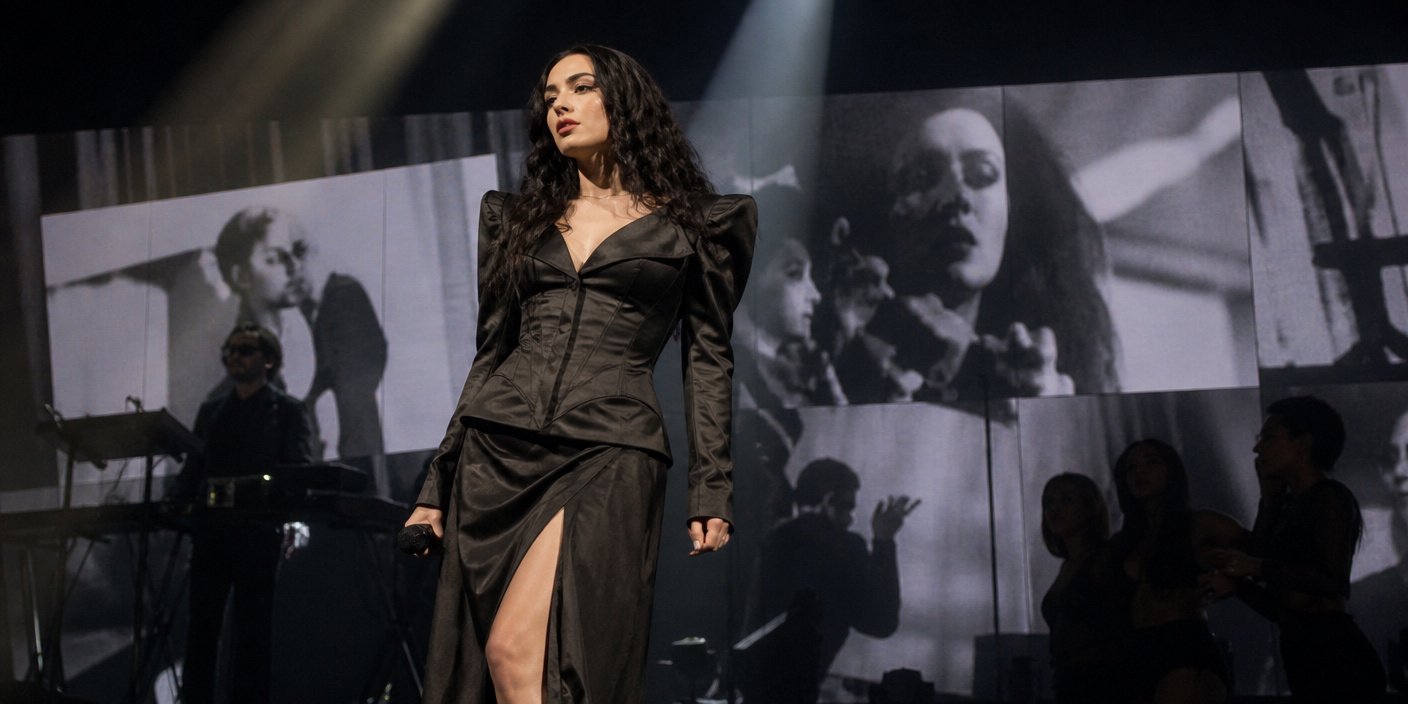
Charli XCX has officially closed the book on the chaotic, neon-drenched rave aesthetic of her ‘Brat’ summer, launching her new tour, ‘Music, Fashion, Film,’ in South Philadelphia with a performance that signals a decisive pivot toward high-art auteurism. This opening night was not merely a concert; it was an existential dance party that traded viral meme-culture energy for a measured, reflective, and deeply collaborative artistic direction. By integrating the experimental ethos of John Cale, the sharp design eye of Marc Jacobs, and the cinematic narrative scope of Martin Scorsese, Charli XCX has effectively positioned herself as a modern-day polymath rather than just a pop star.
Key Highlights
- The Aesthetic Pivot: A marked transition from the lo-fi, lime-green rave culture of the ‘Brat’ era to a high-contrast, cinematic, and mature visual language.
- The Creative Trinity: Integration of John Cale’s experimental soundscapes, Marc Jacobs’ fashion sensibilities, and Martin Scorsese’s narrative techniques into the live performance.
- Philadelphia Debut: The tour’s launch in South Philly served as the testing ground for this new multi-disciplinary approach, emphasizing scale and narrative depth.
The Auteurism of Modern Pop Performance
For months, the cultural conversation surrounding Charli XCX was dominated by the hyper-kinetic, raw, and unapologetically digital aesthetics of her previous project. However, the South Philadelphia opener of ‘Music, Fashion, Film’ serves as a stark rebuttal to the idea that Charli is tethered to a singular trend. The production value on display represents a massive capital investment in ‘world-building’ rather than just hit-making. Where ‘Brat’ invited the audience into a messy, collaborative party, ‘Music, Fashion, Film’ invites them to witness a curated, almost forensic examination of celebrity and art.
The Influence of the ‘Trinity’
The inclusion of icons like John Cale, Marc Jacobs, and Martin Scorsese is not merely a name-dropping exercise; it is a structural pillar of the tour’s conceptual framework. John Cale, a founding member of The Velvet Underground, brings an experimental, avant-garde sonic texture that pushes Charli’s electronic roots into the realm of dissonance and atmospheric tension. His influence is palpable in the stage arrangements, which favor jarring, repetitive loops and expansive, haunting soundscapes over the standard pop-structure.
Marc Jacobs, serving as the visual architect, has stripped away the DIY, thrift-store aesthetic of the previous tour. In its place are structured, high-fashion silhouettes that feel less like costumes and more like characters in a film. The lighting design mirrors this, utilizing a stark, noir-inspired color palette that feels intentionally removed from the ‘Brat’ neon.
Perhaps most intriguingly, the references to Martin Scorsese suggest a focus on the ‘narrative of the rise and fall.’ The stage screens utilized techniques reminiscent of mid-century cinema—grainy filters, long, slow tracking shots, and jump cuts that provide a biographical layer to the performance. It is a show about the process of being an artist, rather than just the result of being a pop star.
The Industry Shift: From Rave to Reality
The pivot is not just stylistic—it is economic and professional. By aligning with these specific figures from the ‘old guard’ of cool, Charli XCX is signaling a shift in her target demographic and her long-term career viability. While the ‘Brat’ era was peak ‘online culture’—accessible, remixable, and transient—the ‘Music, Fashion, Film’ tour is an attempt to cement legacy status.
This shift carries significant implications for the music industry. We are seeing a move away from the ‘always-on’ digital content machine towards the ‘prestige event’ model. This tour treats live performance as a museum piece—something to be analyzed, reviewed, and studied, rather than just consumed in 15-second clips on social media. The South Philadelphia venue, which hosted this debut, saw a crowd that was notably quieter during the performance, seemingly mesmerized by the technical precision of the show rather than reacting with the typical chaotic energy of her previous concerts.
Secondary Angles: Sustainability and Future-Proofing
1. The Economic of Auteurship: By leveraging high-concept collaborators, Charli XCX is justifying higher ticket prices and creating a more ‘premium’ brand experience, protecting her from the inevitable cooling-off of viral trends.
2. The Obsolescence of Digital Virality: This tour acts as a corrective measure to the ‘Brat’ era. By moving toward a more physical, cinematic medium, Charli is insulating her career against the fickle nature of TikTok-driven popularity.
3. Demographic Expansion: The pivot to experimental music and high-fashion aesthetics is clearly intended to attract an older, arts-focused demographic, effectively widening her base beyond the Gen Z internet-native audience.
FAQ: People Also Ask
Q: What does ‘Music, Fashion, Film’ actually entail for the audience?
A: It is a multidisciplinary performance. Expect less of a standard ‘pop concert’ setlist structure and more of a narrative-driven stage show that blends elements of avant-garde electronic music, runway-style fashion presentations, and cinematic video projections.
Q: Is this a permanent departure from the ‘Brat’ era?
A: Yes. The tour explicitly frames this as a new chapter. Charli XCX is moving toward a more ‘prestige’ branding strategy, distancing herself from the viral, lo-fi aesthetic that defined her 2024 trajectory.
Q: Are John Cale and Martin Scorsese actually appearing on stage?
A: No, their presence is conceptual and archival. They provide the ‘DNA’ of the show—the musical dissonance, the fashion styling, and the cinematic visual storytelling—rather than performing live.
Q: Why was South Philadelphia chosen for the opener?
A: Philadelphia’s venue culture is often cited by touring artists as a perfect ‘litmus test’ for production scale, providing the necessary infrastructure for large-scale video projections while maintaining a grounded, passionate audience atmosphere.