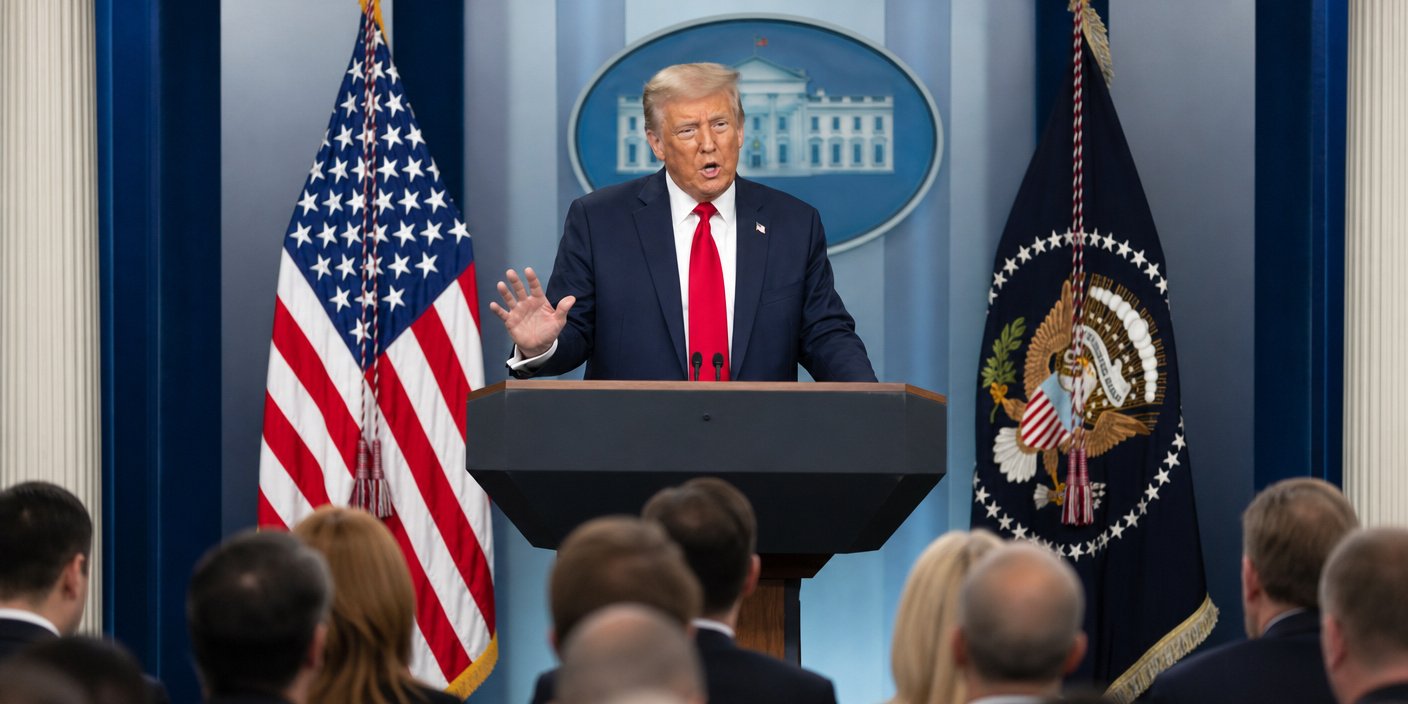
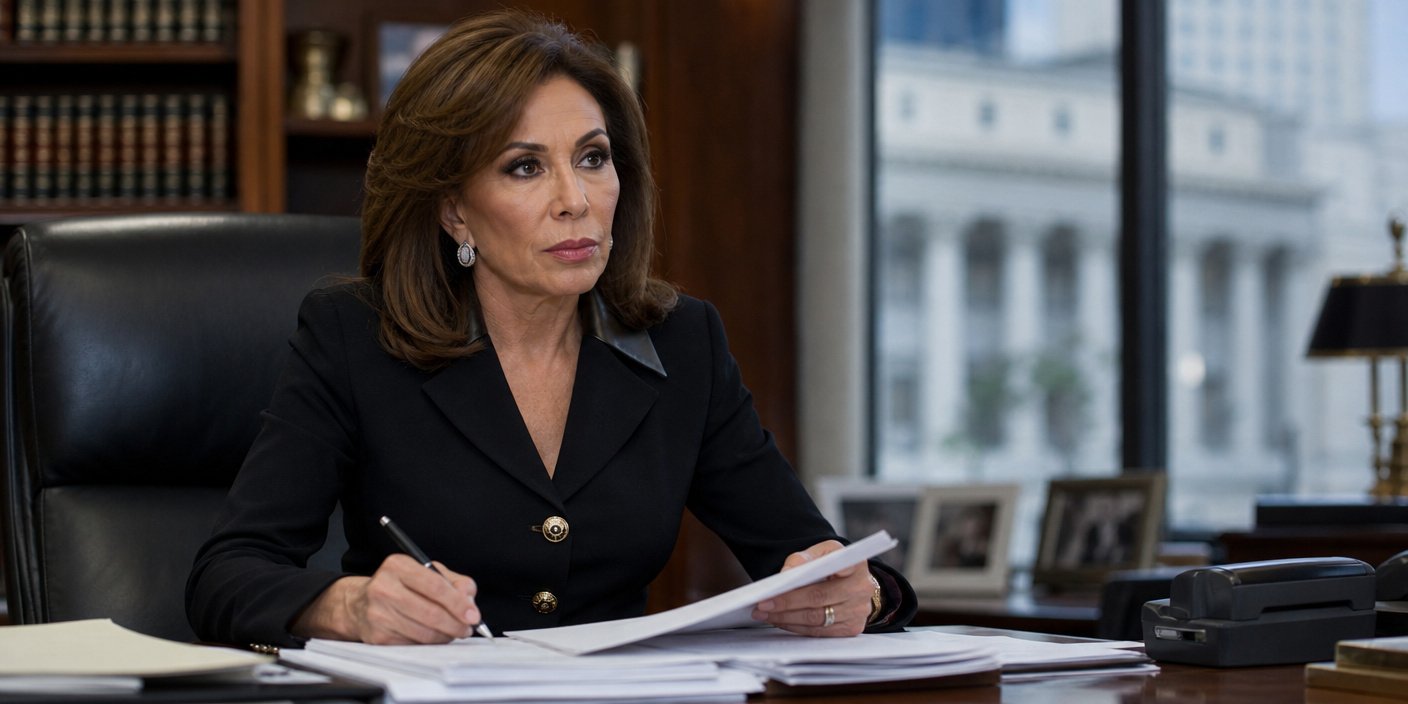
The tension between the executive branch and federal law enforcement in the nation’s capital reached a boiling point this week as reports emerged that President Trump is actively considering the removal of U.S. Attorney for the District of Columbia, Jeanine Pirro. Sources close to the White House confirm that the President has expressed both public and private fury regarding the U.S. Attorney’s legal strategy in the wake of the highly publicized vandalism incidents at the Reflecting Pool, with the President explicitly accusing Pirro of having “choked” during the critical filing phase. This potential personnel shift signals a significant escalation in the ongoing dialogue between the Oval Office and the Department of Justice regarding the prosecution of crimes committed on federal property.
Key Highlights
- Presidential Ultimatum: President Trump is reviewing the tenure of U.S. Attorney Jeanine Pirro following his dissatisfaction with her office’s performance in high-profile vandalism cases.
- The ‘Choked’ Allegation: The President reportedly characterized Pirro’s legal filings in the Reflecting Pool cases as weak, signaling a deeper frustration with the current D.C. prosecutorial strategy.
- Administrative Uncertainty: The potential removal raises questions regarding the continuity of ongoing investigations within the District of Columbia and the executive branch’s influence over independent federal agencies.
- Escalating Tensions: This development highlights a broader pattern of presidential scrutiny directed at federal appointees tasked with maintaining law and order in the nation’s capital.
The Friction Behind the Filing: Analyzing the Escalation
The discord stems from a specific series of legal maneuvers taken by the D.C. U.S. Attorney’s office concerning the recent vandalism of the Reflecting Pool at the Lincoln Memorial. The vandalism, which involved the defacement of federal property, was viewed by the White House as a symbolic attack on national heritage. When the initial filings were submitted by Pirro’s office, President Trump reportedly felt that the charges lacked the necessary rigor to serve as an effective deterrent, leading to the President’s blunt assessment that the leadership “choked” under the pressure of the moment.
For an administration that has made “law and order” a central pillar of its domestic agenda, the perception of weakness—real or imagined—in the federal court system is an existential political concern. Legal observers note that while a U.S. Attorney is expected to exercise independent discretion, the political reality is that the D.C. office operates in a unique sphere, often subject to more intense scrutiny from the executive branch than regional offices elsewhere in the country.
The Mechanics of Presidential Removal
Under existing statutes, the President holds the authority to remove a U.S. Attorney. While such actions are historically rare and often carry significant political cost, they are not unprecedented. The removal of a federal prosecutor requires a careful balancing act; it risks alienating the broader Department of Justice hierarchy and may prompt criticism regarding the politicization of the legal system. However, for President Trump, the primary motivator appears to be the perceived failure to execute a robust prosecutorial strategy in a venue as visible as the National Mall.
Implications for Federal Prosecution in D.C.
If the administration proceeds with a replacement, the immediate impact would be felt in the ongoing investigations. A new U.S. Attorney would likely be expected to re-evaluate current filings, potentially seeking superseding indictments or tougher sentencing guidelines for those involved in the vandalism. This creates a ripple effect: defense attorneys may challenge the sudden shifts in legal strategy, arguing that political influence is overriding the objective application of the law.
Furthermore, the D.C. office is uniquely tasked with prosecuting both local crimes and federal offenses. A change in leadership at this juncture could disrupt the delicate equilibrium required to handle such a caseload. As the administration weighs its options, the legal community remains on high alert, watching for any sign that the Department of Justice is shifting its tactical approach to align more closely with the President’s public criticisms.
Secondary Angles: Examining the Broader Context
1. The Politics of Federal Property Security: The Reflecting Pool incident is part of a larger national conversation regarding the security of federal assets. This situation highlights how vandalism is no longer viewed strictly as a local nuisance crime but as an affront to national authority, justifying, in the President’s view, more aggressive federal prosecution.
2. Historical Precedent and Executive Power: Throughout U.S. history, presidents have frequently clashed with the Department of Justice. By reviewing the historical context of attorney general and U.S. Attorney dismissals, we can see that this tension often spikes during periods of high political polarization, where the executive branch feels that the judiciary is lagging behind the urgency of the political moment.
3. Administrative Continuity: Beyond the headlines, the practical implication is the potential for administrative gridlock. If Pirro is removed, the transition period—often filled by an acting U.S. Attorney—can create a vacuum in decision-making power, potentially stalling active investigations for weeks or months while a successor is nominated and confirmed.
FAQ: People Also Ask
Can the President unilaterally fire a U.S. Attorney?
Yes, the President has the constitutional authority to remove a U.S. Attorney at any time, as they serve at the pleasure of the President. This is a well-established power, though it is used sparingly to avoid the perception of political interference.
Why is the Reflecting Pool vandalism considered such a significant case?
The vandalism of federal monuments and landmarks on the National Mall is viewed by the administration as a challenge to federal authority and a threat to national heritage, elevating the legal response from a simple vandalism case to a matter of significant national concern.
What does it mean for a prosecutor to ‘choke’ in this context?
In this context, the phrase is a colloquialism for failing to aggressively pursue charges, underestimating the severity of a case, or failing to present the strongest possible argument in court, which the President views as a dereliction of duty.