The Coachella Valley Music and Arts Festival has once again become the epicenter of cultural discourse, and this year, the spotlight has turned firmly toward Kylie Jenner. While the desert festival is renowned for its high-profile celebrity sightings and carefully curated influencer aesthetics, Jenner’s latest antics during the opening weekend of Coachella 2026 have triggered a polarizing response across social media platforms. The reality star’s decision to pair an unabashedly supportive, Justin Bieber-inspired fashion statement with a cryptic, masked dance routine has left fans and critics divided, fueling a wave of commentary that touches on everything from performance art to the commercialization of the modern festival experience.
The Aesthetic Shift: Emulating the ‘Bieberchella’ Era
Jenner arrived at the Empire Polo Club sporting a look that immediately caught the attention of both fashion pundits and dedicated music fans. Leaning into what many are calling the “Bieberchella” aesthetic, she donned a green tank top emblazoned with Justin Bieber’s face, paired with black trousers and accessories from the singer’s own fashion label, SKYLRK. For long-time observers of Jenner’s festival fashion, this was a clear departure from her usual haute-couture-meets-desert-boho style. By aligning herself so visually with the headliner, Jenner positioned her presence not just as a casual attendee, but as a vocal supporter—a move that resonated with the “Belieber” fanbase but raised eyebrows among those seeking more individualistic festival styling.
Behind the Mask: Performance Art or PR Stunt?
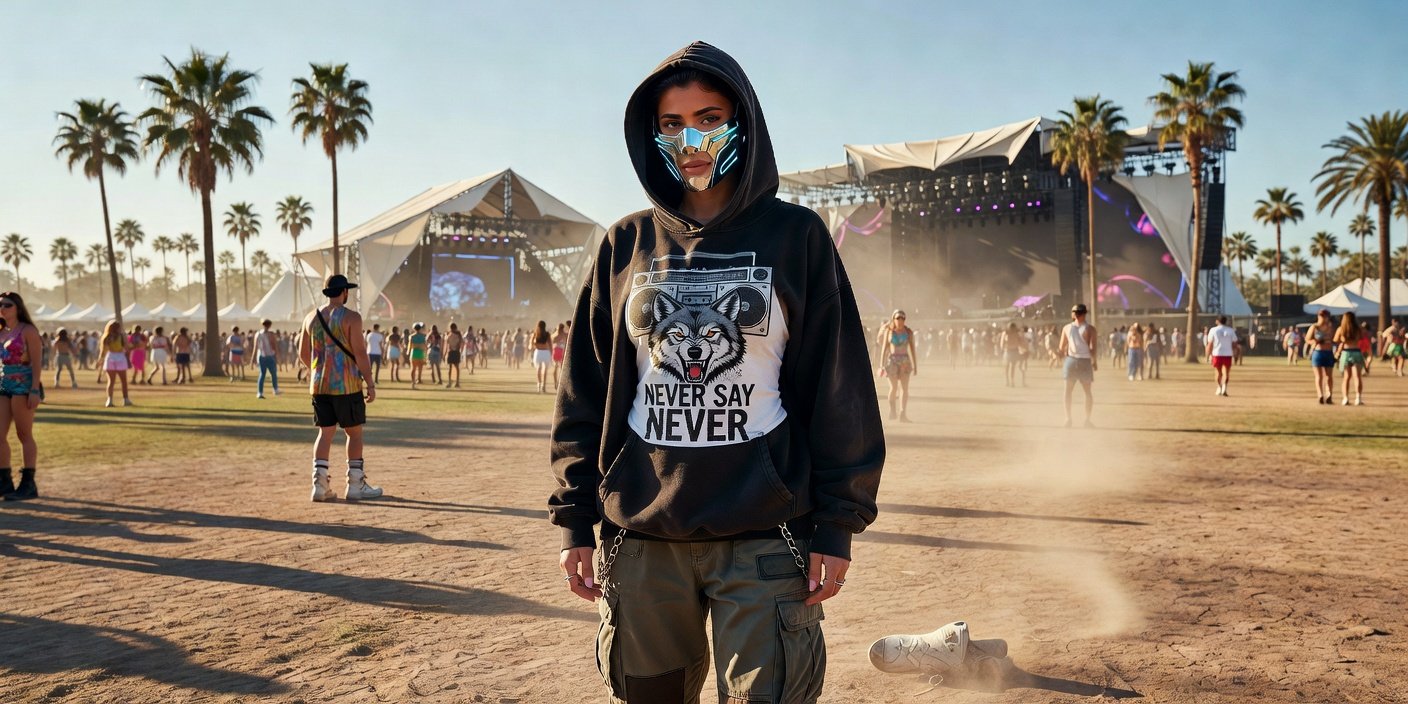
However, it was not the wardrobe that sparked the most intense backlash; it was the video content. Jenner shared a clip on Instagram featuring herself and her entourage engaging in a choreographed, masked dance routine. The juxtaposition of the anonymity provided by the masks and the high-energy, performative nature of the dance felt disjointed to many viewers. Critics labeled the display as “performative” and “out of touch” with the authentic, grassroots spirit that Coachella claims to represent. While Jenner’s inner circle defended the move as a lighthearted nod to internet culture, the visual clash—mask-wearing anonymity versus the hyper-visible nature of a celebrity at a major public event—created a cognitive dissonance that the internet was quick to dismantle.
Festival Chaos: The Logistics of Celebrity Presence
Beyond the fashion and the TikTok dances, the broader narrative emerging from Coachella 2026 is one of logistical and cultural tension. The intense scrutiny on high-profile attendees like Jenner highlights a growing “festival fatigue” among the general public. As celebrities continue to turn the festival into a branded showcase, fans are increasingly vocal about the perceived disconnect between the elite VIP experience and the crowded, dusty reality of the general admission experience. Jenner’s brief, heavily documented appearance served as a lightning rod for these complaints, with many users on X (formerly Twitter) and TikTok using her viral video as a focal point to discuss the evolving nature of the festival as a corporate marketing tool rather than a space for musical discovery.
Understanding the Cultural Ripple Effect
To understand why a simple dance video and a tank top can cause such a stir, one must look at the intersection of celebrity branding and festival culture.
The Commodification of Fandom
By wearing merchandise and utilizing the festival as a backdrop for brand-aligned content, Jenner isn’t just attending a music festival; she is participating in a curated digital economy. This strategy, while effective for engagement numbers, often strips away the spontaneity that audiences crave. The “backlash” is not necessarily directed at the star herself, but at the systematic transformation of a cultural event into a content factory.
The Role of Parasocial Relationships
Justin Bieber’s upcoming headlining set is one of the most anticipated moments of the festival. When Jenner, a close friend of the singer, aligns her aesthetic so closely with his brand, she leverages the existing parasocial relationship between the artist and his fans. For the die-hard fan base, this is an act of solidarity. For the casual observer, it is an obvious, perhaps even calculated, attempt to secure relevance in the festival news cycle.
Future Implications for Coachella
As Coachella moves further into the 2020s, the balance between celebrity spectacle and musical substance will remain a point of contention. If the festival continues to be defined by who is wearing what—rather than who is playing which set—the core audience that made the event famous may continue to drift toward more intimate, music-centric festivals.
FAQ: People Also Ask
Why did Kylie Jenner’s Coachella appearance spark backlash?
The backlash stems from a combination of “festival fatigue” and the perception that the event is becoming an overly curated marketing vehicle. Her choreographed mask video was viewed by many as performative and disjointed from the authentic festival experience.
What is the ‘Bieber-inspired’ look?
Jenner wore a green tank top featuring Justin Bieber’s face, styled with accessories from his fashion label, SKYLRK, to show support for the headliner, who is a close personal friend.
Is the criticism regarding her mask video justified?
That is subjective. While many critics view it as an example of celebrity tone-deafness, supporters argue it was merely a fun, lighthearted moment between friends during a music festival.
What does this mean for future festivals?
It highlights the growing divide between the VIP influencer culture at major festivals and the general attendee experience, potentially influencing how brands and celebrities approach their public appearances at these events moving forward.