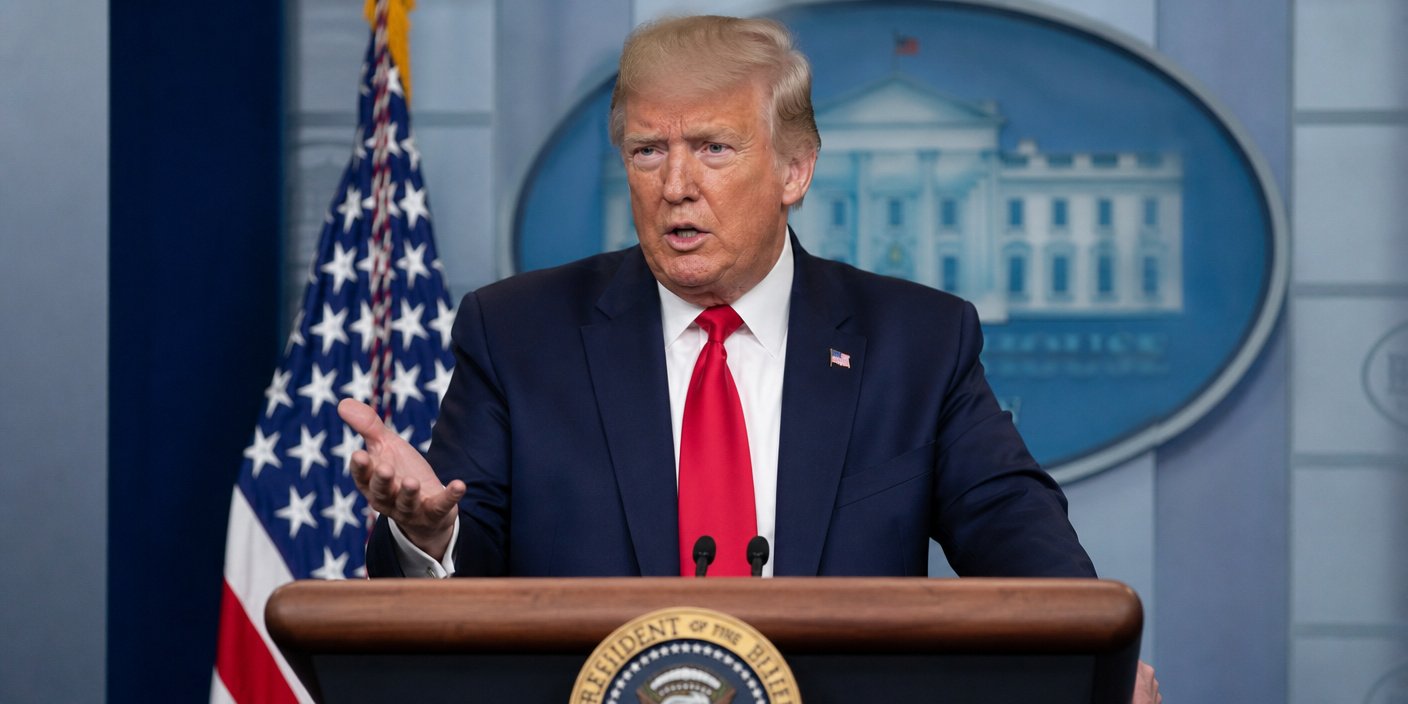
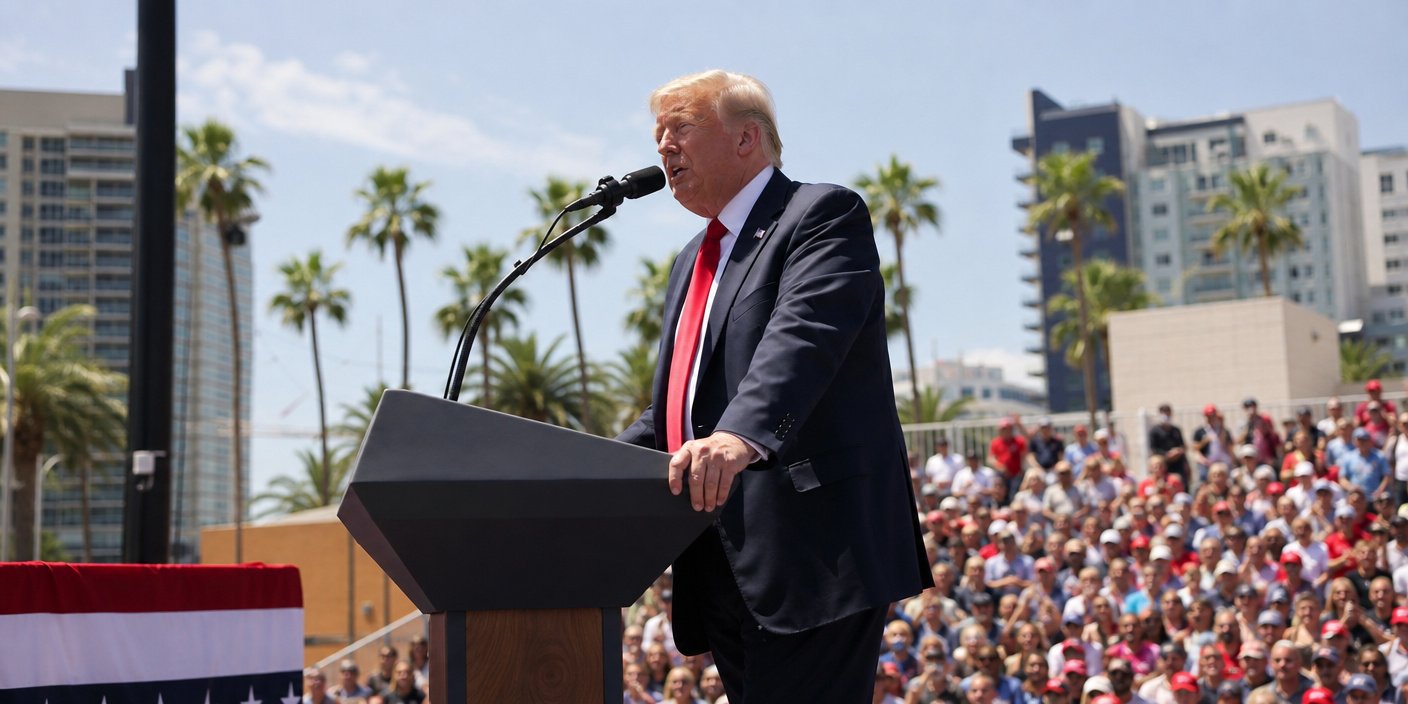
President Donald Trump’s recent campaign appearance in Las Vegas, Nevada, has become the unexpected focal point of a sprawling digital discourse. Beyond the typical policy-heavy rhetoric usually associated with high-stakes campaign events, the discussion shifted toward a visual phenomenon: a noticeably fuller-looking hairstyle that captured the attention of social media users and commentators alike. This viral moment, which rapidly ascended through X (formerly Twitter) and TikTok, saw millions of users analyzing footage from the rally, debating the intricacies of stage lighting, wind conditions, and styling, while also drawing a public reaction from his niece and frequent critic, Mary Trump.
The Optics of the Las Vegas Rally
The event, held at Sunset Park in Las Vegas on June 9, 2024, occurred under the intense Nevada sun, where temperatures soared well into the triple digits. This environmental context served as a crucial variable in the digital breakdown of the event. In the world of high-stakes political optics, every movement and physical detail is scrutinized by opposing factions and neutral observers alike. The viral surge surrounding the former President’s hair serves as a modern case study in how visual minutiae can overshadow substantive political messaging in a 24-hour news cycle. While the rally was intended to energize his voter base in a critical swing state, the algorithmic nature of social media platforms prioritized the visual outlier, propelling the ‘fuller hair’ narrative to the top of trending topics.
The Mechanics of Viral Discourse
When a public figure of Trump’s stature appears with a variation in their signature look, the viral reaction is rarely organic; it is often the result of sophisticated social media engagement algorithms. In this instance, the meme-ification process was rapid. Content creators utilized high-definition clips of the rally, contrasting them with archival footage to drive engagement. This digital feedback loop creates a ‘meme-scape’ where visual anomalies are treated as legitimate news leads. The speed at which this story traveled demonstrates the changing landscape of political reporting, where traditional news outlets are often forced to address social media trends to maintain relevance with younger demographics who prioritize visual storytelling over written press releases.
Mary Trump’s Analysis
Adding to the discourse, Mary Trump, a psychologist and frequent critic of her uncle, weighed in on the appearance. Her commentary, which often seeks to analyze the former President’s psychological motivations and vanity through the lens of family history, contributed a layer of narrative depth to the viral moment. By addressing the appearance, she successfully bridged the gap between ‘meme culture’ and ‘political analysis,’ forcing mainstream outlets to cover not just the hair itself, but the broader significance of the family rift and the public performativity of the Trump brand. For followers of the Trump family dynamic, this intervention was not merely about hair, but about the continuing control of the narrative surrounding the Trump legacy.
The Historical Weight of Presidential Appearance
It is important to place this incident within the broader history of American political image-crafting. The scrutiny of presidential appearance is as old as the medium itself. One cannot discuss the importance of optics without recalling the 1960 Nixon-Kennedy debate, where television viewers perceived a marked difference in performance based solely on aesthetic and physical composure. While the medium has shifted from television to the smartphone screen, the core principle remains identical: the candidate is a symbol as much as a policy platform. The Las Vegas incident, therefore, is not an outlier but a continuation of the tradition of ‘the candidate as an icon.’ Whether the aesthetic shift was the result of styling, environmental factors, or intentional rebranding, the public’s obsession confirms that, in American politics, visual perception is inseparable from perceived political efficacy.
Future Implications for Campaign Branding
Looking ahead, this viral incident provides a roadmap for how political campaigns must prepare for the ‘meme-ification’ of their candidates. Every outdoor event, every windy day, and every public appearance is now a potential liability or a branding opportunity. Campaigns are increasingly hiring ‘optics strategists’ specifically tasked with monitoring social media sentiment in real-time. The Las Vegas rally serves as a clear warning to political strategists that they are no longer just managing the news—they are managing a volatile, hyper-reactive digital ecosystem where the smallest detail can shift the conversation away from the ballot box and onto the hairbrush.
FAQ: People Also Ask
Was the hair change the result of a specific styling choice?
While speculation ran rampant on social media, there has been no official confirmation regarding a change in grooming habits or styling products. Experts in political aesthetics suggest that factors such as the intense Las Vegas heat and stage lighting can create optical illusions.
Why does social media focus so much on appearance?
In a fragmented media landscape, visual anomalies are easily shareable and immediately understandable. Memes allow users to participate in political discourse without needing to engage with complex policy documents, leading to higher engagement rates for visual content.
What has Mary Trump said specifically?
Mary Trump has consistently used her platform to analyze the former President’s public behavior, suggesting that these aesthetic shifts are often tied to his need for external validation and a meticulously curated public image.
How does this affect the campaign’s polling?
There is no concrete evidence to suggest that viral memes about a candidate’s hair have any measurable impact on election polling or voter behavior. The phenomenon remains largely confined to cultural and social media discourse rather than political decision-making.