Authorities are continuing an intensive manhunt for Thomas Ryan, suspected of killing his 70-year-old father, Robert Ryan, in Greenville, NY, on August 6. The incident, which included a fatal house fire, has prompted a multi-agency response, with law enforcement warning the public that the suspect is considered armed and dangerous.
Key Highlights
- Primary Suspect: Thomas Ryan is the focus of an urgent, multi-agency investigation following the death of his father.
- Victim: Robert Ryan, 70, was identified as the victim of the incident in Greenville, NY.
- Incident Details: The event occurred on August 6 and involved both a homicide and a fatal house fire.
- Public Safety Warning: Law enforcement has explicitly warned that the suspect is considered armed and dangerous and should not be approached.
- Active Investigation: The New York State Police are coordinating with local and federal resources to track the suspect, urging the public to report any sightings immediately.
The Investigation into the Greenville Tragedy
The small community of Greenville, New York, remains on high alert as the New York State Police (NYSP) spearhead an exhaustive investigation into a violent incident that occurred on August 6. The scene, which began with reports of a house fire, quickly transitioned into a homicide investigation once first responders identified evidence contradicting an accidental origin. The victim, Robert Ryan, aged 70, was confirmed deceased at the property. The subsequent identification of his son, Thomas Ryan, as a suspect in the killing has triggered an expansive search operation.
Tactical Challenges in the Manhunt
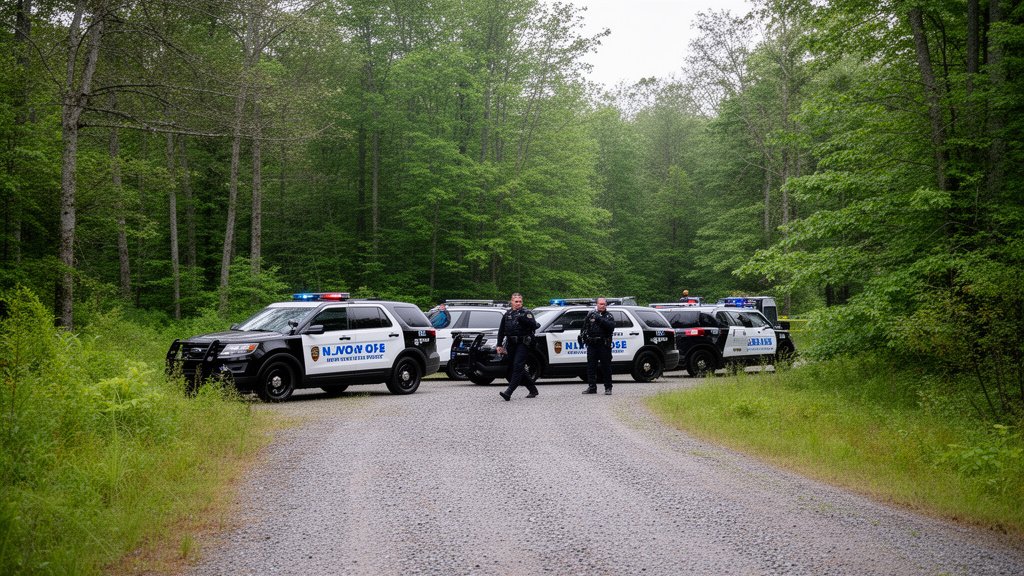
Searching for a suspect classified as “armed and dangerous” presents significant tactical challenges for law enforcement agencies. In rural areas like Greenville, the terrain can be unpredictable, often featuring dense wooded areas, difficult road access, and private property that could potentially offer cover for a fleeing individual. The NYSP, utilizing both ground personnel and aerial surveillance, are focusing their efforts on containment. The “armed and dangerous” designation is not used lightly; it indicates that the suspect possesses not only the capability but also the potential motive to engage in further violence if confronted, necessitating a high-intensity approach from responding officers.
The Intersection of Fire and Homicide Investigations
One of the most complex aspects of this investigation is the interplay between the house fire and the homicide. Arson investigators work in concert with forensic pathologists and criminal investigators to distinguish between a fire that caused a death and a fire used to conceal a crime. Recovering evidence from a structure that has suffered significant fire damage is technically demanding. Forensic teams must sift through debris for accelerants, ignition sources, and biological evidence that might have survived the extreme heat. The fact that the NYSP have officially labeled the case a homicide so soon after the event suggests that investigators have likely secured definitive evidence linking the blaze to the actions of the suspect, moving beyond mere speculation to a concrete criminal predicate.
Law Enforcement Coordination
In high-profile cases involving homicides and active manhunts, the NYSP serves as the primary coordinating body. This involves a “unified command” structure where local police departments, county sheriff’s offices, and specialized state units share intelligence in real-time. This coordination is critical for maintaining public safety; information about the suspect’s vehicle, physical description, and last known movements must be disseminated accurately to avoid misinformation. The public is often the most valuable asset in such a manhunt, as “see something, say something” remains a vital pillar of rapid suspect apprehension.
The Legal and Sociological Impact
When a tragic event involves familial relations—such as the incident between Robert and Thomas Ryan—it often creates a profound sense of shock within the local community. These incidents bring the issues of domestic violence and mental health crises to the forefront of public discourse. While the motive remains a subject of the ongoing investigation, the trauma inflicted upon the community is significant. Residents are advised to maintain situational awareness, lock doors, and verify the identity of anyone approaching their homes while the manhunt is active. The legal system will eventually determine the culpability of the suspect, but in the immediate term, the focus remains entirely on containment and safety.
FAQ: People Also Ask
Q: What should I do if I see the suspect, Thomas Ryan?
A: If you see the suspect, do not approach him. He is considered armed and dangerous. Immediately call 911 or the New York State Police and provide your exact location and any details about his appearance or direction of travel.
Q: How is the NYSP keeping the public updated?
A: The New York State Police are issuing official press releases through their public information office. Residents are advised to monitor official NYSP social media channels and local news outlets for verified information.
Q: Why was the house fire classified as a homicide?
A: While specific forensic details remain confidential to protect the integrity of the investigation, the classification indicates that investigators found evidence at the scene suggesting the fire was not accidental and was directly related to the death of Robert Ryan.
Q: Are there any specific road closures or areas to avoid?
A: As of the latest update, authorities are asking residents to remain vigilant. If specific areas are being actively searched, the NYSP will typically coordinate with local officials to issue traffic advisories. Check local news for immediate updates on your specific town or area.