On August 12, 2026, the celestial mechanics of our solar system will align in a rare event: a Total Solar Eclipse will sweep across the Arctic, Russia, Greenland, Iceland, and finally, Spain. For millions who fall outside the narrow path of totality, livestreaming will be the primary gateway to witnessing the moon obscure the sun. This event is not merely a visual spectacle but a critical moment for global scientific observation and a massive logistical undertaking for digital broadcasters.
Key Highlights
- Date and Path: The eclipse occurs on August 12, 2026, with a path of totality traversing the Arctic, Russia, Greenland, Iceland, and the Balearic Islands in Spain.
- Maximum Totality: Certain regions will experience up to 2 minutes and 18 seconds of total darkness as the lunar shadow tracks across the Earth.
- Digital Access: Major observatories and space agencies, including NASA and the European Space Agency (ESA), are coordinating high-definition global livestreams for those outside the path.
- Scientific Observation: The International Astronomical Union (IAU) is preparing for extensive atmospheric and solar corona data collection during the window of totality.
Chasing the 2026 Shadow: A Global Astronomical Event
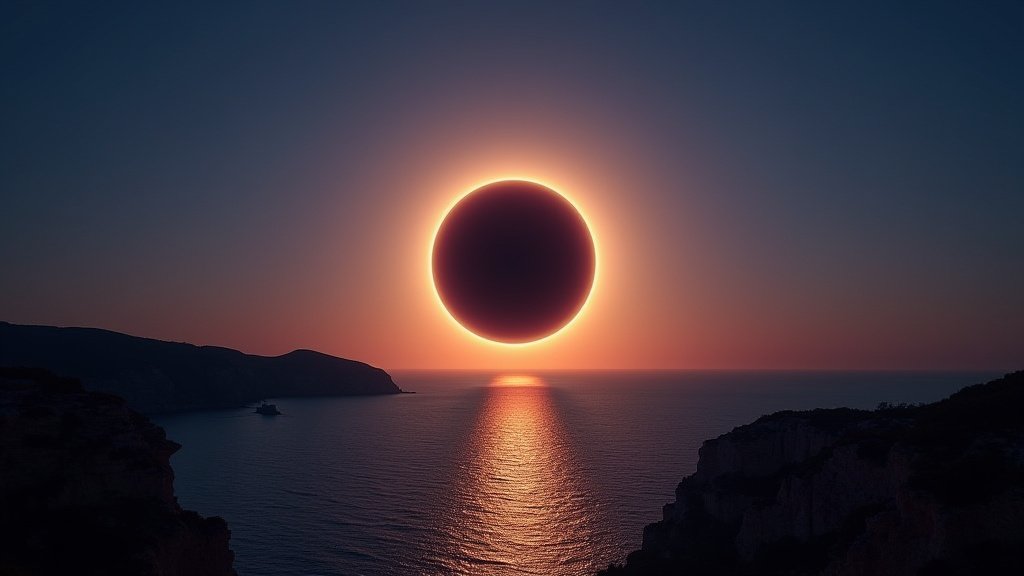
The Total Solar Eclipse of 2026 represents a significant milestone in modern astronomy, distinguishing itself from the continental-spanning eclipses of North America in 2017 and 2024. This event commands attention due to the unique geographical challenges and the specific sunset-timed totality that will occur over the Iberian Peninsula. As the lunar shadow races across the Earth at supersonic speeds, reaching the Balearic Islands in Spain during the final moments before sunset, it offers a dramatic visual context that differs significantly from mid-day eclipses. The path of totality will begin its journey in the high Arctic, moving through the Taimyr Peninsula, crossing the frozen expanse of Greenland, and clipping the western edge of Iceland before finally making landfall in Spain.
The Path of Totality: Logistical and Geographic Details
For ground observers, the logistics are formidable. The path of totality is relatively narrow, requiring precise planning. In Greenland and Iceland, the eclipse will occur higher in the sky, providing a longer window for observation, whereas in Spain, the low-angle sun near the horizon poses unique photographic and atmospheric challenges. Meteorologists are already analyzing historical cloud-cover data for the Balearic region, noting that while the Mediterranean typically offers clear skies in August, the low sun angle makes the viewing experience sensitive to even minor coastal atmospheric conditions. Organizations like Timeanddate.com are already setting up regional observation hubs to ensure that digital viewers receive a stable, high-bitrate feed regardless of local terrestrial weather, utilizing multiple camera angles to mitigate the risk of cloud obstruction.
Where to Watch: Top Livestream Sources
For the vast majority of the global population, high-definition livestreaming is the only viable method to view the eclipse safely and clearly. We anticipate that NASA’s official broadcast channels will collaborate with the European Space Agency (ESA) to provide a unified feed. These broadcasts are expected to utilize 4K camera arrays positioned in both high-latitude Arctic sites and the sun-drenched coastlines of Mallorca.
We recommend tracking the following primary resources:
- Official Space Agency Feeds: NASA and the ESA will provide technical, narrated streams focusing on the science of the corona.
- Global Observation Networks: Platforms such as Timeanddate.com, which provide specialized, ad-free coverage with localized timing information.
- Amateur Astronomy Collectives: International groups often deploy low-latency, satellite-linked feeds from remote locations, offering an ‘on-the-ground’ perspective that large-scale agency broadcasts might miss.
Scientific Significance: Beyond the Spectacle
The 2026 eclipse provides a unique opportunity for researchers to study the solar corona—the sun’s outer atmosphere—which is otherwise invisible due to the sun’s overwhelming brightness. During this event, the International Astronomical Union (IAU) and various university-led teams aim to deploy sensors along the path of totality to monitor ionospheric changes. The sudden loss of solar radiation causes the Earth’s ionosphere to cool rapidly, a phenomenon that can disrupt satellite communications and GPS signal propagation. By syncing data collection across the entire path from the Arctic to Spain, scientists hope to build a comprehensive, multi-point model of how solar occlusion affects global telecommunications, a secondary angle of critical importance for our modern, satellite-dependent infrastructure.
Tourism and Economic Impact
The economic implications of the 2026 eclipse are particularly pronounced in Spain. The tourism sector in the Balearic Islands is currently re-modeling its August projections to account for ‘eclipse tourism.’ Unlike standard summer surges, this influx brings a specific demographic: amateur astronomers, equipment-laden photographers, and international science enthusiasts. Local municipalities are already coordinating ‘dark-sky’ initiatives, restricting light pollution in key observation zones to maximize the experience for spectators. This event serves as a case study in how specialized natural phenomena can drive localized economic booms, forcing local governments to balance the sudden spike in foot traffic with the preservation of sensitive coastal environments.
Historical Patterns and Future Outlook
Comparing the 2026 event to previous eclipses, such as those in 2017 and 2024, reveals a shifting interest in international ‘eclipse chasing.’ While the previous North American events focused on high-density urban corridors, the 2026 eclipse highlights the allure of extreme environments—from the Arctic tundra to the historic coastlines of Europe. Astronomers note that this event is a precursor to the massive 2027 eclipse, which will trace a path across North Africa and the Middle East. Observing how the global audience engages with the 2026 livestream technology will provide a blueprint for broadcasters in 2027, as they prepare to deliver content to an even larger, more dispersed global audience. The evolution of 360-degree, VR-ready livestreaming technology is expected to be a key differentiator for the 2026 coverage, allowing viewers to simulate the experience of being in the shadow itself.
FAQ: People Also Ask
Q: Is it safe to look at the sun during a total solar eclipse?
A: You can only look at the sun without eye protection during the brief window of ‘totality,’ when the moon completely covers the sun’s bright face. At all other times, and during partial phases, specialized solar filter glasses are mandatory to prevent permanent eye damage.
Q: What is the exact duration of the 2026 eclipse?
A: The duration of totality varies significantly by location. The maximum duration will reach approximately 2 minutes and 18 seconds, though this peak time is restricted to specific points along the central path of the moon’s shadow.
Q: Can I watch the eclipse without a livestream?
A: Only if you are physically located within the path of totality. If you are outside this narrow path—even by a few miles—you will only see a partial eclipse, which requires solar glasses to view safely. Livestreaming is recommended for those outside the path of totality.
Q: What specific entities are providing coverage?
A: The primary broadcasts will be led by NASA, the European Space Agency (ESA), and Timeanddate.com. Several international university astronomy departments are also expected to stream data-rich feeds directly from the field.