In a startling revelation that has sent shockwaves through global diplomatic circles, a senior U.S. official confirmed early Tuesday morning that President Trump was the subject of an emergency extraction during his attendance at the NATO summit in Turkey. The operation, which involved moving the President into a catering cart to bypass hostile surveillance, underscores the rapidly deteriorating security landscape facing world leaders in 2026.
The Anatomy of an Unconventional Extraction
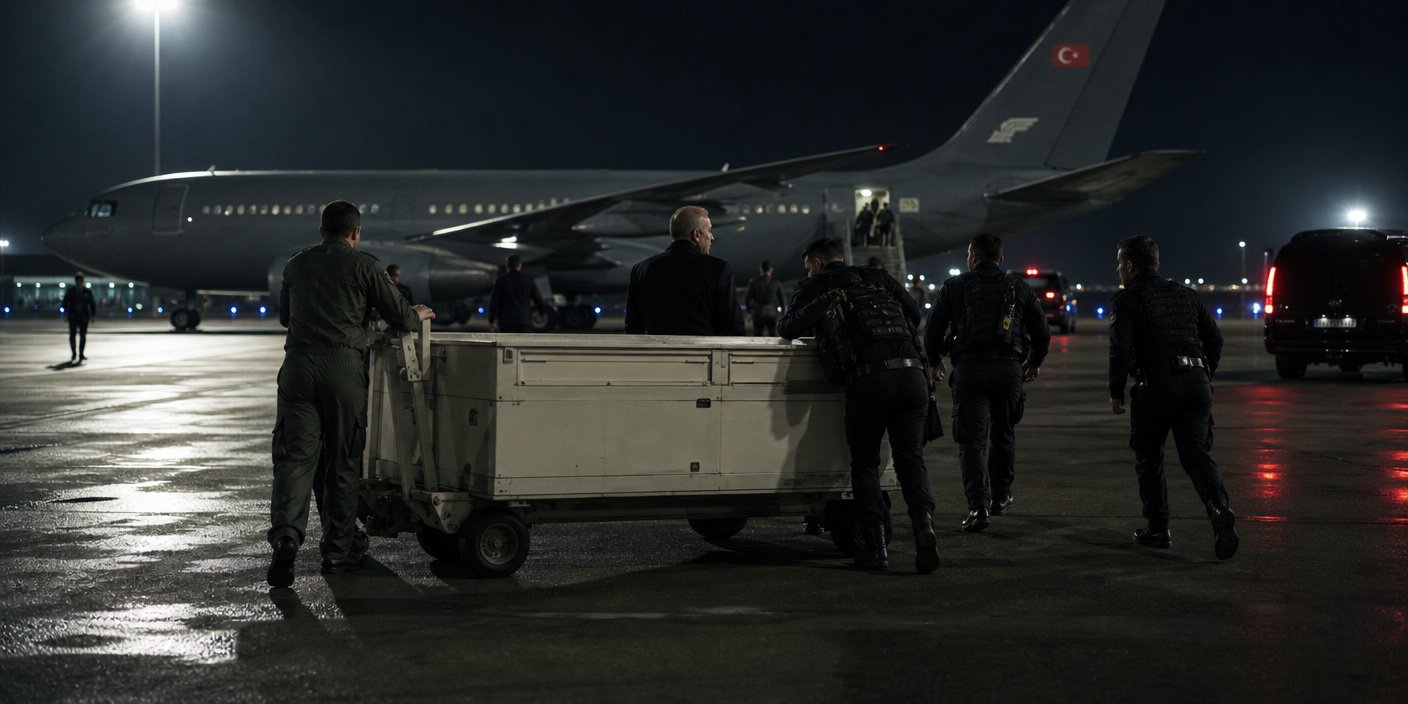
The operation, executed late Monday night, occurred under the shroud of darkness on the tarmac of a high-security Turkish military airfield. Intelligence assets had reportedly picked up chatter indicating that operatives linked to the Iranian Revolutionary Guard Corps (IRGC) were tracking the President’s movements in real-time. With the President’s primary motorcade compromised by potential ambush points on the road to the airbase, the U.S. Secret Service was forced to improvise.
According to the official source, the Secret Service utilized a mundane airport service vehicle—a catering supply cart—to move the President through the airport’s service tunnels and onto the tarmac. This decision, while unorthodox and bordering on the clandestine, was deemed necessary to avoid the high-profile visibility of a standard armored limousine. The President was effectively ‘hidden in plain sight’ amidst the logistical chaos of the summit’s support operations. Upon reaching the military jet, the President was ushered directly into the aircraft, which departed immediately for a secure, undisclosed location, bypassing standard diplomatic departure protocols.
Intelligence Failure or Strategic Necessity?
The incident raises significant questions regarding the host nation’s intelligence capabilities and the extent of the Iranian threat network operating within Turkey. While NATO officials have yet to provide a full accounting of how such a significant security breach occurred, insiders suggest that the intelligence regarding an imminent attack was classified as ‘Category A’—an immediate and actionable threat to the President’s life.
This specific intelligence indicated that Iranian-backed operatives had infiltrated the local support staff at the summit, creating a vulnerability that the Secret Service could not mitigate with standard shielding procedures. The reliance on an improvised extraction method highlights the volatile nature of the 2026 geopolitical theater, where traditional security perimeters are increasingly vulnerable to asymmetric threats. This event will undoubtedly lead to a complete overhaul of protective detail protocols for U.S. Presidents traveling to non-allied or unstable high-risk zones.
The Secret Service’s Pivot to Improvisation
For the U.S. Secret Service, the ‘catering cart’ maneuver represents a massive shift in operational doctrine. Historically, the agency relied on the rigidity of its armored ‘Beast’ limousines and complex motorcade formations to protect the executive. However, this incident proves that in the age of drones, cyber-surveillance, and local intelligence penetration, rigidity can be a fatal flaw. By choosing an unconventional, low-signature path, the protective detail demonstrated a willingness to prioritize stealth over the pomp of official transport.
Security analysts are already calling this ‘The Turkey Pivot,’ referencing the necessity of adapting protective measures to the environment rather than forcing the environment to fit the protection. The psychological toll on the President and his staff, though undisclosed, is expected to be significant, as such high-stakes evacuations historically leave permanent marks on the administration’s approach to foreign travel and diplomacy.
Geopolitical Implications and Regional Fallout
Beyond the immediate security concerns, this incident carries profound geopolitical weight. The fact that the threat originated from an Iranian source, in a country as strategically vital as Turkey, puts immense pressure on NATO’s cohesion. Relations between Washington and Tehran are already at a nadir, and this attempted security breach will likely lead to harsh sanctions and a massive intelligence purge within the region.
Furthermore, the President’s abrupt exit from the NATO summit—before the conclusion of key ministerial meetings—leaves a vacuum in the agenda. The diplomatic fallout will require the White House to reassure allies that the United States remains committed to the alliance, even while its leader is being hunted in the region. This narrative will dominate the 24-hour news cycle for the foreseeable future, as questions regarding the security of other world leaders currently in Turkey begin to mount.
FAQ: People Also Ask
Was the President injured during the extraction?
No, the official source confirmed that the President remained unharmed throughout the entire process. The extraction was carried out with extreme caution and speed to ensure his physical safety.
Why was the President in Turkey for this summit?
President Trump was attending an emergency NATO summit focused on addressing the rising maritime tensions in the Mediterranean and the ongoing regional security crisis in the Middle East.
Did the Turkish government know about the extraction?
This remains a point of contention. While the U.S. works closely with Turkish security services, the Secret Service reportedly kept the details of the ‘catering cart’ maneuver highly compartmentalized to prevent potential leaks or further exposure to the threat.
What happens to the NATO summit now?
While the summit is continuing, the abrupt departure of the U.S. President has shifted the focus from the original agenda to discussions regarding regional security protocols and the safety of the remaining delegations.