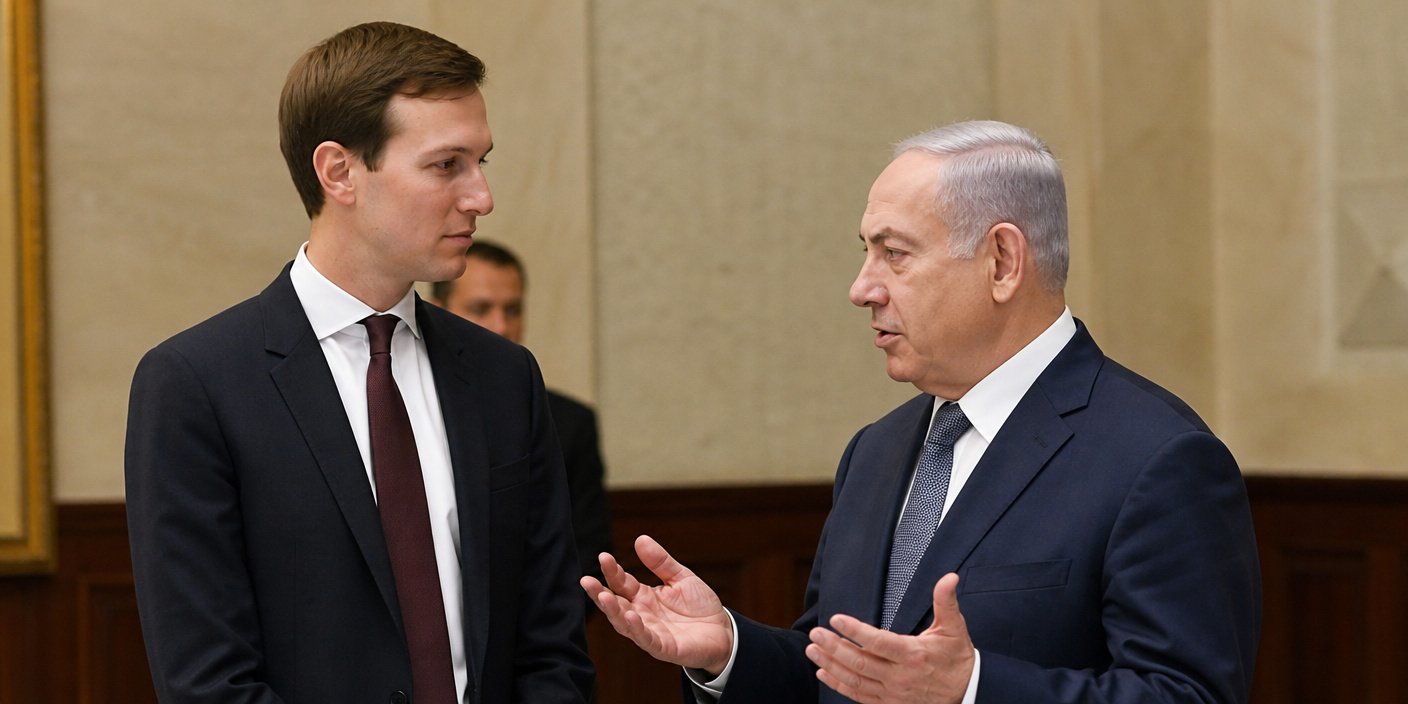
The landscape of Middle East diplomacy shifted dramatically today as Trump envoy Jared Kushner announced a strategic framework designed to initiate the disarmament of Hamas within a 30-day window. Following intensive, high-level consultations with Israeli Prime Minister Benjamin Netanyahu, the proposed plan seeks to dismantle the existing security stalemate by introducing a rigorous verification mechanism overseen by a United States military general. This development marks a significant acceleration in efforts to stabilize the Gaza Strip and establish a durable peace architecture in the region.
Key Highlights
- 30-Day Operational Timeline: The framework sets a definitive one-month window to begin the disarmament process, moving away from open-ended negotiations.
- US Military Oversight: A high-ranking US general will be appointed to lead the verification of disarmament protocols, ensuring accountability and adherence to agreed-upon terms.
- Strategic Alignment: The plan is the direct result of coordinated discussions between Jared Kushner and Prime Minister Benjamin Netanyahu, signaling a united front on security objectives.
- Breaking the Impasse: This initiative is specifically engineered to bypass current diplomatic roadblocks and force tangible security milestones.
The Architecture of Security and Oversight
The central pillar of the newly announced framework is the introduction of direct American supervision. For years, verification in the Gaza Strip has been a contentious point, often marred by a lack of trust between the involved parties and a reliance on third-party intermediaries who lacked enforcement capabilities. By placing a US general at the helm of the verification process, the Trump administration’s diplomatic team aims to provide a neutral, authoritative figure capable of ensuring that disarmament commitments are not merely promises but verifiable actions.
The Operational Reality of Verification
This verification mechanism is designed to be comprehensive. It involves monitoring the surrender of heavy weaponry, the decommissioning of tunnel infrastructure, and the systematic dismantling of militant command-and-control capabilities. The presence of a US general provides a unique layer of security assurance that has been absent in previous cease-fire attempts. This official will be responsible for reporting back to international stakeholders, providing a real-time assessment of compliance or non-compliance. This, in theory, removes the ambiguity that has allowed previous agreements to collapse under the weight of accusation and counter-accusation.
Integrating Regional Partners
While the US provides the oversight, the long-term success of this disarmament plan is predicated on the integration of regional partners, particularly those involved in the broader Abraham Accords framework. By aligning the disarmament of Hamas with the strategic interests of the broader Middle Eastern coalition, the plan aims to create a regional consensus that isolates militant actors. This is not just a security plan; it is a diplomatic restructuring that seeks to replace the current volatility with a predictable, rules-based regional security architecture.
Geopolitical Shifts and Diplomatic Synergy
The alignment between Jared Kushner and Prime Minister Benjamin Netanyahu is indicative of a broader attempt to synchronize Israeli security requirements with American regional policy. Netanyahu’s participation in these discussions suggests a recognition by the Israeli government that the traditional approach to managing the Gaza threat has reached a point of diminishing returns. The introduction of the 30-day timeline creates a “forced function,” requiring all parties to either engage in the disarmament process or face the diplomatic and potentially logistical consequences of non-compliance.
The Economic and Humanitarian Pivot
An essential secondary angle to this disarmament strategy is the economic trajectory of the Gaza Strip. Disarmament is implicitly linked to the initiation of large-scale reconstruction efforts. International donors have long been hesitant to pour capital into an area where infrastructure is frequently destroyed by recurring conflict. By securing the environment under US military oversight, the proposed plan creates the stability necessary for legitimate international economic investment. This transformation—from a war-torn enclave to a potentially integrated regional economic player—is the ultimate incentive structure the envoy’s office is utilizing to gain local and international support.
Historical Precedent and Future Risks
This approach mirrors elements of previous post-conflict stabilization efforts, such as the demilitarization models used in the Balkans or the Sinai Peninsula. However, the unique urban terrain of Gaza and the ideological entrenchment of militant groups present unprecedented challenges. The 30-day window is incredibly ambitious; it requires massive coordination between intelligence, military, and diplomatic channels. If successful, it could redefine the role of the US as the primary arbiter of security in the Middle East, effectively ending the era of proxy-driven stalemate.
FAQ: People Also Ask
Q: Does the 30-day timeline guarantee immediate peace?
A: No. The 30-day timeline refers to the commencement of the disarmament process. It is a functional deadline to initiate the sequence of events, not a guarantee that the entire conflict will conclude within that timeframe. It is intended to break the current impasse and start the operational phase of the peace plan.
Q: What power does the US general have in this plan?
A: The US general will serve as the primary verification authority. Their role is to observe, document, and report on the progress of disarmament. They are tasked with providing neutral evidence to all stakeholders to ensure that all parties are adhering to the agreed-upon security protocols.
Q: Is Hamas currently part of these negotiations?
A: The source reporting focuses on the discussions between Jared Kushner and Israeli leadership. The strategy is designed to force a change in the status quo, effectively sidelining obstructionist elements by creating a framework where compliance becomes the only viable path for regional stakeholders.
Q: How does this impact the Abraham Accords?
A: This plan aims to leverage the success of the Abraham Accords by bringing regional partners into a unified security framework, using the normalization of relations as a carrot for long-term regional stability.