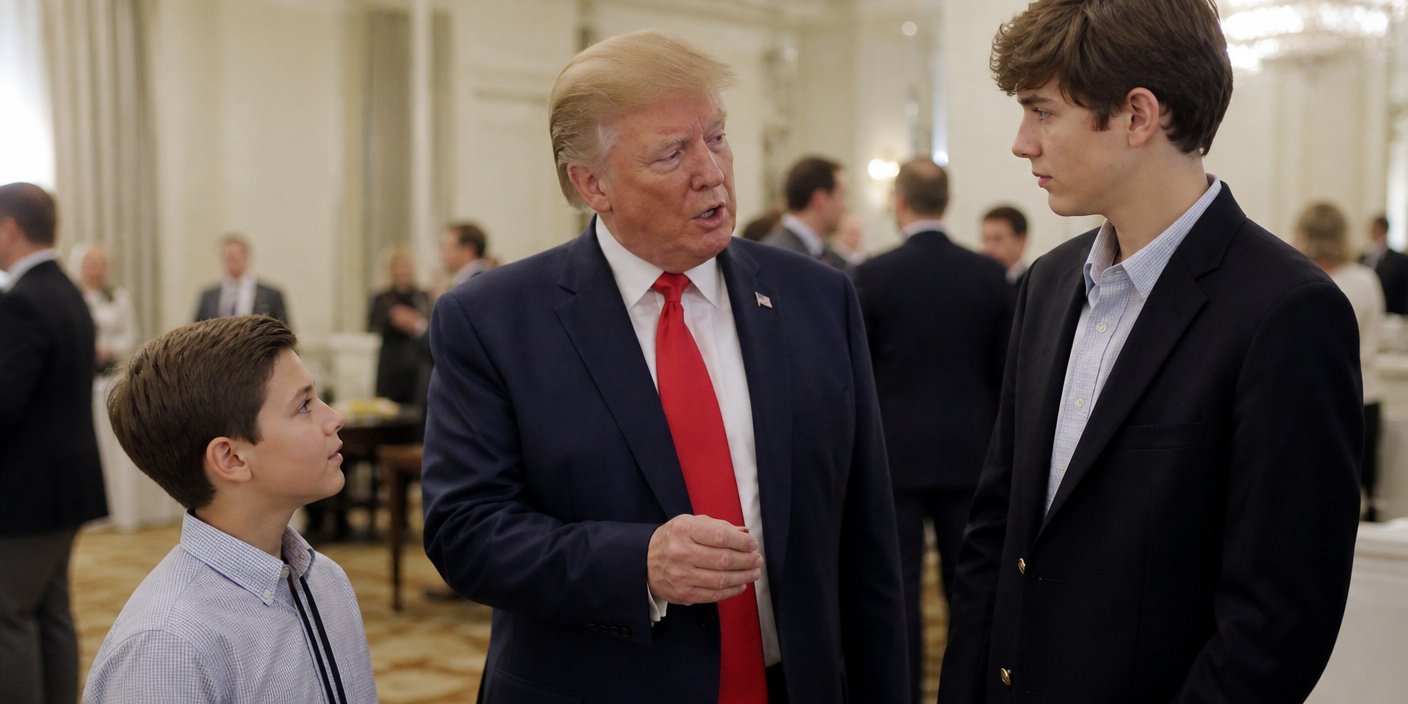
President Donald Trump’s recent meeting with 10-year-old Nathanial Rai and his 16-year-old rescuer, Ryder Williams, has ignited a fierce national conversation following comments the former president made regarding a life-saving scenario. During the high-profile interaction, which followed a widely circulated video of the rescue, Trump candidly remarked that he likely would not have risked his own life to save the boy. This unvarnished commentary, captured and disseminated rapidly across digital platforms, has once again underscored the sharp divide between supporters who value Trump’s unfiltered authenticity and critics who interpret such statements as a departure from traditional, idealized presidential conduct.
Key Highlights
- The Incident: President Donald Trump hosted 10-year-old Nathanial Rai and his 16-year-old lifeguard, Ryder Williams, at a high-profile venue following a viral video documenting a near-drowning rescue.
- The Comment: During the engagement, Trump stated to the youth that he “wouldn’t, probably help you” had he been in a similar life-or-death situation requiring personal risk.
- Digital Impact: The interaction immediately gained traction on social media, becoming a focal point for debates regarding the psychological nuances of political optics versus raw, honest admission.
- Public Reception: Reactions have been polarized, with some praising the comment as a refreshingly honest assessment of human instinct, while others labeled it as callous or inappropriate for a public leader.
Deconstructing the Rhetoric of the ‘Wouldn’t’ Moment
The encounter between Donald Trump, Nathanial Rai, and Ryder Williams was intended as a celebratory acknowledgment of a heroic, viral-worthy event. However, it quickly pivoted into a moment of intense media scrutiny. To understand why this specific interaction gained such traction, one must look at the intersection of political theater and the modern, unfiltered digital landscape.
The Context of the Mar-a-Lago Encounter
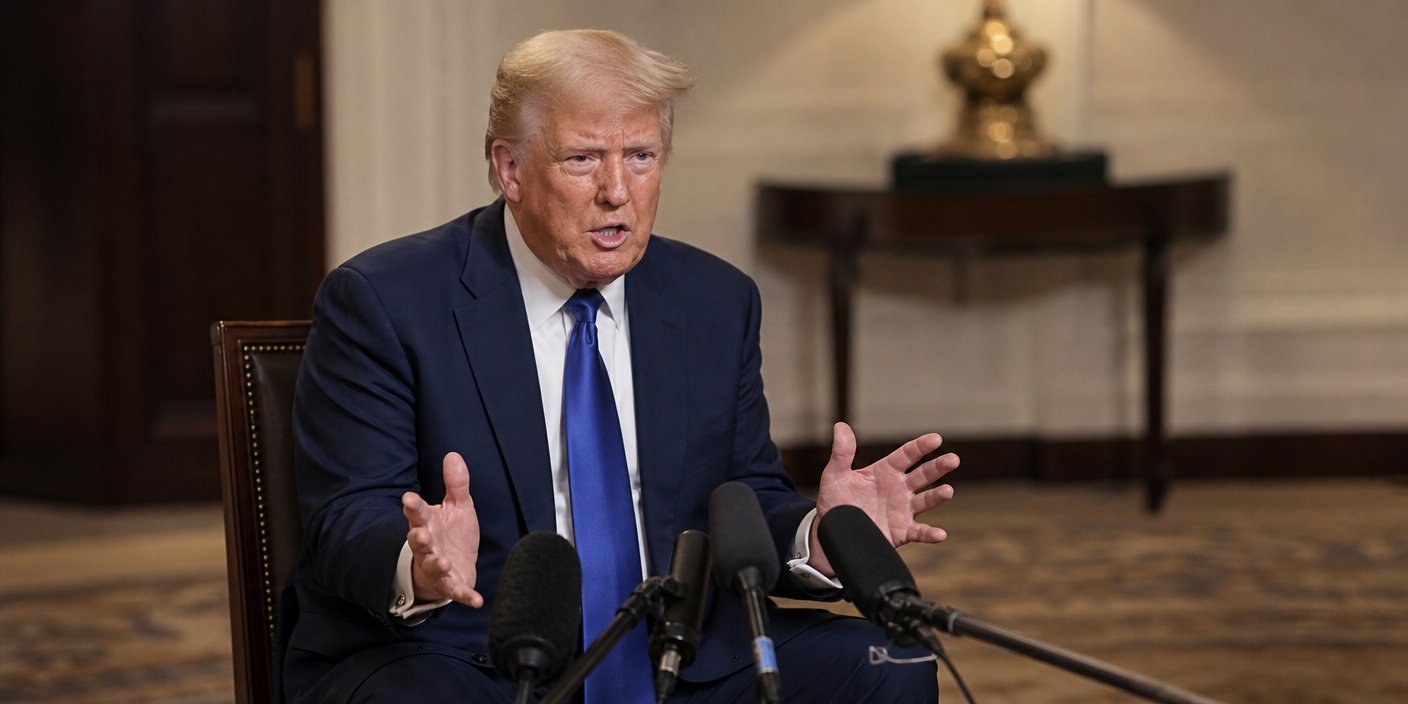
It is important to establish the setting. The meeting occurred as part of a public-facing event where political figures often engage with citizens to bolster their image of accessibility. When Trump, a figure known for his deviation from rehearsed, focus-grouped political rhetoric, engaged with the 10-year-old and the lifeguard, the expectation was a standard exchange—praise for the rescuer and a kind word for the rescued. Instead, the dialogue turned toward a hypothetical assessment of personal survival instincts.
This is not the first time a Trump interaction has veered into the unexpected. His supporters have long championed this style as a refreshing rejection of the “politician speak” that dominates Washington. In this view, Trump is simply admitting the reality of human survival instincts—that most people, when faced with an immediate, high-stakes threat, would hesitate to sacrifice their own lives for a stranger. By saying “I wouldn’t, probably help you,” he is engaging in a form of radical honesty that cuts through the artificiality of political performance.
Analyzing Public Perception and Leadership Expectations
Conversely, critics argue that the office of the presidency—or even the stature of a national leader—carries with it the symbolic expectation of self-sacrifice. For many, the comment felt jarring because it stripped away the protective, heroic veneer usually afforded to powerful figures. It prompted a psychological debate: Do we want leaders who are aspirational and theoretically altruistic, or do we prefer leaders who mirror our own confessed vulnerabilities and instincts?
This incident highlights a major shift in how political communication functions. In the era of viral video media, context is often lost. The snippet of the video, showing Trump’s face and hearing his voice, travels much faster than the full, nuanced conversation could ever hope to. The immediate emotional gut-reaction of the viewer becomes the primary driver of the discourse. People were not debating the legality of the rescue or the merits of lifeguarding; they were debating the character of the man speaking.
The Impact of Viral Media on Public Figures
The viral nature of this event underscores how every public interaction is now subject to microscopic review. For individuals like Nathanial Rai and Ryder Williams, the incident was likely a surreal transition from a local heroic story to a national, politically charged spectacle. The transition highlights the unique power—and potential for intrusion—that modern media possesses. It forces us to ask: How does the constant, 24/7 scrutiny of public figures affect their ability to remain “real”? When every word is recorded, analyzed, and repurposed, the instinct to retreat into safe, scripted responses becomes nearly universal. Trump’s refusal to do so is precisely what keeps his interactions dynamic, but it is also what invites the controversies that define his public image.
Historical Context of Unfiltered Leadership
Throughout American history, leaders have operated within various rhetorical frameworks. From the carefully crafted oratory of Lincoln to the media-savvy warmth of Reagan, the persona of the President has been a curated image. Trump’s style, however, is a departure that feels more akin to a talk-radio host or a candid podcast guest. This is not an accidental feature of his communication; it is a fundamental pillar of his brand. His supporters perceive this as a sign of transparency. They feel that he is telling them what he truly thinks, rather than what a PR consultant thinks they want to hear.
However, this approach carries political risks. When a leader admits to personal selfishness—even if it is a common human trait—it creates ammunition for political opponents who characterize it as a moral failing. The debate over this comment is essentially a debate over values. Is it better for a leader to tell a polite lie that upholds a heroic ideal, or to tell a brutal truth that shatters it?
The Road Ahead: Authenticity vs. Optics
As we look forward, the incident involving Nathanial Rai, Ryder Williams, and Donald Trump serves as a case study for future political campaigns. We are seeing a fundamental change in the public’s appetite for political content. The traditional, polished campaign video is losing ground to the unscripted, viral moment. While this incident may be categorized as a gaffe by some and an honest moment by others, its long-term impact on the political narrative will likely be limited. Yet, it serves as a stark reminder that in a hyper-connected world, no interaction is ever truly private, and the pressure on public figures to perform perfect morality is being met with an increasingly defiant, unvarnished reality.
FAQ: People Also Ask
Q: Did President Trump actually say he wouldn’t save the boy?
A: Yes, in a viral recording of the event, Trump told the 10-year-old, “I wouldn’t, probably help you,” while discussing the heroic actions taken by the teenage lifeguard.
Q: Who were the individuals involved in the viral rescue video?
A: The individuals involved were 10-year-old Nathanial Rai and his 16-year-old rescuer, Ryder Williams. They were later invited to meet with President Trump following the video’s success.
Q: Why is this specific comment causing such a stir?
A: It has sparked controversy because it challenges the public expectation that a political leader should express self-sacrifice, instead offering an honest, albeit blunt, assessment of survival instincts.
Q: How have the families of those involved reacted?
A: While the public reaction has been intense, there has been limited reporting on the specific personal reactions of the families of Nathanial and Ryder regarding the viral discourse surrounding the comment.