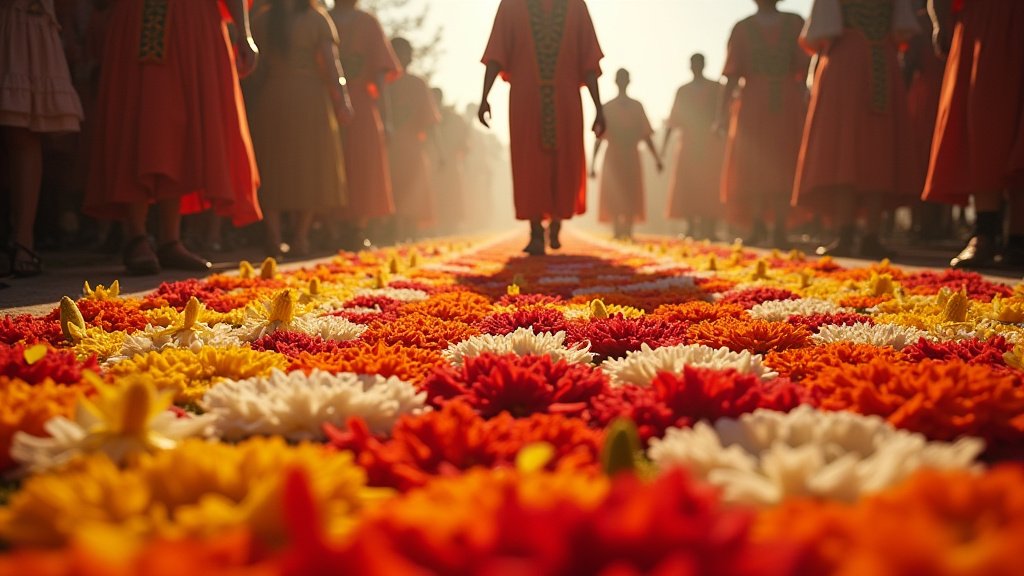
Pope Francis led a breathtaking Mass in Spain, highlighted by an iconic procession along a route meticulously carpeted with vibrant flowers. This deeply symbolic event showcased a profound display of popular piety, drawing significant attention and reverence.
Key Highlights:
- Pope Francis presided over a significant Mass in Spain.
- The Mass featured a visually striking procession.
- The procession route was adorned with a carpet of intricate floral designs.
- The event underscored a strong sense of popular religious devotion.
A Spectacle of Faith: The Flower-Carpeted Procession
This remarkable event in Spain saw Pope Francis at the center of a Mass that was elevated by an extraordinary procession. The chosen route for this sacred journey was transformed into a living tapestry, with thousands of flowers meticulously arranged to form a vibrant and fragrant carpet. This practice, known as ‘alfombra de flores,’ is a deeply ingrained tradition in many Spanish communities, often reserved for significant religious celebrations.
The Significance of Floral Carpets in Religious Events
The creation of these floral carpets is more than just an aesthetic endeavor; it carries profound religious and cultural significance. For centuries, communities have poured immense effort into crafting these ephemeral artworks, viewing them as offerings of beauty and devotion to the divine. The painstaking process of gathering, arranging, and designing the floral patterns symbolizes sacrifice, community effort, and a collective act of faith. The ‘alfombra de flores’ tradition often culminates in a procession walking over the carpet, a symbolic act of treading on beauty in devotion or of purifying oneself by walking a path of sacred art.
Popular Piety and Papal Presence
The presence of Pope Francis at this Mass amplified the significance of the floral procession, transforming it into an event of international note. Popular piety, which refers to the religious beliefs and practices of ordinary people, often finds expression in such visible, community-driven rituals. These expressions can include pilgrimages, festivals, and the creation of devotional art. The Spanish tradition of the floral carpet aligns perfectly with these expressions, offering a tangible and beautiful manifestation of collective faith that resonates deeply with participants and observers alike.
Echoes of Tradition and Modern Devotion
While the practice of floral carpet creation has ancient roots, its continued relevance in contemporary society, especially when graced by the presence of the Pope, speaks to the enduring power of tradition and faith. The event in Spain serves as a powerful reminder that religious devotion can manifest in visually stunning and communally engaging ways. It bridges the gap between historical practices and modern expressions of faith, demonstrating that the desire to honor the sacred through art and collective participation remains a vital aspect of many cultures.
FAQ: People Also Ask
What is the tradition of floral carpets in Spain?
In Spain, the tradition of floral carpets, known as ‘alfombra de flores,’ involves communities creating intricate and colorful carpets made entirely of flowers along procession routes for religious festivals and celebrations. It’s a form of devotional art and community engagement.
Why are flowers used in religious processions?
Flowers are used in religious processions as symbols of beauty, reverence, purity, and celebration. They represent the ephemeral nature of life and beauty, often offered as a sacrifice or a way to beautify the path of a sacred figure or event.
What does ‘popular piety’ mean in a religious context?
‘Popular piety’ refers to the religious beliefs, practices, and devotions of ordinary people within a religious tradition. It often manifests in customs, rituals, and expressions of faith that are distinct from formal liturgy but deeply meaningful to the community.
How does a papal visit influence local religious traditions?
A papal visit can bring international attention and prestige to local religious traditions, encouraging greater participation and preservation efforts. It also serves as a powerful symbol of unity within the global Catholic Church and can revitalize local faith communities.
What is the historical origin of floral carpet processions?
The tradition of creating floral carpets for religious processions has historical roots in various ancient cultures, including Roman and pagan festivals, which were later adapted and integrated into Christian observances, particularly during significant feast days like Corpus Christi.